

What Is a Boxer Dog?
Meet a dog built like an athlete, devoted with fierce loyalty. The Boxer dog combines physical power with a surprisingly playful, affectionate personality that makes owners say they’re more clown than guard dog — until a stranger approaches and the protective instinct surfaces instantly.
A Boxer is a large, muscular working dog originally bred in Germany for hunting big game. Known for their distinctive square head, powerful jaw, and energetic temperament, the Boxer dog is intelligent, loyal, and protective. The AKC ranks them #14 in popularity, making them one of America’s favorite family dogs.
Quick Facts
| Attribute | Details |
| Breed Name | Boxer (German: Deutscher Boxer) |
| Origin | Germany, 19th century |
| AKC Classification | Working Group — Recognized 1904 |
| Size | Male: 65–80 lbs, 23–25 in |
| Lifespan | 8–10 years |
| Coat Type | Short, glossy, smooth single coat |
| Colors | Fawn, brindle, white (white mask acceptable) |
| Temperament | Playful, confident, loyal, protective, energetic |
| Energy Level | High |
| Best For | Active families, experienced owners, homes with yards |
| AKC Popularity | #14 Overall |
Want to explore more about dog? Read this “German Shorthaired Pointer Dog“
Origin & History
Original Purpose & Heritage
The Boxer dog was developed in 19th-century Germany by crossing English Bulldogs with Mastiffs and local hunting dogs. German breeders aimed to create a powerful hunting dog capable of taking down large game like wild boar, while maintaining loyalty and trainability. The name ‘Boxer’ likely comes from their habit of standing on hind legs and fighting with their front paws.
Breed Evolution & Modern Development
By the early 20th century, the Boxer had become a favorite among German aristocrats and military personnel. They served as military and police dogs throughout Europe. The breed gained international recognition after World War II, arriving in America and becoming beloved family companions.
AKC Recognition & Modern Role
The AKC officially recognized the Boxer dog in 1904. Today, while Boxers retain their protective instincts, they are primarily family companions. They excel in obedience, agility, and as therapy dogs — versatile working dogs adapted to modern family life.
Physical Traits: Appearance, Size & Coat
Height & Weight Standards
| Aspect | Male | Female |
| Height | 23–25 inches at shoulder | 21–23.5 inches at shoulder |
| Weight | 65–80 lbs | 55–70 lbs |
| Build | Muscular, square, powerful | Slightly lighter, equally athletic |
| Shedding Level | Moderate year-round | Moderate year-round |
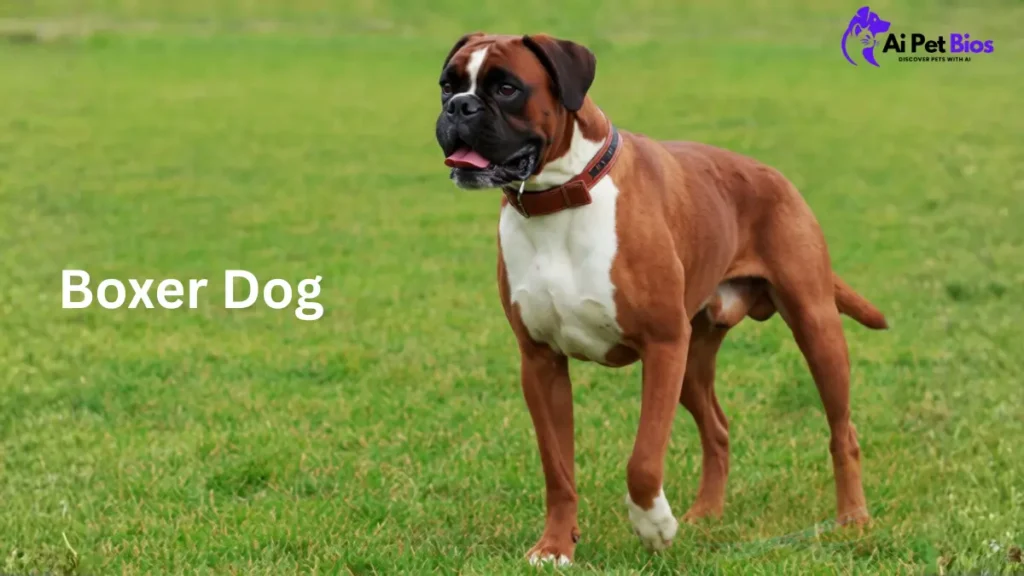
The Boxer dog is instantly recognizable by its distinctive square head, powerful undershot jaw (lower jaw extends beyond upper jaw), and muscular, athletic frame. Their short coat is smooth and glossy, lying flat against a dense, well-muscled body built for strength and agility.
Color Variations
| Color Pattern | Description | Prevalence |
| Fawn | Light tan to deep mahogany, ranging from pale to rich | Most common |
| Brindle | Dark stripes over fawn base — tiger-striped appearance | Common |
| White | Predominantly white (often on chest and paws) | Accepted |
| Reverse Brindle | Brindle pattern so heavy it appears dark | Less common |
Personality & Temperament
Despite their imposing appearance, Boxer dogs are famous for their playfulness. They form deep bonds with family members, balancing protective instinct with affectionate goofiness.
| Trait | Rating (1–5) | Description |
| Affection with Family | 5/5 | Extremely devoted; velcro dogs that follow owners everywhere |
| Good with Children | 5/5 | Excellent; patient and protective of family kids |
| Good with Other Dogs | 3/5 | Can be dominant; early socialization essential |
| Good with Strangers | 3/5 | Friendly once introduced; naturally suspicious of unknown people |
| Intelligence | 4/5 | Highly intelligent; ranked #49 in obedience—by choice, not ability |
| Energy Level | 4/5 | High energy; needs 1–2 hours of daily activity |
| Barking Level | 3/5 | Moderate; alert to activity but not excessive |
| Independence | 2/5 | Highly people-dependent; dislikes extended alone time |

Health: Common Issues & Lifespan
Boxers have a shorter lifespan than many breeds at 8–10 years, attributed in part to health issues common to large dogs. Responsible breeding practices and proactive health screening are essential.
Senior Boxer dog Care (7+ years)
As Boxers enter their senior years, their needs change significantly. Transition to a senior-specific diet with reduced calories (1,400–1,800 daily) and added joint supplements like glucosamine and chondroitin. Monitor for early signs of arthritis—stiffness after rest, reluctance to jump into the car, or changes in gait. Add non-slip rugs on hardwood floors to prevent falls.
Increase veterinary visits to twice per year for senior bloodwork, cardiac monitoring (Holter testing), and dental care. With proper senior management, many Boxers remain active and healthy well into their 10th or 11th year—exceeding the average lifespan.
Managing Heat Sensitivity
Boxer dogs are brachycephalic (short-nosed) dogs, which makes them highly susceptible to heatstroke. Never exercise your Boxer when the temperature exceeds 75°F (24°C). Early morning or late evening walks are safest during summer months. Signs of overheating include excessive panting, drooling, bright red gums, staggering, and collapsing.
If you suspect heatstroke, move your dog to air conditioning immediately, apply cool (not cold) water to the body, and contact your veterinarian. Invest in a cooling vest for hot days—it can be life-saving for this breed.
| Condition | Prevalence | Symptoms | Prevention |
| Dilated Cardiomyopathy | High (breed-specific) | Lethargy, coughing, fainting, labored breathing | Cardiac screening; maintain healthy weight |
| Bloat/GDV | High | Distended abdomen, retching, abdominal pain | Avoid post-meal exercise; slow feeders |
| Hip Dysplasia | Moderate (~10%) | Limping, stiffness, reluctance to jump | OFA screening; maintain healthy weight |
| Boxer dog Cardiomyopathy | Breed-specific | Arrhythmias, sudden collapse, fainting | Holter monitor testing; regular cardiac checks |
| Hypothyroidism | Moderate | Weight gain, lethargy, coat thinning | Annual thyroid panel; medication if needed |
| Degenerative Myelopathy | Breed-specific | Hind-end weakness, loss of coordination | DNA test available; physical therapy |
Recommended Health Screenings (AKC/OFA)
- Cardiac Evaluation (OFA) — Essential
- Holter Monitor Testing — Arrhythmia screening
- OFA Hip Evaluation
- DNA tests for degenerative myelopathy
- Annual Thyroid Panel
- CAER Ophthalmologist Evaluation (triennial)
Grooming & Care: Complete Maintenance Guide
The Boxer’s short coat is among the lowest-maintenance of all breeds. However, their heat sensitivity, tendency to overheat, and specific health needs require proactive care.
| Task | Frequency | Tools | Notes |
| Brushing | 2–3x per week | Rubber curry brush, bristle brush | Removes loose hair; promotes healthy skin |
| Bathing | Every 8–12 weeks | Gentle dog shampoo | Dry thoroughly; avoid extreme heat |
| Ear Cleaning | Weekly | Vet-approved ear cleaner, cotton balls | Prevent infections; check for redness |
| Nail Trimming | Every 3–4 weeks | Dog nail clippers or grinder | Essential for large dogs; affects gait |
| Dental Brushing | 3–5x per week | Dog toothbrush, enzymatic paste | Critical for overall health |
| Heat Management | Constant in summer | A/C, cool water access | CRITICAL — Boxers overheat easily |
Exercise & Activity Needs
Boxer dogs are high-energy working dogs that need vigorous daily activity. Without exercise and mental stimulation, they become destructive and may develop anxiety. This is not a couch dog.
| Life Stage | Daily Exercise | Activity Type | Notes |
| Puppy (0–12 mo) | 30–45 min (split) | Short walks, play, socialization | Avoid jumping on hard surfaces |
| Adult (1–7 yrs) | 1.5–2+ hours | Running, hiking, fetch, agility, swimming | Mental stimulation equally important |
| Senior (7+ yrs) | 45–90 min | Moderate walks, light play, swimming | Monitor for joint stiffness |

Diet: Nutrition, Feeding & Weight Management
Boxer dogs require high-quality nutrition to support muscle development. Portion control and feeding schedules are essential—never free-feed, and avoid exercise immediately after meals to prevent bloat.
| Life Stage | Meals/Day | Daily Calories | Key Focus |
| Puppy (0–12 mo) | 3–4 | 1,400–1,800 kcal | Controlled calcium; DHA for development |
| Adult (active) | 2 | 1,800–2,500 kcal | High protein (28%+); glucosamine for joints |
| Senior (7+ yrs) | 2 | 1,400–1,800 kcal | Reduced calories; omega-3s for heart health |
Foods to avoid: Chocolate, grapes, raisins, onions, garlic, xylitol, macadamia nuts, avocado, and fatty table scraps.
Training: Tips, Techniques & Behavioral Guide
The Boxer dog is intelligent but strong-willed. Early socialization and consistent training are essential to manage protective instincts and prevent dominance issues.
| Age | Focus | Key Skills | Duration |
| 8–12 weeks | Foundation & bonding | Name, sit, come, crate, handling, bite inhibition | 4 weeks |
| 12–16 weeks | Basic obedience | Stay, down, leave it, loose-leash walking | 4 weeks |
| 4–6 months | Socialization | Dogs, children, strangers, new environments | Ongoing |
| 6–12 months | Impulse control | Wait, settle, place command, controlled greetings | 6 months |
| 1 year+ | Advanced training | Obedience, agility, protection training (if appropriate) | Ongoing |
Boxer-Specific Training Challenges
Boxer dogs are notorious jumpers — they greet people by leaping, which is dangerous with children and seniors. Teach “off” and “settle” from day one. Their mouthiness (pawing and grabbing) is instinctive from their original hunting role; redirect to toys immediately. They also test boundaries constantly; consistency between all family members is essential, or they will exploit the weakest link. Finally, their protective instinct means they may become reactive to strangers if not socialized extensively before 16 weeks.
Is a Boxer Dog Right for You? Suitability Assessment
The Boxer is exceptional for experienced owners, athletic families, and homes with yards. Their size, strength, and protective nature require confident, consistent handling.
| Factor | Rating | Notes |
| Family Dogs | 4/5 | Excellent; patient and protective when raised with children |
| First-Time Owners | 2/5 | High energy and protective nature require experience |
| Apartment Living | 2/5 | Needs outdoor space and regular vigorous exercise |
| Allergy-Sensitive | 2/5 | Moderate shedder; not hypoallergenic |
| Active Individuals | 5/5 | Perfect; thrive on exercise and engagement |
| Seniors | 2/5 | Energy and strength requirements are challenging |
| Homes with Other Dogs | 2/5 | Can be dominant; careful introductions essential |
Cost of Ownership
| Expense | First Year | Annual |
| Puppy / Purchase | $1,000–$2,500 | — |
| Vet Care | $800–$1,500 | $500–$800 |
| Food | $800–$1,200 | $800–$1,200 |
| Training & Behavioral | $400–$1,000 | $200–$500 |
| Grooming (minimal) | $100–$200 | $100–$200 |
| TOTAL ESTIMATE | $3,100–$6,400 | $1,600–$2,700 |
International Pricing
| Region | Puppy Price Range |
| UK | £1,000–£2,000 |
| Australia | $2,000–$4,000 AUD |
| Canada | $1,500–$3,000 CAD |
Boxer vs. Similar Breeds: Key Differences
| Trait | Boxer Dog | Rottweiler | Bullmastiff | Doberman Pinscher |
| Size | Large (55–80 lbs) | Large (80–135 lbs) | Large (100–130 lbs) | Large (60–100 lbs) |
| Coat | Short, glossy, smooth | Short, dense double | Short, dense single | Short, sleek |
| Energy Level | High | Moderate | Moderate | Very High |
| Trainability | Good (independent) | Excellent | Good | Excellent |
| Protective Nature | High (alert, loyal) | Very High | Very High | Very High |
| Lifespan | 8–10 years | 8–11 years | 7–9 years | 10–12 years |
| Avg. Cost | $1,000–$2,500 | $1,200–$2,500 | $1,500–$3,500 | $1,500–$2,500 |
13 Truths About Boxer Ownership That Surprise New Owners
- They will destroy your furniture if under-exercised — not out of malice, but because they need an outlet for their energy.
- Despite their size and strength, Boxers sunburn easily and overheat in temperatures above 75°F — they are indoor dogs, not outdoor dogs.
- Their protective instinct is innate, not trained — they will guard your home with or without encouragement, requiring socialization to prevent overprotection.
- They bond so intensely with their family that separation anxiety is common; they are not dogs that thrive in kennels or with frequent absences.
- Their short lifespan (8–10 years) is shorter than many large breeds — cardiac disease is the leading cause of death, not old age.
- They drool significantly, especially during hot weather or excitement — this is normal; carry towels and accept furniture covers as a lifestyle choice.
- Their ‘stubborn’ reputation is actually selective compliance — they understand commands perfectly but choose when to obey, testing boundaries constantly.
- A tired Boxer is a well-behaved Boxer dog — behavior problems almost always stem from insufficient exercise, not bad temperament.
- They have a surprisingly sensitive side despite their tough appearance; harsh corrections backfire, and positive reinforcement works infinitely better.
- They sleep sprawled across couches and beds — if you value furniture space, reconsider Boxers now.
- Their need for mental stimulation rivals their exercise requirements — puzzle toys, training sessions, and games are as important as running.
- Healthcare costs are substantial — budget for cardiac monitoring, potential surgeries, and specialized preventive care throughout their shorter lifespan.
- They are escape artists with a sense of humor. Boxers can learn to open latches, push through poorly secured gates, and even turn door handles. Unlike breeds that escape to roam, Boxer dogs often escape just to sit on the front porch and watch you panic—then greet you with a proud, wagging tail. Secure your yard with 6-foot fencing and double-check latches. A bored Boxer will find a way out, not for adventure, but to prove they can.

Frequently Asked Questions
Is a Boxer a good family dog?
Yes, for active families with older children and previous dog experience. Boxer dogs are affectionate, protective, and patient. Their size, energy, and strength require supervision with small children and consistent training to prevent accidental injury through exuberance.
Are Boxers smart?
Extremely intelligent. Boxers rank #49 in obedience intelligence — not because they cannot learn, but because they choose when to comply. They excel at problem-solving, protection work, and understanding human emotions. Mental enrichment is essential to prevent boredom.
How long do Boxers live?
Typically 8–10 years — shorter than many breeds due to health issues common to large dogs. Longevity is influenced by cardiac health screening, weight management, and consistent veterinary care. Early detection of cardiomyopathy can extend lifespan.
Do Boxers shed a lot?
Moderately year-round. Regular brushing 2–3 times weekly reduces loose hair significantly. Boxers are not hypoallergenic and shed more than single-coated breeds like Poodles.
What are common Boxer health problems?
Primary concerns include dilated cardiomyopathy, bloat, hip dysplasia, hypothyroidism, and degenerative myelopathy. Cardiac screening is critical. Always request cardiac and hip clearances before purchasing a Boxer.
How much does a Boxer cost?
From a reputable AKC breeder, expect $1,000–$2,500 in the USA. Show-quality or champion lines reach $3,500+. UK: £1,000–£2,000. Australia: $2,000–$4,000 AUD. Annual costs run $1,600–$2,700. Rescue adoption through the American Boxer Club Rescue network costs $200–$500.
Can a Boxer live in an apartment?
Poorly. Boxers need outdoor space, vigorous exercise, and a securely fenced yard. Apartment living with 2+ hours of daily exercise could work, but a home with yard access is strongly preferred. This breed is built for space and activity.
Boxer vs. Rottweiler: what’s the difference?
Boxers are bred for hunting and protection with higher energy and more playfulness. Rottweilers are livestock guardians with calmer temperaments and greater independence. Boxers need more exercise; Rottweilers need more space and stronger leadership.
Finding a Puppy: Pricing, Breeders & Adoption Options
| ✅ Green Flag | ❌ Red Flag |
| AKC-registered; breed club member | No registration; no breed affiliation |
| Cardiac, hip, and DM screening provided | Only ‘vet checked’ without formal testing |
| Puppies raised indoors; socialized early | Multiple litters always available; kennel-raised |
| Clear health contract with return policy | Pressure to decide quickly; no guarantees |
| Transparent about health history | Unrealistically low prices — below market |
| Asks about your lifestyle and experience | Sells to anyone without screening |
Rescue: American Boxer Club Rescue (americanboxerclub.net) | Regional Boxer rescue organizations
Final Thoughts: Is a Boxer Right for You?
For experienced owners, the Boxer is a rewarding, loyal companion. Their combination of strength, intelligence, and affection is unmatched when properly managed.
If you want a low-maintenance dog, the Boxer is not the choice. This breed demands active engagement and clear boundaries. Under-exercised Boxers can become dangerous — genetics channeled without proper outlets.
Ready to take the next step? Research breeders through the American Boxer Club at americanboxerclub.net, explore rescue adoption through their national network, and always request full cardiac, hip, and genetic health documentation before committing.
About the Author
Dr. James Hartley | Certified Canine Behaviorist, Working & Protective Breed Specialist
Dr. James Hartley has spent 16+ years working with working and protective dog breeds, specializing in behavioral rehabilitation and breed-specific training. He has consulted for rescue organizations, breed clubs, and families managing protective instincts responsibly. His practical, evidence-based guidance prioritizes dog welfare and owner safety.
Verified by: American Boxer Club Breed Health Committee | Reviewed by: Dr. Sarah Chen, DVM, Protective Breed Specialist
Medical Disclaimer
This article is for informational purposes only and does not constitute professional veterinary or behavioral advice. Always consult a licensed veterinarian regarding your dog’s health, medical conditions, or dietary needs. Individual animals may vary from breed generalizations described here. Neither the author nor this publication assumes liability for actions taken based on this content.
Courtesy: Dogumentary TV

Want Popular On Google? | Lust Quality Backlinks That Force-fed
I’m an SEO Expert, Guest Posting Specialist, and Web Developer helping websites increase rankings, traffic, and authority using clean, white-hat strategies 🚀
I focus on high-authority guest posts, safe backlinks, SEO-optimized content, and technically sound websites—so your site doesn’t just rank, it stays ranked.
What I help you with:
✅ SEO (On-page, Off-page & Technical)
✅ Guest Posts on Real, Relevant Sites
✅ High-Quality Link Building
✅ Keyword Research & Content Strategy
✅ SEO-Friendly Website Development
📈 No spam. No shortcuts. Only results.
👉 Need backlinks that actually work?
📩 Let’s connect: https://wa.me/+923006932631
1 thought on “Boxer Dog: 13 Training Secrets, Myths & Care Tips”
Comments are closed.