
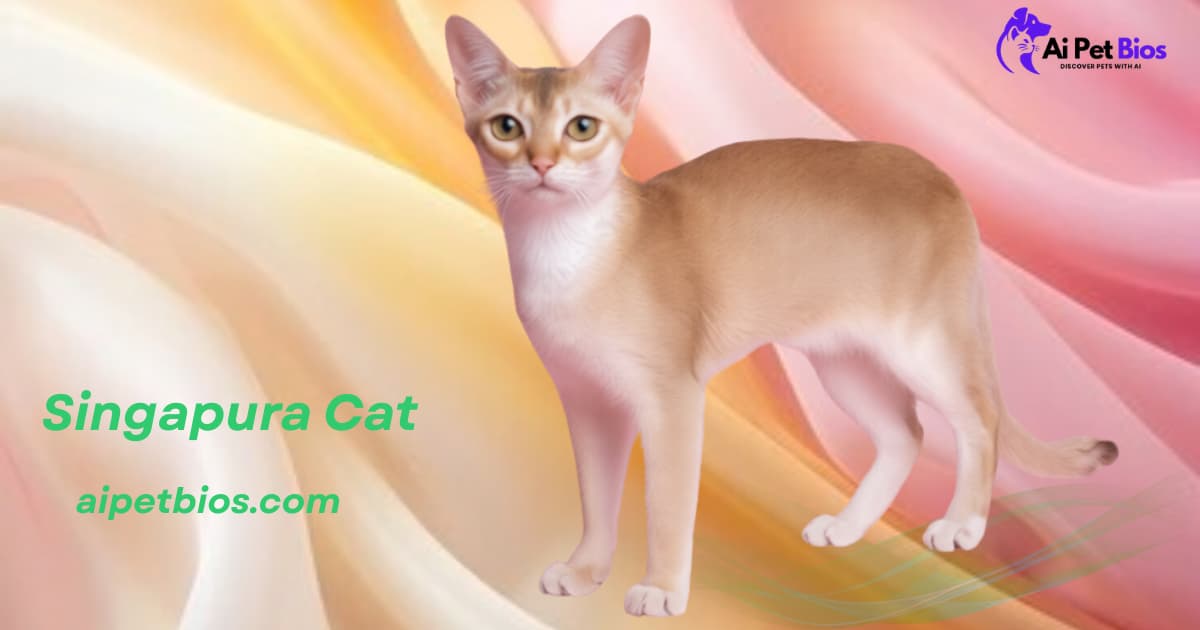
When people ask, “What is a singapura cat?” they’re often surprised to learn it’s not a miniature version of another breed—it’s a legitimate, fully-formed feline that happens to be the smallest domestic cat in the world. Despite their petite size, Singapura cats pack remarkable personality, intelligence, and affection into their tiny frames, making them increasingly popular among cat lovers seeking something truly unique.
This comprehensive guide explores everything you need to know about singapura kitten ownership, singapura price expectations, and why these remarkable creatures might be perfect for your household.
7 Essential Facts About the Singapura Cat
Before diving into comprehensive details, here are seven critical facts that define what makes the Singapura breed so extraordinary and unique:
Fact #1: World’s Smallest Domestic Cat Breed
These cats are officially recognized as the smallest domestic cat breed, weighing only 4–8 pounds and standing just 6–8 inches at the shoulder. This exceptional smallness isn’t a genetic defect—it’s a deliberate, carefully maintained breed characteristic that makes them distinctly different from all other domestic cats.
Fact #2: Originated from Singapore’s Streets
The breed’s fascinating history began in 1970s Singapore, where these tiny cats lived as street animals in drainage systems. American breeder Hal Hafner brought several back to the United States, establishing the foundation for today’s singapura cat breed. By 1982, they received official championship status from TICA and CFA.
Fact #3: Exceptionally Affectionate and People-Oriented
Unlike independent cat breeds, cats are among the most people-oriented felines, actively seeking human interaction, following owners room-to-room, and becoming distressed without regular companionship. They’re not suitable for homes with absent owners or limited human interaction.
Fact #4: High Intelligence and Trainability
Singapura cats possess remarkable intelligence comparable to dogs. They can learn to walk on leashes, play fetch, respond to voice commands, and master complex puzzle toys. This intelligence makes them exceptionally trainable but also means they can open cabinets and manipulate household objects.
Fact #5: Sepia Agouti is the Only Accepted Color
All purebred Singapura cats display exclusively sepia agouti coloring—warm, peachy-brown with darker ticking. Singapura cat white, singapura cat orange, and singapura cat black variations do not exist within breed standards. Any cat displaying other colors is not recognized as a purebred cat.
Fact #6: Premium Pricing and Extreme Rarity
Singapura cat price ranges from $600–$2,000+ for breeder kittens, with show-quality singapura kittens costing significantly more. This rarity reflects only a small number of certified breeders worldwide, long waiting lists, and limited singapura kittens for sale. Availability remains a significant challenge.
Fact #7: Long Lifespan with High Care Requirements
Singapura cat lifespan averages 12–15 years, with many living longer with proper care. However, their extreme social needs, special nutritional requirements for their small size, and demand for daily enrichment make them high-maintenance companions requiring committed, active owners.
Quick Facts Table: Singapura Cat at a Glance
| Attribute | Details |
| Scientific Classification | Felis catus (domestic variant) |
| Origin | Singapore (street cats domesticated 1970s) |
| Size | 6–8 inches tall; 5.5–8 inches long |
| Weight Range | 4–8 lbs (exceptionally lightweight) |
| Life Expectancy | 12–15 years (often longer with proper care) |
| Coat Type | Short, silky, single-layered |
| Coat Color | Sepia agouti only (warm brown with ticking) |
| Eye Color | Amber to hazel |
| Temperament | Highly affectionate, social, playful, vocal |
| Activity Level | Very high; requires significant interaction |
| Ideal Home Environment | Indoor; active households |
Introduction: The Extraordinary Story of Earth’s Tiniest House Cat
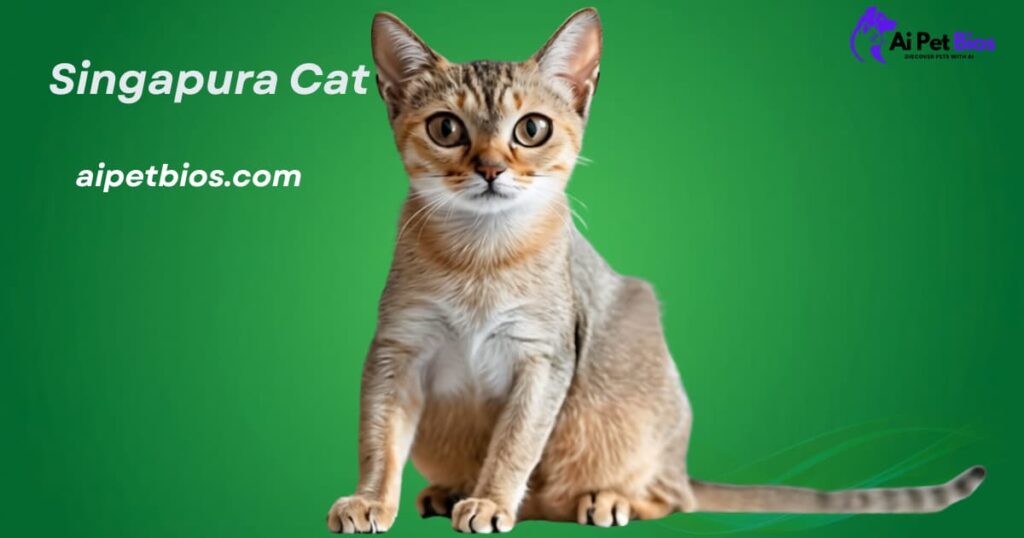
Before 1970, the singapura existed primarily on the streets of Singapore, living as feral or semi-domestic animals with no formal recognition. Local residents called them “drain cats” because they often nested in drainage systems throughout the city. This changed when American breeder Hal Hafner and his wife Tommie traveled to Singapore and were captivated by these miniature felines.
They brought several back to the United States, where dedicated breeders began documenting the breed’s characteristics and establishing breeding standards. By 1982, the singapura cat breed received championship status from The International Cat Association (TICA), followed by recognition from the Cat Fanciers’ Association (CFA).
Today, the Singapura is recognized worldwide as an extraordinary breed that defies the assumption that smaller pets are less engaging or affectionate. Their remarkable journey from street cat to internationally celebrated companion animal is a testament to selective breeding and the power of recognizing untapped potential.
Origin and Background: From Singapore’s Streets to Your Home
The Cultural Context
Singapore’s warm, humid tropical climate created ideal conditions for small, efficient predators. these developed their compact size and short coats as natural adaptations to this environment. Their small stature made them excellent hunters of insects and small rodents, while their short coat minimized heat retention in the tropical heat.
Formal Recognition and Breeding Standards
The breed’s formalization happened remarkably quickly once introduced to Western breeders. Breed clubs established specific standards emphasizing:
- Extremely small, delicate frame
- Distinctive sepia agouti coloring
- Large, expressive amber eyes
- Sweet, innocent facial expression
- Affectionate, people-oriented temperament
These standards remain virtually unchanged since the breed’s official recognition, demonstrating the stability and consistency of the genetic foundation.
Core Characteristics: Understanding the Singapura Cat’s Unique Physical Profile
Singapura Cat Size: The World’s Tiniest Domestic Feline
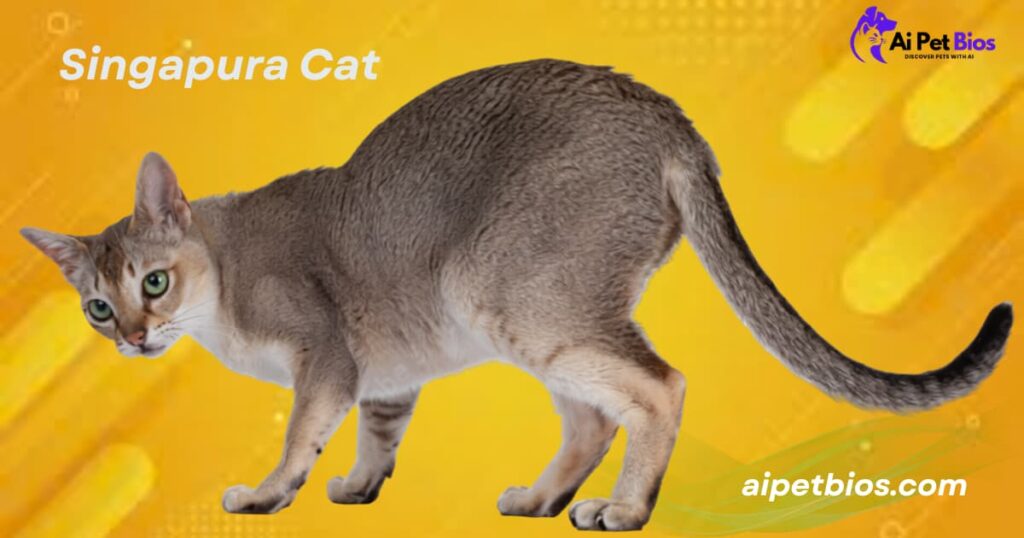
When discussing singapura cat size, superlatives become unavoidable. These cats consistently rank as the smallest domestic breed, and by a significant margin. An adult Singapura typically stands only 6–8 inches at the shoulder—roughly the height of a standard coffee mug.
Their body length, excluding the tail, measures approximately 5.5–8 inches. The tail, proportionally longer than many breeds, adds balance to their delicate frame. Most people can hold an adult Singapura comfortably in both hands, and many can manage with just one.
This extreme smallness isn’t dwarfism or a genetic defect—it’s a deliberate, carefully maintained breed characteristic. Every aspect of their physiology is proportional; they’re simply tiny, perfectly-formed cats.
Singapura Cat Weight: Surprisingly Substantial Despite Minimal Size
Despite their appearance, singapura cat weight presents an interesting reality. While these cats are extraordinarily small, they’re densely muscled and surprisingly heavy for their size. Most adults weigh 4–8 pounds, with females typically occupying the lower end of this range.
Newborn singapura kittens weigh approximately 2–3 pounds at 8 weeks old. By 12 weeks, they’ve typically grown to 3.5–4.5 pounds. They reach full maturity around 18–24 months, at which point their weight stabilizes within the breed standard.
Important Note: A healthy Singapura cat weight should feel firm and muscular. Their small frame can make them appear delicate, but proper nutrition is essential to maintain muscle tone and prevent obesity—which, even in small cats, creates serious health consequences.
Singapura Cat Colors: Sepia Agouti as the Only Standard
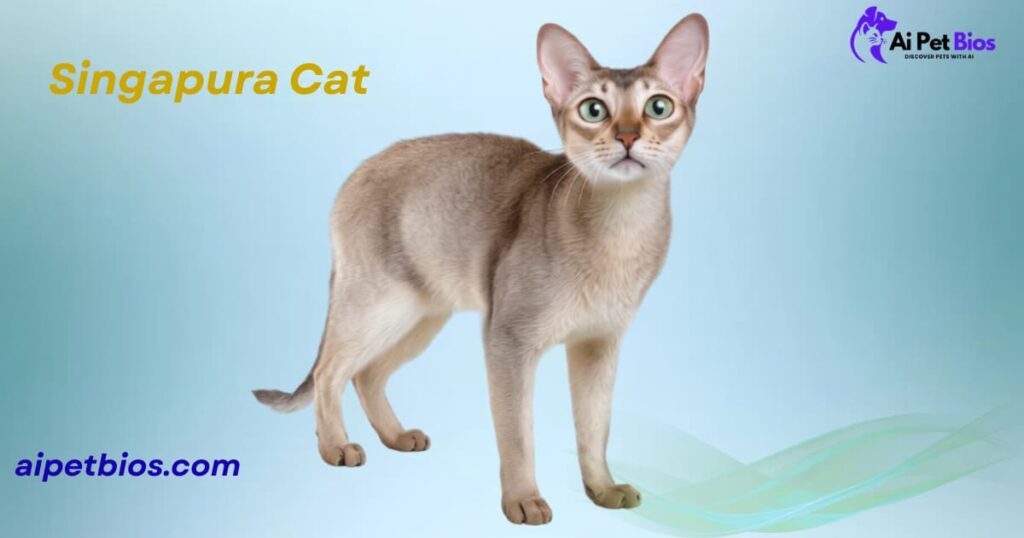
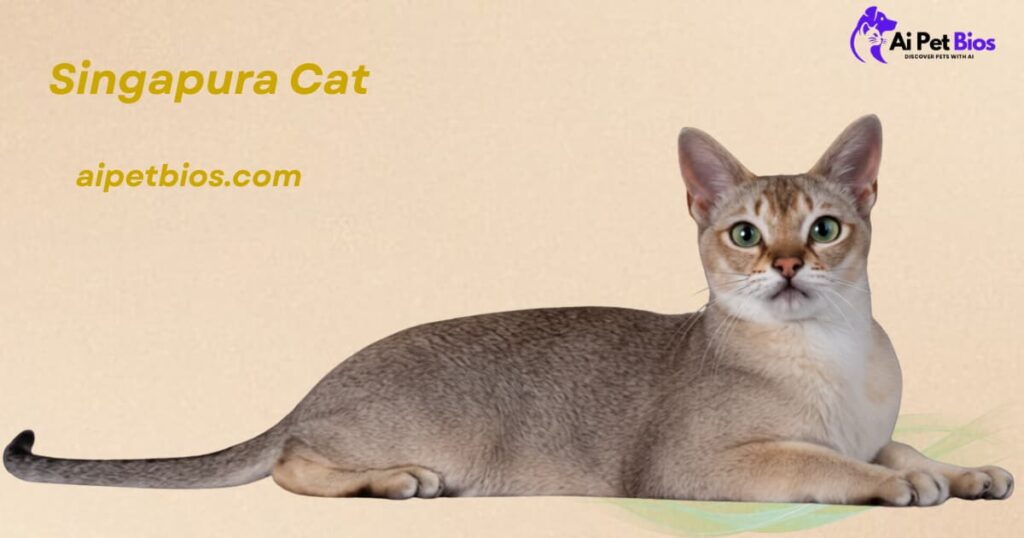
One of the breed’s most distinctive features is its singular accepted coloration. Unlike most breeds that come in multiple colors, singapura cat colors are limited to one: sepia agouti.
This coloring combines:
- Warm, peachy-cream base coat
- Dark brown ticking throughout (sparse guard hairs with darker pigmentation)
- Subtle stripes on the legs and tail
- Warm ivory chest and belly
The sepia agouti pattern creates a sophisticated, understated elegance that becomes more apparent under sunlight.
Singapura cat white, singapura cat orange, and singapura cat black variations do not exist within breed standards. Any cat displaying these colors, despite other Singapura characteristics, would not be recognized as a purebred singapura cat by major cat associations.
Personality and Temperament: Understanding the Singapura Soul
The Social Butterfly Phenomenon
These are renowned for being among the most people-oriented of all cat breeds. Unlike independent cats that appreciate their owners but don’t require constant interaction, Singapura cats actively crave human companionship and involvement in daily activities.
These cats:
- Follow their owners from room to room
- Greet visitors enthusiastically
- Become distressed if left alone for extended periods
- Communicate through frequent, varied vocalizations (chirps, trills, meows)
- Seek constant physical contact (sitting on laps, sleeping in bed)
- Participate actively in household activities
This people-orientation makes Singapura excellent for families, but potentially problematic for owners who work long hours or travel frequently.
Intelligence and Trainability
Singapura cat personality includes notable intelligence that exceeds many dog breeds. These cats can:
- Learn to walk on harnesses and leashes
- Play fetch and retrieve objects
- Respond to voice commands
- Master complex puzzle toys
- Understand household routines
- Open cabinets and doors (potentially problematic)
Early socialization and consistent training leverage this intelligence to create well-behaved, obedient companions.
Activity Levels and Play Requirements
Despite their small size, Singapura cats possess energy levels rivaling much larger breeds. They require:
- 3-4 interactive play sessions daily (minimum 15 minutes each)
- Complex enrichment toys and climbing structures
- Window perches for bird watching
- Rotating toy variety to prevent boredom
- Mental stimulation through puzzle feeders and hide-and-seek games
Insufficient exercise and enrichment lead to behavioral problems including destructiveness, excessive vocalization, and aggression.
Singapura Cat Lifespan: How Long Do These Tiny Companions Live?
Singapura cat lifespan is among the longest in the feline world. With proper care, these cats typically live 12–15 years, with many reaching 16–18 years or beyond.
Factors extending lifespan include:
- Indoor living (protects from accidents, diseases, predators)
- Regular veterinary care (preventative screening, timely intervention)
- Proper nutrition (high-quality cat food appropriate to size)
- Adequate exercise and enrichment (maintains physical and mental health)
- Stress-free environment (minimizes health-compromising tension)
- Early detection of health issues (enables early treatment)
The extended lifespan represents a significant long-term commitment—bringing home a Singapura kitten means a 15+ year partnership.
Cost and Investment: Understanding Singapura Cat Price
How Much Does a Singapura Cat Cost?
Singapura cat price varies considerably based on breeder reputation, bloodline quality, and geographic location.
Typical Pricing Breakdown:
- Standard breeder kittens: $600–$1,200
- Show-quality kittens: $1,200–$2,000+
- Championship bloodline kittens: $2,000–$3,500+
- Rescue/adoption: $50–$300
Factors Influencing Singapura Cat Price
| Factor | Impact |
| Breeder reputation | Established breeders charge premium prices |
| Bloodline/pedigree | Championship ancestry increases cost |
| Health testing | Genetic screening and certifications add value |
| Geographic location | Urban areas command higher prices than rural regions |
| Show potential | Kittens bred for showing cost more |
| Demand and availability | Limited breeders = higher prices |
| Inclusions | Registration, initial vaccinations, spay/neuter affect pricing |
Beyond Purchase: Lifetime Cost Considerations
Purchasing a Singapura kitten is only the initial investment. Budget for:
- Veterinary care: $500–$1,000 annually
- Food and supplies: $300–$600 annually
- Toys and enrichment: $200–$400 annually
- Emergency care: $2,000–$5,000 (one-time, unpredictable)
- Total 15-year investment: $10,000–$25,000+
Maintenance and Care: Creating an Environment Where Your Singapura Thrives
Nutritional Requirements for Tiny Cats
Singapura cats require specifically formulated nutrition reflecting their small size and high metabolism. They need:
- Protein: 30–40% of diet
- Portion control: Often 1/4–1/2 standard cat portions
- Meal frequency: 2–3 meals daily (prevents hypoglycemia)
- Food type: High-quality wet and dry food combination
Creating Optimal Living Spaces
Despite their size, Singapura cats need substantial environmental enrichment:
Essential Items:
- Multi-level cat trees (vertical space is critical)
- Window perches for bird watching
- Interactive toys (feather wands, laser pointers, balls)
- Puzzle feeders
- Hideaways and enclosed spaces
- Scratching posts
Health Maintenance
Regular Care Includes:
- Veterinary check-ups: annually (twice yearly for seniors)
- Dental care: professional cleaning as recommended
- Nail trimming: every 2–3 weeks
- Ear cleaning: weekly inspection
- Parasite prevention: monthly (flea, tick, heartworm)
- Genetic screening: before breeding (ethical responsibility)
Common Singapura Cat Health Considerations
While generally healthy, be aware of:
- Pyruvate Kinase (PK) deficiency: Genetic blood disorder (reputable breeders screen for this)
- Patellar luxation: Knee joint instability
- Hypertrophic cardiomyopathy: Heart condition (rare)
- Regular checkups enable early detection and intervention
Common Concerns and Misconceptions About Singapura Cats
“They’re too delicate to handle safely”
Reality: While small, Singapura cats are sturdy and resilient. Their tiny size doesn’t increase injury risk if handled appropriately. However, supervise interactions with very young children who might accidentally hurt them through rough play.
“They’ll get lost in the house”
Reality: Despite their size, Singapura cats are excellent at navigating household spaces and finding their owners. Their intelligence helps them learn household layouts quickly.
“They require special, expensive food”
Reality: Singapura cats eat standard cat food, simply in smaller portions. High-quality brands designed for all cats work perfectly.
“They need constant attention or become destructive”
Reality: While social, Singapura cats can entertain themselves with proper enrichment. However, they do suffer from extended alone time (6+ hours daily) and may develop behavioral issues. They’re best suited to homes with available people.
Comparison Section: Singapura Cats vs. Other Small Breeds
Singapura Cat vs. Domestic Shorthair
| Aspect | Singapura | Domestic Shorthair |
| Size | Extremely small (4–8 lbs) | Variable (8–12 lbs average) |
| Personality | Highly social, people-dependent | Varies by individual |
| Lifespan | 12–15 years | 12–18 years |
| Cost | $600–$2,000+ | Free to $200 |
| Special care | Moderate | Minimal |
Singapura Cat vs. Other Small Breeds
Cornish Rex and Devon Rex offer similar size and playfulness but have distinctive curly coats requiring different maintenance. Munchkin cats are small but have genetic health concerns not present in Singapura cats.
The singapura cat breed stands unique in combining extreme smallness with excellent health genetics and people-oriented temperament.
Pros and Cons: Is a Singapura Cat Right for You?
✅ Advantages
| Benefit | Why It Matters |
| Minimal physical space required | Ideal for apartments and small homes |
| Exceptional affection | Creates deep bonding with owners |
| Trainability | Can learn behaviors like dogs |
| Long lifespan | 12–15+ years of companionship |
| Low shedding | Easier maintenance than longer-haired breeds |
| Portability | Easy to transport, travel with |
| Unique appearance | Conversation starter, distinctive look |
❌ Disadvantages
| Challenge | Why It Matters |
| High social demands | Requires constant human interaction |
| Cannot be left alone | Problematic for full-time workers |
| Expensive to purchase | High initial investment ($600–$2,000+) |
| Limited breeder availability | May require travel or extended waits |
| Special nutritional needs | Portion control is critical |
| Fragility perception | Requires careful handling supervision |
| Vocal nature | Some owners find constant meowing annoying |
| Rarity | Fewer vets fully familiar with breed |
Quick Answer Sections
What is a Singapura Cat?
A Singapura cat is the world’s smallest domestic cat breed, originating from Singapore’s streets. These affectionate, highly social felines weigh 4–8 pounds and typically live 12–15 years. Known for intelligence, trainability, and people-oriented personalities, Singapura cats form exceptionally strong bonds with their owners but require substantial daily interaction and enrichment to thrive.
Are Singapura Cats Rare?
Yes, Singapura cats are extremely rare. Only a small number of reputable breeders specialize in this breed worldwide. This rarity drives higher prices ($600–$2,000+) and often results in waiting lists for available singapura kittens. The limited gene pool, while carefully managed, means fewer cats are available for purchase or adoption compared to mainstream breeds.
Which Cat Stays the Smallest?
The Singapura cat claims the title of world’s smallest domestic cat breed. Adults typically weigh 4–8 pounds and stand 6–8 inches at the shoulder. Even newborn singapura kittens are exceptionally tiny, weighing only 2–3 pounds at 8 weeks old. Their small size is not dwarfism but a carefully maintained breed standard.
Buying Guide: Where to Find Singapura Cats
Where Can I Buy a Singapura Cat?
Reputable Breeders: Finding reputable singapura cat breeders usa requires research. Seek breeders who:
- Hold membership in breed clubs (CFA, TICA affiliations)
- Provide health testing documentation
- Allow facility visits and breeder communication
- Offer written contracts and health guarantees
- Include spay/neuter requirements in agreements
Singapura Cat for Sale Near Me vs. Nationwide Search
Most people cannot find singapura cat for sale near me locally. Most successful buyers:
- Contact breeders nationwide
- Accept 2–6 month wait lists
- Pay transportation costs ($200–$500)
- Utilize reputable pet transport services
- Or travel to pick up kittens personally
Singapura Kittens for Sale vs. Singapura Kittens for Adoption
For-Sale Channels:
- Reputable breeders: Highest quality, health testing, lifetime support
- Breed-specific rescues: Singapura kittens for adoption occasionally available, lower cost ($50–$300)
Adoption Advantages:
- Lower purchase price
- Typically already spayed/neutered
- Known health and behavioral history
- Rescue organizations provide ongoing support
Red Flags When Seeking Singapura Kittens for Sale Near Me
- Multiple litters constantly available → Sign of irresponsible breeding
- Prices significantly below market → Quality concerns
- No health testing documentation → Genetic risk
- Refusal to allow visits → Potential scam
- Pressure to purchase quickly → Unethical practice
- No written contract → Inadequate protections
Is a Singapura Cat Right for You? Decision Framework
Your household is ideal for a Singapura kitten if you:
✅ Work from home or have flexible schedules
✅ Want an exceptionally affectionate companion
✅ Enjoy interactive play and training
✅ Have adequate space for enrichment (despite their small size)
✅ Can afford $600–$2,000+ purchase price
✅ Budget $500–$1,500 annually for care
✅ Want a long-term commitment (12–15+ years)
✅ Live in an apartment or small home
✅ Desire a trainable, intelligent cat
Your household may not be ideal if you:
❌ Work long hours without midday visits
❌ Travel frequently
❌ Want an independent, low-maintenance cat
❌ Have limited budget for premium-priced pets
❌ Have very young children (supervision required)
❌ Cannot provide daily enrichment and interaction
❌ Have severe allergies (they still shed, despite minimal hair)
❌ Prefer quiet cats (they’re vocal)
Frequently Asked Questions: Singapura Cat Edition
How Much Does a Singapura Cat Cost in the USA?
Singapura cat price typically ranges from $600–$2,000 depending on breeder reputation and bloodline. Show-quality singapura kittens cost $1,200–$2,000+. Adoption through rescue organizations costs $50–$300. Factor in annual care costs of $500–$1,500.
Are Singapura Cats Rare?
Absolutely. Singapura cats are among the rarest domestic breeds worldwide. Only a small number of certified breeders exist, creating significant supply limitations and contributing to higher singapura cat price. This rarity makes singapura kittens for sale competitive, with waiting lists extending months.
Are Singapura Cats Good Pets for Families?
Singapura cats are excellent family companions with important caveats. Their affectionate, patient nature makes them good with children, but their social needs require present, engaged families. They struggle in households with absent owners or limited interaction. They’re best for active, home-present families.
How Big Do Singapura Cats Get?
Singapura cat size remains diminutive throughout life. Adults typically weigh 4–8 pounds and stand 6–8 inches at the shoulder. They’re 40–50% smaller than average domestic cats, making them exceptionally portable and space-efficient despite requiring psychological enrichment.
Why Is the Singapura Cat Called the Smallest Cat Breed?
The name literally describes biological reality: Singapura cats are the world’s smallest domestic cat breed. Their origin in Singapore’s tropical environment and subsequent selective breeding intentionally emphasized extremely small stature while maintaining health, robust genetics, and stable temperament.
Is the Singapura Cat Friendly?
Extraordinarily. Singapura cats are among the friendliest, most people-oriented cat breeds. They actively seek human interaction, follow owners constantly, and become distressed without regular companionship. This extreme friendliness makes them poor choices for homes without substantial human presence.
What Color Are Singapura Cats?
Singapura cat colors are limited to sepia agouti—a warm, peachy-brown coloring with darker ticking throughout. No other colors are recognized by major cat associations. Singapura cat white, black, or orange variations do not exist within breed standards.
How Long Do Singapura Cats Live?
Singapura cat lifespan averages 12–15 years, with many living 16–18 years with optimal care. Their small size, robust genetics, and people-oriented nature contribute to extended longevity compared to many larger breeds. Proper veterinary care, nutrition, and enrichment maximize lifespan.
Pros & Cons Summary Table
| Category | Pros | Cons |
| Size/Space | ✅ Minimal space needed | ❌ Fragility perception |
| Personality | ✅ Extremely affectionate | ❌ Demands constant interaction |
| Intelligence | ✅ Highly trainable | ❌ Can open cabinets/doors |
| Lifespan | ✅ 12–15+ years | ❌ Long-term commitment |
| Cost | ✅ No expensive food | ❌ High purchase price |
| Health | ✅ Generally robust | ❌ Limited vet expertise |
| Appearance | ✅ Unique, beautiful | ❌ Requires breeder search |
| Portability | ✅ Easy to transport | ❌ Requires harness training |
Conclusion: The Singapura Cat Decision
The Singapura cat represents a unique opportunity for the right owner: an extraordinarily affectionate, intelligent, portable companion that maximizes personality while minimizing space requirements. Their exceptional beauty, combined with intelligence and trainability, makes them compelling for cat enthusiasts seeking something distinctly different.
However, Singapura cats are not casual pets. They demand active, present owners willing to provide substantial daily interaction, enrichment, and financial investment. The $600–$2,000 purchase price represents merely the beginning of a 15-year commitment involving regular veterinary care, specialized nutrition, and consistent engagement.
Success with a Singapura kitten requires:
- Working from home or having flexible schedules
- Budget for premium pet ownership ($500–$1,500 annually)
- Commitment to enrichment and training
- Willingness to search nationwide for reputable breeders
- Understanding their extreme social needs
For the right household—one valuing deep human-animal bonds, interactive companionship, and accepting of their vocal, attention-seeking nature—a Singapura cat becomes not just a pet, but a transformative family member capable of providing love and entertainment for 12–15+ years.
Next Steps:
- Research reputable singapura cat breeders usa through CFA and TICA websites
- Review breeder facilities and references thoroughly
- Join Singapura cat online communities to learn owner experiences
- Budget for purchase, care, and emergency veterinary expenses
- Assess your lifestyle against the breed’s social demands honestly
Your Singapura kitten is waiting—if your home and heart are ready.
Disclaimer
This article provides informational content about Singapura cats and is not a substitute for professional veterinary or behavioral advice. Cat ownership involves individual variations; consult licensed veterinarians for specific health concerns, genetic screening, or medical treatment.
Prices and breeder availability mentioned reflect 2026 market conditions and vary by location and individual circumstances. Always verify breeder credentials, health testing documentation, and contractual protections before purchase.
Courtesy: Animal Verse

Want Popular On Google? | Lust Quality Backlinks That Force-fed
I’m an SEO Expert, Guest Posting Specialist, and Web Developer helping websites increase rankings, traffic, and authority using clean, white-hat strategies 🚀
I focus on high-authority guest posts, safe backlinks, SEO-optimized content, and technically sound websites—so your site doesn’t just rank, it stays ranked.
What I help you with:
✅ SEO (On-page, Off-page & Technical)
✅ Guest Posts on Real, Relevant Sites
✅ High-Quality Link Building
✅ Keyword Research & Content Strategy
✅ SEO-Friendly Website Development
📈 No spam. No shortcuts. Only results.
👉 Need backlinks that actually work?
📩 Let’s connect: https://wa.me/+923006932631
1 thought on “Singapura Cat: 7 Essential Facts about the World’s Tiniest Feline”
Comments are closed.