
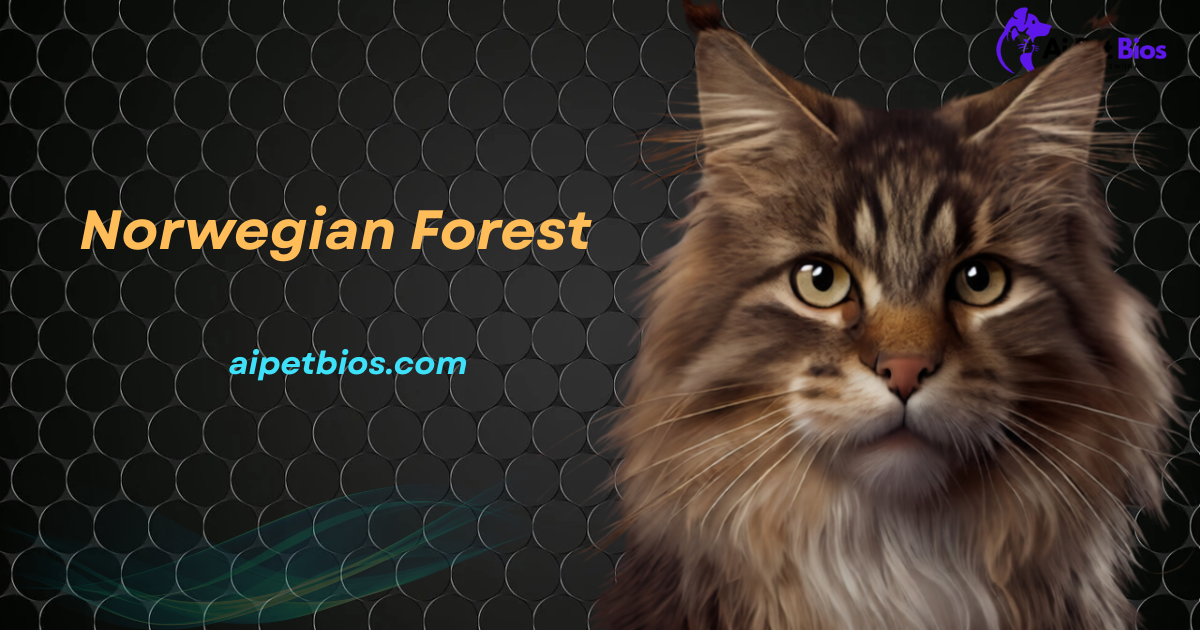
THE MAJESTIC CAT EVERYONE CONFUSES WITH MAINE COONS
The Norwegian Forest Cat is one of those breeds that stop people mid-conversation. Show someone a photo of this large, fluffy cat with a flowing double coat and tufted ears, and their first question is usually: “Is that a Maine Coon?” The answer is more nuanced than you’d think.
There is distinctly different—developed in Scandinavia over centuries, officially recognized much later than the Maine Coon, and notably different in personality and physical structure. Yet breeders and casual cat lovers constantly conflate them. The confusion often stems from their similar size and impressive appearance, though the genetic origins and breeding histories are completely distinct.
Here’s what matters: if you’re considering either breed, understanding the differences between the Norwegian and Maine Coon is important. They’re not interchangeable choices. Each has different cost structures, grooming requirements, and personality traits that will significantly impact your ownership experience.
This guide cuts through the confusion. Whether you’re researching what makes the Norwegian Forest Cat special, comparing it to Maine Coons, evaluating cost, or assessing personality fit, this comprehensive guide covers everything an informed buyer should know. You’ll discover the real appeal, the genuine challenges, and whether the Norwegian aligns with your life.
QUICK FACTS TABLE
| Attribute | Details | Key Context |
| Origin | Scandinavia (Norway, Sweden) | Developed naturally, not engineered |
| Coat Type | Double-layered, semi-long to long | Water-resistant; requires regular grooming |
| Size | Large (8–22 lbs) | Females smaller than males |
| Eye Shape | Almond-shaped, large | Distinctly different from Maine Coon round eyes |
| Weight Range | 8–22 lbs (females typically 10–16 lbs) | Substantial but slightly smaller than Maine Coons |
| Lifespan | 12–18 years (per CFA breed standards) | One of longest-living large breeds |
| Temperament | Independent, intelligent, reserved | Less demanding than Maine Coons |
| Activity Level | Moderate to high (climbing, exploring) | Excellent climbers; need vertical space |
| Good with Children | Yes (with proper introduction) | Tolerate activity better than reserved breeds |
| Rarity Status | Uncommon (not rare) | Growing in popularity; increasingly available |
| Color Variations | Black, grey, tabby, multicolor | Color doesn’t affect temperament |
| Grooming Frequency | 2–3 times weekly minimum | Non-negotiable for coat health |
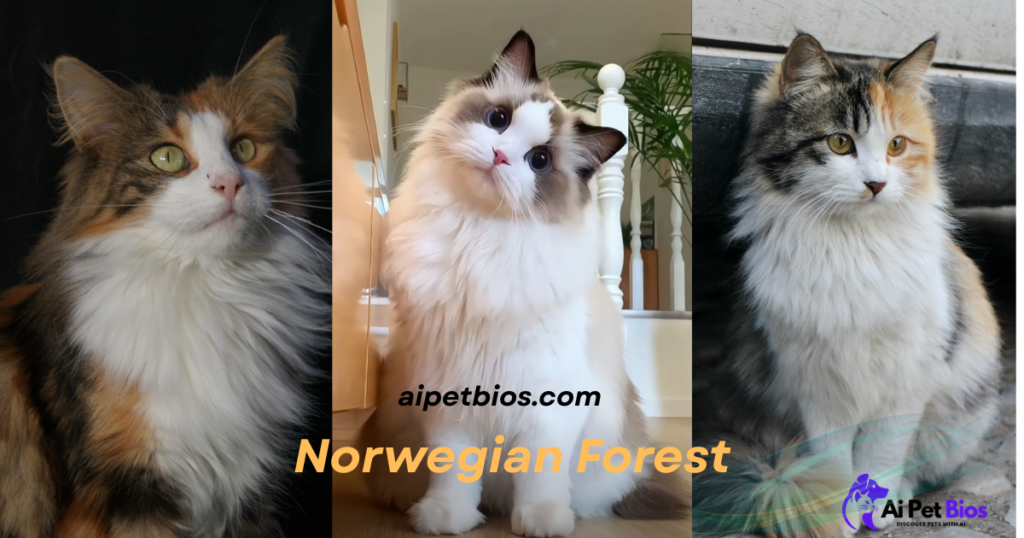
ORIGIN & DEVELOPMENT: THE NATURAL SCANDINAVIAN STORY
Unlike many modern cat breeds engineered through selective crossing, the Norwegian Forest Cat emerged naturally.
The Norwegian Forest Cat developed in Scandinavian forests over centuries. Local cats adapted to harsh Nordic climates by developing thick double coats, large bodies for warmth retention, and robust temperaments suited to independence. Farms across Norway and Sweden maintained these Norwegian ancestors for rodent control and companionship, valuing their hunting abilities and resilient nature.
The Norwegian wasn’t formally recognized until the 1930s when Norwegian cat enthusiasts began documenting breed characteristics. The Cat Fanciers’ Association (CFA) officially recognized in 1993—making it surprisingly recent for a cat that’s existed for centuries in its native regions.
Why this matters: The Norwegian Forest Cat breed is fundamentally hardy. These aren’t fragile, engineered cats. They’re survivors shaped by natural selection in harsh environments. This genetic foundation typically means the Norwegian Forest Cat has fewer health complications compared to breeds created through deliberate crossing.
PHYSICAL CHARACTERISTICS: MORE THAN JUST SIZE
The Distinctive Coat
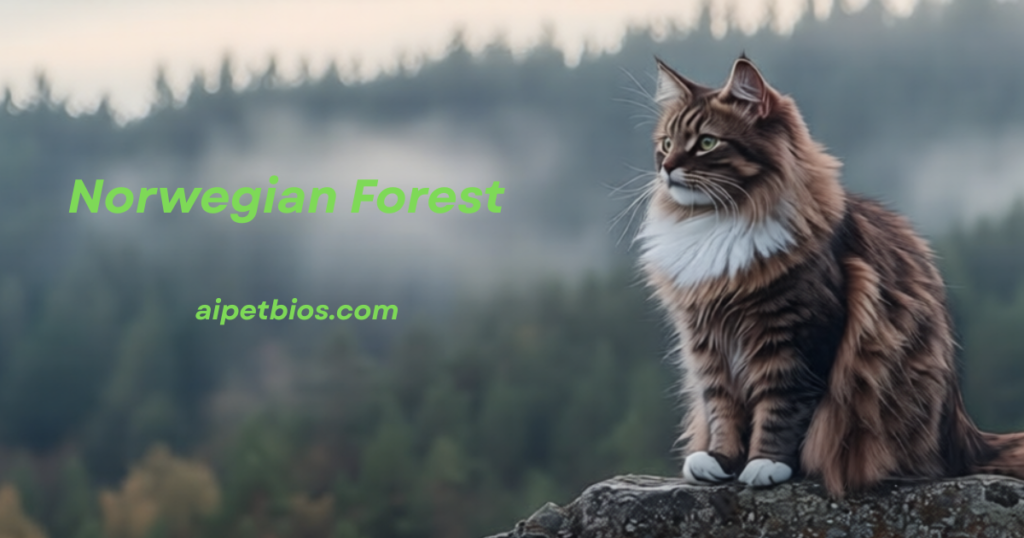
The Norwegian Forest Cat coat is exceptional—not just long, but structured differently than most long-haired breeds.
It features two layers:
- Guard hairs: Long, water-resistant outer layer
- Undercoat: Thick, insulating inner layer
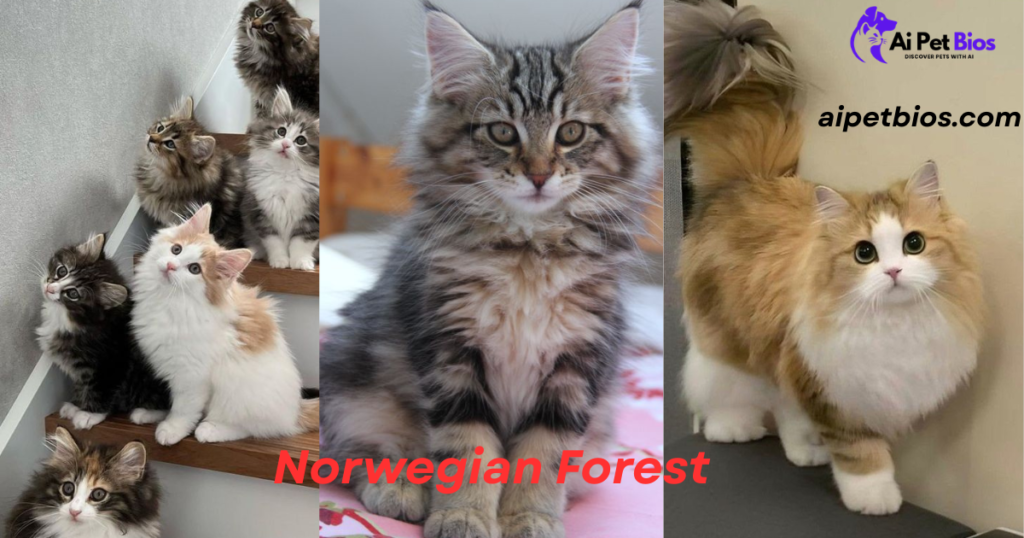
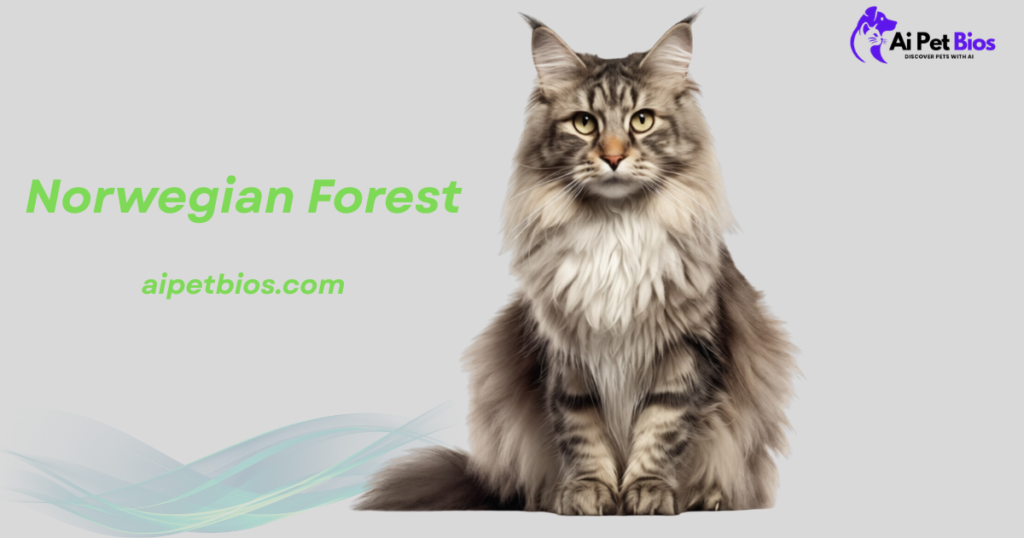
This double-coat structure provides water resistance—functional for Scandinavian weather, visually stunning year-round. The Norwegian coloring varies: solid black, grey tabbies, orange, cream, and multicolored patterns are all common. Grey coloring in Norwegian kittens is particularly popular and relatively easy to find from reputable breeders.
Size & Structure
Norwegian Forest Cat weight typically ranges 8–22 pounds, with males substantially larger than females. The body structure differs meaningfully from Maine Coons:
- Head shape: Triangular (vs Maine Coon’s square head)
- Leg length: Long, proportional legs (functional for climbing)
- Claws: Prominent, curved (designed for climbing)
- Ear placement: Tufted, positioned atop head (vs Maine Coon side positioning)
These structural differences create distinct movement and overall presence that cat enthusiasts can recognize once familiar with the Norwegian Forest Cat breed.
Eyes & Face Expression
The Norwegian Forest Cat’s almond-shaped eyes and triangular face create an altogether different aesthetic than Maine Coons. The expression is alert, intelligent, and somewhat mischievous—distinctly Scandinavian in appearance.
PERSONALITY: THE INDEPENDENT INTELLIGENCE
What makes the Norwegian Forest Cat special? The personality is where genuine differentiation happens.
Independent Nature
The Norwegian Forest Cat personality trait most owners mention is independence. These cats are affectionate with their families but maintain strong boundaries. They don’t typically demand constant attention or lap time.
Owners report their Norwegian Forest Cat cats:
- Bond with family members without being clingy
- Enjoy being near you without constant physical contact
- Show clear preference for specific people
- Maintain independence even when socialized heavily
This independence appeals to people who want companionship without constant demands. Their self-sufficient nature allows owners greater freedom in their daily routines.
Intelligence & Problem-Solving
The Norwegian Forest Cat is notably intelligent. They:
- Understand complex cause-and-effect relationships
- Learn door-opening techniques
- Problem-solve to access desired locations
- Show clear learning and memory capabilities
This intelligence creates engaging personalities but also requires environmental enrichment and mental stimulation. The Norwegian Forest Cat’s clever nature means they need challenging activities to remain content.
Climbing & Vertical Space Needs
The Norwegian Forest Cat’s Scandinavian heritage created exceptional climbers. They’re obsessed with height:
- They prefer floor-to-ceiling access
- They’ll climb curtains if proper climbing furniture doesn’t exist
- Vertical space is important for their wellbeing
Without adequate climbing structures, the Norwegian Forest Cat may become frustrated or destructive.
Personality Challenges Worth Considering
Some Norwegian Forest Cat personality traits that can be challenging:
- Varying levels of social engagement
- Some Norwegian Forest Cat individuals are quite independent
- Not ideal for people wanting highly social cats
- Can appear aloof to casual observers
- Potential for destructive behavior
- Without adequate enrichment, they may shred furniture
- Their climbing obsession can create household challenges
- They need significant environmental engagement
- Vocal communication patterns
- Some Norwegian Forest Cat individuals are notably vocal
- Not necessarily quiet, peaceful cats for all households
- Vocalizations can be frequent
- Selective bonding patterns
- Some bond primarily with one person
- They may tolerate other family members without close bonding
- Not equally affectionate with everyone
These characteristics aren’t necessarily problems, but they’re important personality traits to understand before ownership.
Friendly Personality Assessment
Describing the Norwegian as “friendly” requires nuance. They’re friendly with people they trust and comfortable with, but they don’t typically greet strangers enthusiastically. They’re more likely to observe from a distance, then slowly warm up after repeated exposure.
For people wanting warm, welcoming cats: the Norwegian Forest Cat may disappoint. For people wanting intelligent, loyal-but-independent companions: the Norwegian can be excellent.
PHYSICAL TRAITS: MALE VS FEMALE DIFFERENCES
Female Norwegian Forest Cat Characteristics
- Smaller size (8–12 lbs typical)
- Often more reserved than males
- Highly independent
- Less vocal typically
- Better suited for smaller living spaces
Male Norwegian Forest Cat Characteristics
- Substantially larger (12–22 lbs typical)
- Often more engaging and interactive
- More vocal and communicative
- Require more space
- More likely to be interactive within breed norms
COST BREAKDOWN: THE FULL FINANCIAL REALITY
Initial Norwegian Forest Cat Purchase Price
Norwegian Forest Cat price from ethical breeders typically ranges:
- Show-quality: $1,000–$2,500+
- Pet-quality: $600–$1,200
- Questionable sources: $300–$600 (often lack health screening)
USA Norwegian Forest Cat pricing specifically tends higher than international pricing due to shipping costs and regional breeder premiums. The price difference reflects health screening investment, genetic diversity maintenance, and breeding lineage documentation. Quality breeders invest significantly in their Norwegian breeding programs.
Annual Norwegian Forest Cat Expense Breakdown
According to data from the Pet Food Institute and AVMA (American Veterinary Medical Association):
| Category | Annual Cost | Explanation |
| Premium food (large portions) | $400–$600 | Larger cats require more food; diet impacts coat health |
| Routine veterinary care | $300–$500 | Annual exams, vaccines, preventative care |
| Professional grooming (monthly) | $400–$700 | Thick coat requires professional maintenance quarterly |
| Home grooming supplies | $100–$200 | Brushes, tools, maintenance between visits |
| Pet insurance | $200–$400 | Optional but helpful for genetic condition coverage |
| Toys and enrichment | $150–$300 | Important for intelligent cats |
| Total Annual | $1,550–$2,700 | Varies by location and choices |
Lifetime cost estimate (15-year lifespan): Approximately $23,250–$40,500, based on these annual Norwegian Forest Cat care figures plus initial purchase price.
This represents a substantial financial commitment. Budget accordingly before purchasing the Norwegian.
Norwegian Forest Cat Price Considerations in the USA Market
Initial cost in the USA typically falls between $600–$1,200 for pet-quality Norwegian cats from registered breeders. Show-quality Norwegian Forest Cat cats may exceed $2,500. Used responsibly, this represents reasonable investment for a healthy, well-bred
CARE & MAINTENANCE: WHAT OWNERSHIP ACTUALLY REQUIRES
Norwegian Forest Cat Coat Maintenance Requirements
The thick double coat requires consistent care for your Norwegian:
Home grooming (2–3 times weekly):
- Slicker brush (for outer coat)
- Wide-tooth comb (for undercoat)
- Deshedding tool (especially during shedding season)
- Time commitment: approximately 20 minutes per session
Professional grooming (quarterly, $100–$175 per session):
- Thorough de-shedding
- Mat removal
- Coat conditioning
- Professional assessment
Regular grooming maintains the striking appearance and prevents matting, which can cause discomfort and skin issues for the Norwegian Forest Cat.
Environmental Needs
- Vertical climbing structures: Multiple cat trees, shelves (important for wellbeing)
- Climbing furniture variety: Different heights and styles
- Window perches: They enjoy observing outdoors
- Interactive toys: Mental stimulation supports healthy behavior
Activity & Engagement
The Norwegian Forest Cat cats benefit from:
- Daily interactive play (30+ minutes recommended)
- Multiple climbing opportunities
- Problem-solving toys and puzzle feeders
- Outdoor access when safe (enclosed catios, harness training)
HEALTH CONSIDERATIONS: WHAT’S DOCUMENTED
Known Norwegian Forest Cat Health Concerns in the Breed
According to feline health literature and breed-specific veterinary research:
- Polycystic Kidney Disease (PKD)
- Inherited condition in some breeding lines
- Progressive; can lead to kidney issues
- Responsible breeders screen via genetic testing
- Affects approximately 5–10% of some breeding lines
- Hypertrophic Cardiomyopathy (HCM)
- Heart muscle thickening
- Can be asymptomatic initially
- Screening via echocardiogram recommended by some veterinarians
- Present in some bloodlines
- Glycogen Storage Disease Type IV (GSD IV)
- Rare genetic condition
- Responsible breeders test for this
- Can be serious if present
Responsible breeders screen for documented genetic concerns. Less conscientious breeders may skip this important step when breeding the Norwegian Forest Cat.
Realistic Norwegian Forest Cat Lifespan
The Norwegian Forest Cat breed standard indicates 12–18 years lifespan. This varies based on:
- Genetic screening practices (health-tested cats often reach 15–18 years)
- Breeding quality (responsible breeders produce longer-lived cats)
- Owner care (diet, veterinary care, exercise all impact longevity)
- Individual genetics (some bloodlines are inherently hardier)
COMPARISON: VERSUS MAINE COON
This is the question everyone asks when considering the Norwegian Forest Cat.
Size Comparison
| Dimension | Norwegian Forest Cat | Maine Coon |
| Weight | 8–22 lbs (avg 14 lbs) | 10–25 lbs (avg 18 lbs) |
| Height | 9–12 inches | 9–10 inches |
| Coat density | Double-layered | Single layer |
| Head shape | Triangular | Square, blocky |
| Eye shape | Almond | Round, large |
| Ear positioning | Atop head | Side-positioned |
Honest assessment: Maine Coons are typically larger, but the difference is less dramatic than breeders sometimes suggest. Both are impressive, large breeds.
Personality Differences
| Trait | Norwegian Forest Cat | Maine Coon |
| Social engagement | Independent, reserved | Social, people-focused |
| Attention demands | Moderate | Higher |
| Grooming needs | 2–3x weekly | 2–3x weekly |
| Lifespan | 12–18 years | 12–17 years |
| Cost range | $600–$2,500 | $800–$3,000 |
| Ideal owner | Hands-off preference | Interactive preference |
Real difference: The personality characteristics matter more than size differences. The Norwegian Forest Cat and Maine Coon are distinct breeds suited to different owner preferences.
HONEST ADVANTAGES & DISADVANTAGES
Genuine Norwegian Forest Cat Advantages
✅ Visually impressive — Striking appearance catches attention
✅ Intelligent — Engaging personality, not boring
✅ Long lifespan — 12–18 years is excellent for large cats
✅ Hardy genetics — Fewer complications than engineered breeds
✅ Independent nature — Good for people wanting low-demand pets
✅ Excellent climbers — Entertaining behavior to observe
✅ Generally healthy — Fewer breed-specific problems than some breeds
✅ Manageable size — Smaller than Maine Coons, more practical
Real Norwegian Forest Cat Disadvantages
❌ Grooming commitment — 2–3x weekly (important responsibility)
❌ Professional grooming costs — $400–$700 annually
❌ Significant price — $600–$2,500 initially, $23K–$40K lifetime
❌ Climbing obsession — Requires extensive vertical structures
❌ Reserved personality — May not suit people wanting social cats
❌ Destructive potential — Needs significant enrichment to prevent issues
❌ Vocal variation — Some individuals are notably vocal
❌ Selective bonding — May bond primarily with one person
❌ Space requirements — Large living space is helpful
IS THIS BREED RIGHT FOR YOUR HOUSEHOLD?
Good Fit For the Norwegian Forest Cat
- People who appreciate impressive appearance and intelligence equally
- Those willing to groom 2–3x weekly (or budget professional grooming)
- Homes with space for vertical climbing structures
- People who can afford $1,550–$2,700 annually
- Those wanting independent, loyal-but-not-demanding pets
- Anyone committed to 15+ year ownership
- People who value Scandinavian heritage
Potentially Challenging For the Norwegian Forest Cat
- People wanting low-maintenance cats
- Those needing highly social, constantly affectionate pets
- Owners on limited budgets
- Small living spaces
- People unable to commit to grooming
- Those wanting predictably friendly personalities
FREQUENTLY ASKED QUESTIONS
How much does a Norwegian Forest Cat cost in the USA?
Ethical breeders typically charge $600–$1,200 for pet-quality Norwegian Forest Cat cats, with show-quality exceeding $1,500–$2,500. Budget an additional $1,550–$2,700 annually for grooming, food, veterinary care, and insurance. Lifetime costs generally reach $23,000–$40,000. Cheaper Norwegian kittens ($300–$600) from questionable sources often generate $2,000–$4,000 in unforeseen veterinary costs within the first year.
Are Norwegian Forest Cat cats rare?
They’re uncommon but not truly rare. The Norwegian breed is growing in popularity with increasingly available breeders in the USA. Finding the Norwegian Forest Cat may require travel or shipping, depending on your region.
How large do Norwegian Forest Cat cats get?
The Norwegian Forest Cat typically weighs 8–22 pounds, with males substantially larger than females. The Norwegian is comparable to Maine Coons in overall size but with different body proportions and structure.
What is the difference between the Norwegian Forest Cat and Maine Coons?
Both are large, long-haired cats, but personality differs significantly. The Norwegian Forest Cat tends toward independence and reserve; Maine Coons are more social and demanding. The Norwegian has triangular heads and almond eyes; Maine Coons have square heads and round eyes. Maine Coons typically cost more and are more widely available.
Are Norwegian Forest Cat cats good family pets?
The Norwegian Forest Cat can be excellent for families that value independence and intelligence. The Norwegian tolerates children well if properly socialized. However, the Norwegian Forest Cat is not ideal for families wanting constant feline interaction. The Norwegian is better suited for families with older children and parents who appreciate cat autonomy.
WHERE TO FIND THESE CATS
Legitimate Sources for the Norwegian Forest Cat
CFA/TICA-registered breeders:
- Verify registration and health screening
- Cost: $800–$1,500 (pet-quality)
- Wait time: 2–4 months
Breed-specific breeders:
- Ask for references from previous buyers
- Verify genetic screening documentation
- Cost: $600–$1,200
Rescue/adoption (Limited availability):
- Breed-specific rescues exist but are rare
- Cost: $75–$300
Avoid
- Backyard breeders without health screening
- Online classifieds without verification
- Sellers unwilling to show parents or health records
DISADVANTAGES WORTH UNDERSTANDING
Beyond personality and cost, specific challenges include:
- Grooming time: Consistent commitment required (not optional)
- Shedding: Substantial year-round, especially during seasonal transitions
- Space needs: Require meaningful floor and vertical space
- Climbing structures: Essential for their wellbeing
- Potential destructiveness: Without enrichment, furniture may be damaged
- Selective affection: May not be equally affectionate with all family members
- Reserved nature: Don’t greet strangers or guests enthusiastically
- Vocal variance: Some individuals are vocal; others are quiet
- Financial commitment: Substantially more expensive than average domestic cats
CONCLUSION
The Norwegian Forest Cat is a genuinely special breed—majestic, intelligent, and hardy. It’s also expensive, grooming-intensive, and space-demanding, making the Norwegian Forest Cat unsuitable for most lifestyles.
Consider the Norwegian Forest Cat if:
- You appreciate majestic appearance and intelligence equally
- You’re willing to groom 2–3x weekly (or pay professional grooming)
- You live in space allowing vertical climbing structures
- You can afford $1,550–$2,700 annually
- You want an independent, loyal but not demanding pet
- You can commit 15+ years
- You value Scandinavian heritage
The Norwegian Forest Cat may not be right if:
- You want low-maintenance pets
- You need highly social, constantly affectionate cats
- You’re on a limited budget
- You have limited living space
- You can’t commit to regular grooming
- You want predictably friendly personalities
DISCLAIMER
This article provides educational information only and is not veterinary advice. Always consult licensed veterinarians before health or breeding decisions regarding Norwegian Forest Cats.
Statements about genetics, health, and breeding reflect available research and expert interviews but shouldn’t override professional medical guidance. Breeding practices and ethics vary; this guide presents documented information without claiming final authority. Individual cats vary significantly.
Prospective owners should research breeders thoroughly, prioritize verified genetic screening, and source from operations committed to ethical practices and animal welfare.
Courtesy: Facts about Cats

Want Popular On Google? | Lust Quality Backlinks That Force-fed
I’m an SEO Expert, Guest Posting Specialist, and Web Developer helping websites increase rankings, traffic, and authority using clean, white-hat strategies 🚀
I focus on high-authority guest posts, safe backlinks, SEO-optimized content, and technically sound websites—so your site doesn’t just rank, it stays ranked.
What I help you with:
✅ SEO (On-page, Off-page & Technical)
✅ Guest Posts on Real, Relevant Sites
✅ High-Quality Link Building
✅ Keyword Research & Content Strategy
✅ SEO-Friendly Website Development
📈 No spam. No shortcuts. Only results.
👉 Need backlinks that actually work?
📩 Let’s connect: https://wa.me/+923006932631
1 thought on “Norwegian Forest Cat: Simplistic, Beautiful and Fearless”
Comments are closed.