
Ready to start your journey? Explore reputable TICA breeders and prepare your home for this magnificent miniature tiger.
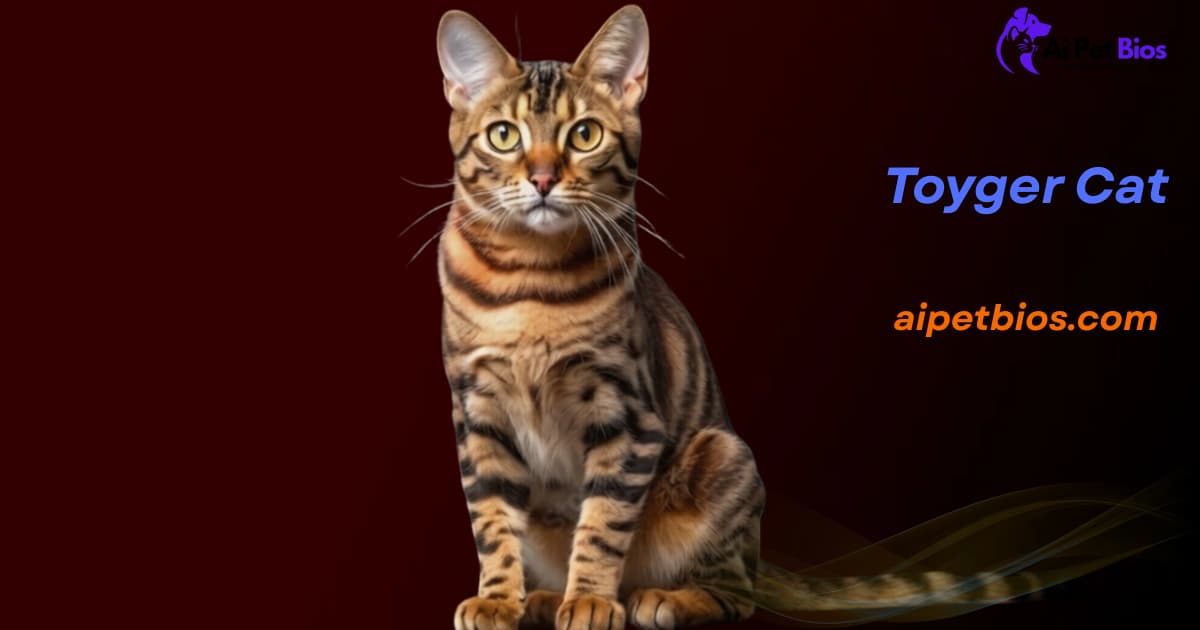
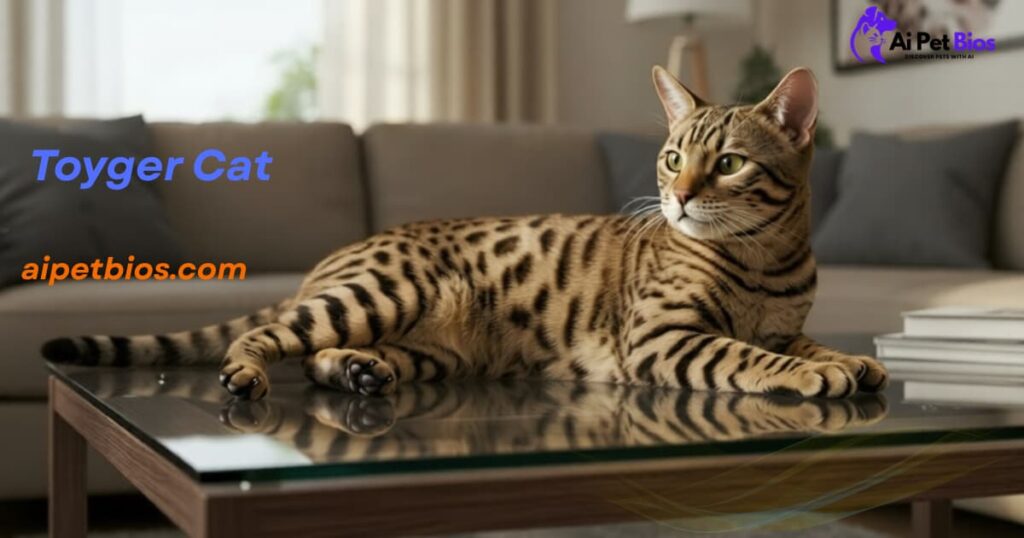
Imagine walking into a room and watching heads turn as people stare at what looks like a miniature tiger casually lounging on your sofa. There is a moment of disbelief, a double-take, and then the inevitable question: “Is that real?” That’s the kind of reaction a Toyger cat often gets. With bold vertical stripes that seem painted on by nature, a muscular, low-to-the-ground build, and a confident, rolling stride, this breed was intentionally designed to capture the majestic beauty of a wild tiger — while remaining a gentle, loving house cat. They are a living work of art, a testament to what dedicated breeders can achieve when they combine nature’s blueprint with a vision for the perfect companion.
The Toyger cat is not a hybrid or a wild animal in disguise. Unlike the Bengal or Savannah, which carry recent wild blood, the Toyger is 100% domestic. It is the result of decades of careful, selective breeding started in the 1980s by Judy Sugden, who wanted to create a domestic cat that looked like a tiger but had the perfect family temperament. Today, the breed is still extremely rare, with fewer than 50 active breeders worldwide and only a few thousand cats in existence globally. Owning one is akin to owning a piece of living art, a status symbol for cat enthusiasts who value rarity and intentional beauty.
If you’re considering adding a Toyger cat to your family, this guide will give you everything you need to know — from their striking appearance and engaging personality to real pricing in 2026, health considerations, daily care requirements, and honest pros and cons. Whether you’re searching for Toyger kittens for sale or simply want to understand if this designer breed is right for your lifestyle, you’ll find clear, practical answers here.
Quick Facts Table | Toyger Cat
| Attribute | Details |
| Origin | USA (1980s) |
| Recognition | TICA (full championship in 2007) |
| Size | Large (8–15 pounds) |
| Lifespan | 12–15 years |
| Temperament | Affectionate, intelligent, active, social |
| Coat Pattern | Bold vertical tiger-like stripes with “glitter” |
| Activity Level | High — needs daily play and enrichment |
| Best For | Active families, experienced cat owners |
| Price Range (USA) | $2,500 – $5,000+ |
| Price Range (UK) | £2,000 – £4,000+ |
| Rarity | Extremely rare |
Origin & History – How the Toyger Cat Was Created
The story of the Toyger cat begins with one woman’s bold vision and a family legacy of feline artistry. In the 1980s, Judy Sugden — daughter of Jean Mill, the creator of the Bengal cat — set out to solve a problem. While her mother had successfully created a domestic cat that resembled a leopard, Judy wanted a cat that looked like a tiger. The existing Bengals of the time had spots and rosettes, but they lacked the distinct vertical striping that defines a tiger’s coat.
Judy started by crossing Bengals (which already carried wild Asian Leopard Cat ancestry) with domestic shorthairs that had strong, bold striping. However, she encountered a genetic roadblock. For a cat to have vertical stripes like a tiger, it needed a specific genetic marker that was rare in domestic cats. Determined to overcome this, Judy introduced a stray cat named “Jammie Blu” from Kashmir, India, into her breeding program. Jammie Blu had unique, genetically dominant striping patterns that became the cornerstone for the modern Toyger’s signature look.
The goal was never to create a wild hybrid, but to produce a fully domestic cat with dramatic vertical stripes, a robust body, and a friendly temperament. Early generations had problems — stripes that were too spotted, inconsistent patterns ranging from mackerel to blotched, and unpredictable personalities. It was not enough to simply have stripes; they had to be the right stripes: bold, vertical, branching, and unbroken.
Through careful, multi-generational selection involving outcrosses to Bengals and specific domestic shorthairs, Sugden and other dedicated breeders refined the look and character. In 2007, after years of rigorous standards and growing numbers, The International Cat Association (TICA) officially granted the Toyger full championship status, recognizing it as a distinct breed. Today, the Toyger represents one of the most intentional breeding projects in modern cat history. Every Toyger Cat carries the legacy of decades of work focused on beauty, health, and temperament.
7 Essential Facts About the Toyger Cat
Before you fall in love with the striking appearance, here are 7 essential facts every potential owner should know:
- They Are 100% Domestic — Despite looking like a miniature tiger, Toyger cats have no wild blood in their recent lineage. Their looks come purely from selective breeding of domestic cats. You get the look of the wild without the unpredictable nature of a hybrid.
- They Need Daily Interaction — Toyger cats are high-energy and highly intelligent. They require 30–60 minutes of active play every day. Without it, they can become bored and destructive, potentially developing habits like knocking items off shelves or excessive vocalization.
- They Are Extremely Rare — With fewer than 50 breeders worldwide, finding a Toyger kitten often means joining a waiting list of 12–24 months. It is not a breed you can typically find in a shelter, and ethical breeders are highly selective about who adopts their kittens.
- They Have a Signature “Glitter” Coat — Many Toygers possess a genetic trait that makes their coat shimmer in sunlight, giving them a metallic, gold-dusted appearance. This “glitter” is a highly prized feature among enthusiasts and is a hallmark of well-bred specimens.
- They Are Surprisingly Trainable — Thanks to their intelligence and food motivation, many Toyger cats learn commands, walk on harnesses, and play fetch — behaviors uncommon in most cats. They respond well to clicker training and enjoy the mental challenge.
- Health Screening Is Non-Negotiable — Reputable breeders test for hypertrophic cardiomyopathy (HCM), a common heart disease in cats. Always ask to see echocardiogram results for both parents before buying. A good breeder will also screen for hip dysplasia and patellar luxation.
- They Thrive on Routine and Enrichment — Toyger cats do best with consistent schedules, tall cat trees, puzzle toys, and plenty of mental stimulation. They want to feel like active members of the family. A bored Toyger is an unhappy Toyger.
These seven facts highlight both the beauty and the responsibility that comes with owning a Toyger.
Core Characteristics & Physical Appearance|Toyger Cat
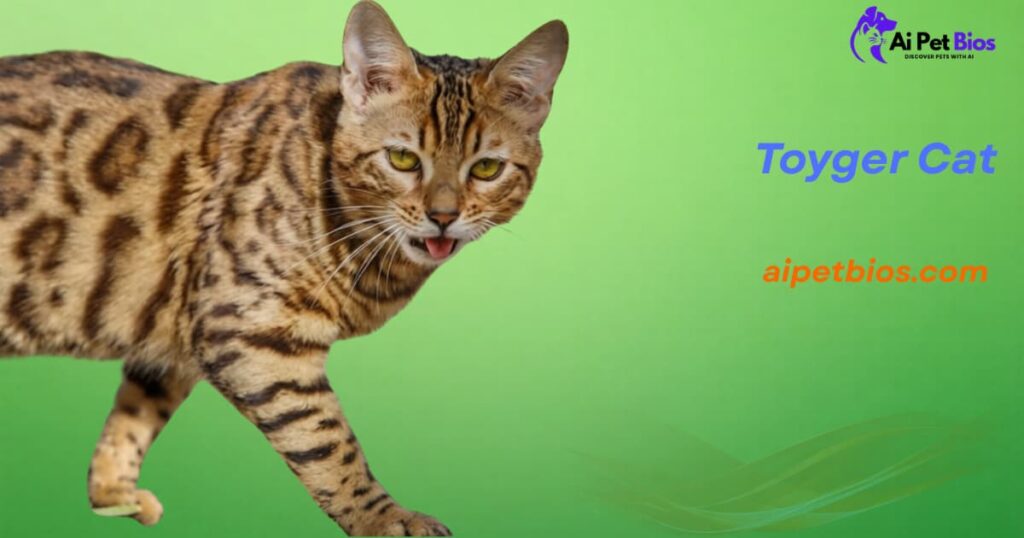
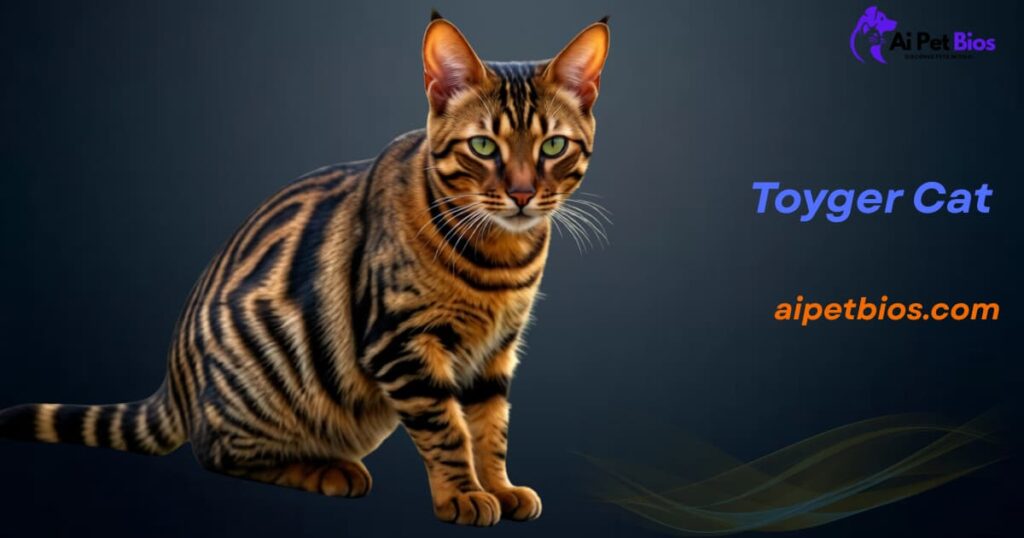
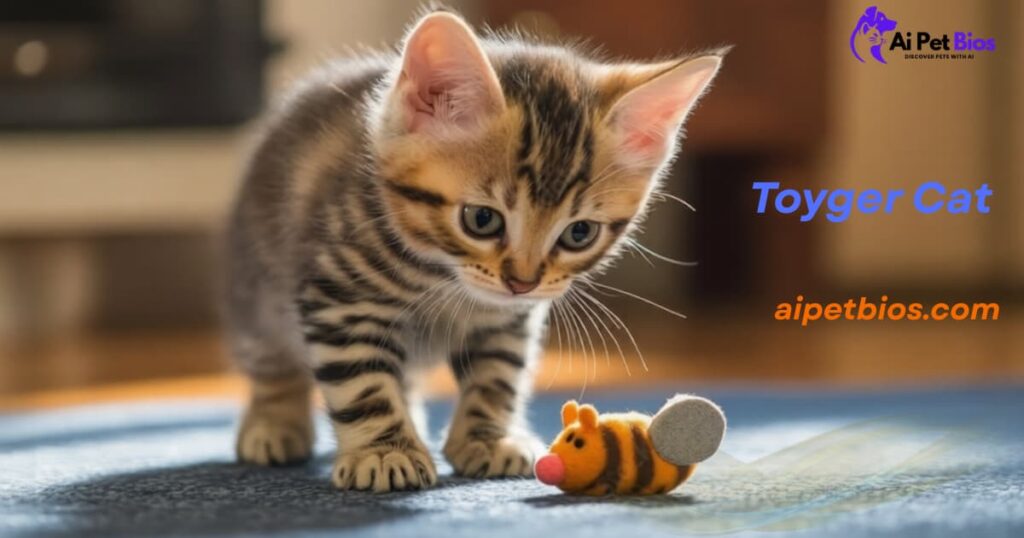
The Toyger cat turns heads because it genuinely looks like a miniature tiger. The vertical stripes are bold and continuous — not spots like Bengals. They should ideally be random, branching, and unbroken, covering the body from the spine down to the belly. The pattern is often described as “ground color with striping,” where the stripes are a deeper color than the background.
The body is muscular and athletic, with a broad chest and strong legs that give it a powerful yet graceful presence. They have a long, low-slung body reminiscent of a tiger’s silhouette, with a deep ribcage and a rounded abdomen. When they walk, they have a distinctive rolling gait, pushing off with their back legs to accentuate their muscles.
Head shape is distinctive with prominent cheekbones, a strong muzzle, and a broad nose. The head is medium in size and shaped like a rounded triangle. Ears are rounded and medium-sized, set wide apart. Eyes are bright and expressive, often gold or copper, and set deep with a hooded look that adds to the wild appearance.
Coat colors include the classic brown (orange tabby base), the increasingly popular silver (white base with black or grey stripes), and the rare white (snow) and blue variations. The “glitter” effect — where the coat sparkles in light — is a genetic trait many breeders strive for and is often visible in the first generation of a breeding program.
Males typically weigh 12–15 pounds, females 8–12 pounds. This larger size combined with the bold striping creates the dramatic “tiger” impression that makes the breed so unique. Real owners often say: “People stop us on the street thinking we’re walking an exotic animal. It never gets old.”
Personality & Temperament
Despite their wild appearance, Toyger cat personality is surprisingly sweet and affectionate. They are confident, curious, and social without being overly demanding. Many owners describe them as “gentle giants” who love being part of family life. They are not typically a “one-person” cat; they tend to bond with the entire household and enjoy following their owners from room to room, curious about every activity.
They are highly intelligent and enjoy learning tricks, solving puzzles, and even walking on a leash. They have a moderate to high energy level, which is balanced by a strong desire for affection. They are often described as having an “off switch”—they will play hard for an hour, then happily curl up on the sofa with the family to watch a movie.
Real owner experience: “Our Toyger is the calmest member of our chaotic household. She plays hard, then curls up happily on the sofa with the kids. She looks wild but behaves like the perfect family cat.”
They are generally good with children who respect them and with other pets, especially dogs, provided introductions are handled slowly. They have a low prey drive for a breed of this type, making them safe around small animals if raised with them, though caution is always advised. They do best in homes where they receive daily attention and mental stimulation. Boredom can lead to mischief, so interactive play and enrichment are essential.
Lifespan & Health
Toyger cats generally live 12–15 years, with some reaching 17 years when given excellent care. The breed benefits from relatively good genetic diversity compared to some other purebred cats, thanks to the strategic outcrossing used in its development. This helps reduce many inherited problems common in rarer breeds.
The main health concern is hypertrophic cardiomyopathy (HCM) . This is the most common heart disease in all cats, and it is particularly monitored in Toygers. Responsible breeders screen breeding cats with annual echocardiograms. When looking for a kitten, always ask to see the most recent HCM screening results for both parents. A clean scan does not guarantee the kitten will never develop HCM, but it significantly reduces the risk.
Other typical cat issues like dental disease and obesity can be managed with proper diet and regular veterinary care. Due to their muscular build, they can sometimes be prone to hip dysplasia or patellar luxation (loose kneecaps), though this is rare. Preventive measures — high-quality nutrition, annual checkups, dental care, and maintaining a healthy weight — significantly support longevity.
Care & Maintenance | Toyger Cat
Owning a Toyger is a commitment to an active lifestyle for your cat. They need daily playtime (30–60 minutes) that mimics hunting. This isn’t just about leaving toys out; it involves interactive play with wands, fetch, and puzzle feeders to engage their minds.
Grooming is relatively low-maintenance. Their short, plush coat requires weekly brushing to remove loose hair and distribute oils. During shedding seasons (spring and fall), brushing may need to increase to every other day. They generally enjoy being groomed if introduced to it as kittens. Nail trimming every 10-14 days, ear checks, and occasional baths help keep them comfortable.
Enrichment is non-negotiable. They need a stimulating environment with tall cat trees (at least 6 feet tall), window perches, and puzzle toys. They are natural climbers and appreciate vertical space. One owner shared: “We built a custom cat tree wall that covers an entire room. Our Toyger uses every level, running up and down like a squirrel. He seems much happier and calmer now that he has a place to expend that energy.”
Diet should consist of high-quality protein. Many Toyger breeders and owners recommend a raw or high-protein wet food diet to maintain the cat’s muscular condition and coat health. Always consult with your breeder and veterinarian to determine the best feeding plan.
Cost & Pricing
Toyger cat price in the USA typically ranges from $2,500 to $5,000+, with UK prices from £2,000 to £4,000+. This premium reflects the breed’s extreme rarity, decades of selective breeding, and rigorous health screening. It is not simply the cost of the kitten; it covers the breeder’s investment in health testing, high-quality nutrition, socialization, and the time spent raising a well-adjusted litter.
Pet-quality kittens (those with minor pattern imperfections or who are not suitable for the show ring) start around $2,500–$3,500. Show-quality kittens, with perfect striping, glitter, and conformation, often start at $4,000 and can go up to $6,000 or more. Rare color variations like silver or white command premium prices.
Waiting lists are common due to small litters. Toygers typically have 3-5 kittens per litter, and reputable breeders often have only one or two litters per year. Expect to wait 12 to 24 months for a kitten, and be prepared to fill out a detailed application, interview with the breeder, and potentially sign a contract that may include spay/neuter clauses and the return of the cat if you can no longer care for it.
Toyger vs Bengal – Key Differences
While both breeds share Bengal ancestry, they are distinct.
- Pattern: The Toyger’s goal is vertical, tiger-like stripes. The Bengal’s goal is spotted or rosette patterns (like a leopard).
- Build: Toygers are built larger, heavier, and more robust, with a broader chest and a “low-slung” walk. Bengals are generally leaner, longer, and more athletic.
- Temperament: Toygers are generally calmer, more laid-back, and better suited for families with children. Bengals are often described as “the Ferrari of cats”—incredibly high-energy, vocal, and demanding. While Toygers need daily play, Bengals often require more intense, almost constant stimulation.
Both are rare, but Bengals are more widely available than Toyger Cats.
Pros & Cons
| Pros | Cons |
| Striking, unique tiger-like appearance | Very expensive initial purchase price |
| Intelligent, trainable, and social | Extremely rare with long waiting lists |
| Affectionate and family-friendly | Requires daily engagement and play |
| Relatively good genetic diversity | Limited breeder network |
| Longer lifespan with proper care | Higher ongoing costs for diet and enrichment |
Buying Guide – Finding a Reputable Breeder
Because the Toyger is so rare, finding a reputable breeder requires diligence. Here is how to ensure you are getting a healthy, ethically bred kitten:
- Start with TICA: The International Cat Association (TICA) maintains a list of registered breeders. Start your search there.
- Avoid Scams: Never buy a Toyger kitten from a pet store or a website offering immediate shipping with low prices. If a price seems too good to be true (e.g., under $1,500), it is likely a scam.
- Ask for Proof: A reputable breeder will be happy to provide proof of HCM screening (echocardiograms), PKD (Polycystic Kidney Disease) testing, and FeLV/FIV status for the parents.
- Visit (or Video Call): A good breeder will want to meet you. Visit the cattery if possible. If not, a video call to see the kittens and their living environment is essential. The kittens should be raised in the home, not in cages.
- Ask Questions: A responsible breeder will ask you just as many questions as you ask them. They want to ensure their kittens go to good homes.
- Contracts: Expect a contract that outlines health guarantees (typically 1-2 years for genetic defects), spay/neuter requirements, and a clause requiring you to return the cat to them if you can no longer care for it.
Is This Toyger Cat Right for You?
The Toyger cat is ideal for experienced cat owners who can commit to daily play, afford the premium price, and appreciate a rare, eye-catching companion. They are best suited for homes where someone is present for a good portion of the day, or for families who are willing to invest in serious enrichment (like catios or large cat trees) to keep them occupied.
It is not suitable for first-time owners who may not be prepared for the energy level and intelligence, very busy households where the cat would be left alone for 10+ hours daily, or those seeking a low-maintenance pet that is content to sleep all day.
If you’re ready for the responsibility and excitement of owning a miniature tiger, the Toyger cat could be the perfect match.
Frequently Asked Questions
How much does a Toyger cat cost?
Toyger cats cost $2,500–$5,000+ in the USA and £2,000–£4,000+ in the UK. Prices reflect rarity, health screening, and the significant breeding effort required to produce the pattern.
Are Toyger cats good pets?
Yes, for the right owner. They are affectionate, intelligent, and family-friendly when given adequate stimulation and engagement. They are not aloof or aggressive.
Is a Toyger a Bengal cat?
No. While they share some ancestry, Toygers and Bengals are distinct breeds with different patterns, builds, and temperaments. The Toyger was developed specifically for tiger stripes.
Why are Toyger Cats so expensive?
Toygers are expensive due to extreme rarity, decades of selective breeding, the high cost of health testing (HCM scans), and limited breeder numbers. It is a niche breed with high demand and low supply.
What is the lifespan of a Toyger cat?
Toyger cats typically live 12–15 years with proper care, with some reaching 17 years.
Conclusion
The Toyger cat represents something extraordinary — a deliberate creation that brings the majesty of a tiger into your home while offering the love and companionship of a domestic cat. They are rare, expensive, and demanding, but for the right owner, they deliver a truly unique and rewarding relationship. They are not just pets; they are conversation starters, status symbols, and loyal companions rolled into one strikingly beautiful package.
If you have the time, resources, and dedication, a Toyger cat could become one of the most special companions you’ll ever own. The journey to bring one home requires patience, but for those who succeed, the reward is a lifetime of living with a miniature tiger that purrs.
Disclaimer This article is for informational purposes only and is not a substitute for professional veterinary or breeding advice. Always consult licensed professionals for health, purchase, or care decisions. Prices and availability can vary by location and time.
Courtesy: Animal Verse

Want Popular On Google? | Lust Quality Backlinks That Force-fed
I’m an SEO Expert, Guest Posting Specialist, and Web Developer helping websites increase rankings, traffic, and authority using clean, white-hat strategies 🚀
I focus on high-authority guest posts, safe backlinks, SEO-optimized content, and technically sound websites—so your site doesn’t just rank, it stays ranked.
What I help you with:
✅ SEO (On-page, Off-page & Technical)
✅ Guest Posts on Real, Relevant Sites
✅ High-Quality Link Building
✅ Keyword Research & Content Strategy
✅ SEO-Friendly Website Development
📈 No spam. No shortcuts. Only results.
👉 Need backlinks that actually work?
📩 Let’s connect: https://wa.me/+923006932631
1 thought on “Daring Toyger Cat: Know About Famous Designer Tiger Breed 2026”
Comments are closed.