
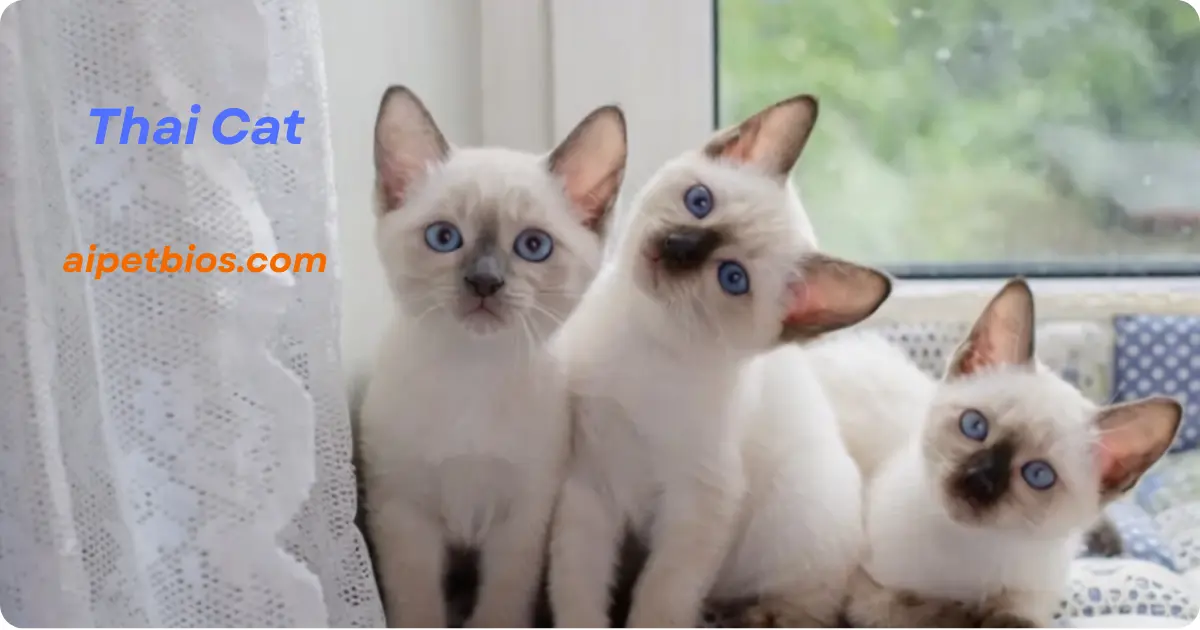
Not all “Siamese” cats are what you think. You’ve probably seen extreme, angular-faced Siamese that are demanding, vocal, and neurotic. But the original Thai cat from Southeast Asia is something entirely different—a perfectly balanced companion with natural beauty, intelligence, and loyalty. If you’ve wanted Siamese beauty without the drama, this breed is calling.
What is a Thai cat? A Thai cat is the original natural breed from Thailand, featuring a rounded face, balanced personality, and traditional pointed coloring. Unlike modern Siamese, this breed maintains calmer temperament, natural body proportions, moderate vocalization, and excellent family compatibility. Lifespan: 12–16 years. Price: $800–$1,500 USA.
Quick Facts Table
| Attribute | Details |
| Origin | Thailand |
| Recognition | TICA, CFA, FIFe certified |
| Weight | 8–12 pounds |
| Lifespan | 12–16 years |
| Temperament | Affectionate, calm, intelligent |
| Vocalization | Moderate (quieter than Siamese) |
| Price USA | $800–$1,500 |
| Price UK | £600–£1,000 |
| Best For | Families, first-time owners |
What Is a Thai Cat? (Natural Breed Definition)
The Thai cat is the original natural breed from Thailand, predating Western Siamese modifications by centuries. In the 1950s, Western breeders selectively bred Siamese for extreme features—larger ears, angular faces, extreme body shapes, intense personalities. Meanwhile, Thai cats remained unchanged in Thailand for hundreds of years, developing naturally in temples and villages.
Recognition from major cat associations including TICA, CFA, and FIFe confirms the Thai cat as a distinct, legitimate breed. In the 1980s, dedicated breeders recognized that the original Thai type was disappearing and began preserving authentic bloodlines, establishing breeding programs focused on maintaining natural characteristics that made this breed special for centuries.
Featured Snippet Answer (52 words): The Thai cat is a naturally occurring domestic breed from Thailand combining rounded facial features, balanced personality, and traditional pointed coloring. Unlike modern Siamese created through selective breeding, this breed maintains moderate body proportions, calmer temperament, and moderate vocalization, making it perfect for families and first-time owners.
Key Difference: Thai vs Siamese
The confusion between Thai and modern Siamese is widespread, but understanding this distinction is critical to your decision.
| Feature | Thai Cat | Modern Siamese |
| Head | Rounded, natural | Wedge-shaped, extreme |
| Personality | Balanced, calm | Intense, demanding |
| Vocalization | Moderate, soft meows | Very loud, constant yowling |
| Lifespan | 12–16 years | 10–14 years |
| Health Issues | Fewer genetic problems | More respiratory issues |
| With Families | Excellent fit | Good but reactive |
| Training | Very responsive | Selective, stubborn |
According to TICA (The International Cat Association), Thai cats represent authentic natural breeding versus Western artificial selection. Is thai cat the same as siamese? No—Thai cats offer Siamese beauty without drama or extreme behavioral demands.
The Bottom Line: Thai cats are to modern Siamese what wolves are to French Bulldogs—same species, but modified so extremely they’re practically different animals.
👉 Read our complete Siamese Cat Guide ➜
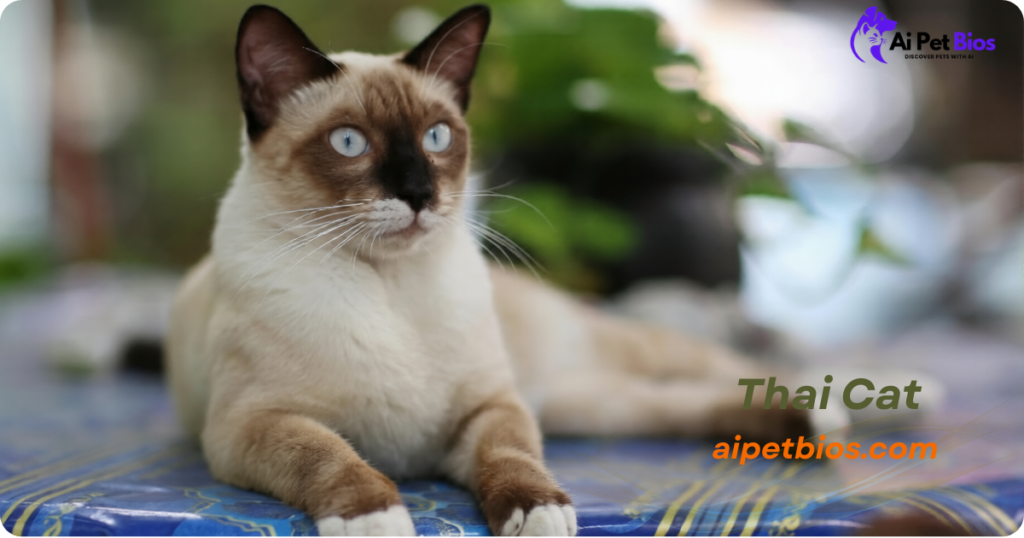
Thai Cat Personality & Temperament
The thai cat personality represents one of the breed’s most appealing characteristics. Unlike their modern Siamese counterparts, which many owners describe as “emotionally exhausting,” Thai cats display remarkable balance between affection and independence.
Featured Snippet Answer (50 words): Thai cats are genuinely affectionate without being obsessive or demanding. They form deep bonds while maintaining healthy independence. Unlike modern Siamese prone to anxiety, Thai cats display natural patience with children, excellent compatibility with other pets, and calm acceptance of daily household activities.
Why Owners Love Them:
Affectionate Without Being Obsessive: They genuinely enjoy your presence without requiring constant attention. Happy to see you when you come home, but content with their own company during work hours. Real owners report: “My cat greets me at the door, sits while I work, and sleeps on the bed. She’s affectionate but not needy.”
Highly Intelligent: Learn tricks, respond to commands, enjoy training. Thai cats are among the smartest domestic breeds. Many owners teach them fetch, “come when called,” and other dog-like behaviors. Their intelligence combined with desire to please makes training rewarding for both cat and owner.
Excellent with Families: Patient with children, tolerate household chaos, get along with other pets. Veterinarians often specifically recommend Thai cats for families because of their natural calm disposition and tolerance for children’s energy levels.
Moderate Vocalization: Soft communication, not constant demanding yowls. They communicate expressively—soft chirps, gentle meows, expressive purring—without excessive noise. Apartment dwellers report no neighbor complaints, unlike modern Siamese which are notoriously loud.
Calm and Patient: Natural confidence prevents stress-related problems. They observe household activity with interest rather than anxiety, maintaining equilibrium throughout daily life.
Real owners report experiences: Coming home to genuine greetings, evening playtime strengthening bonds, a companion that’s happy when you’re happy, loyalty lasting 12–16+ years.
Cat Appearance & Colors
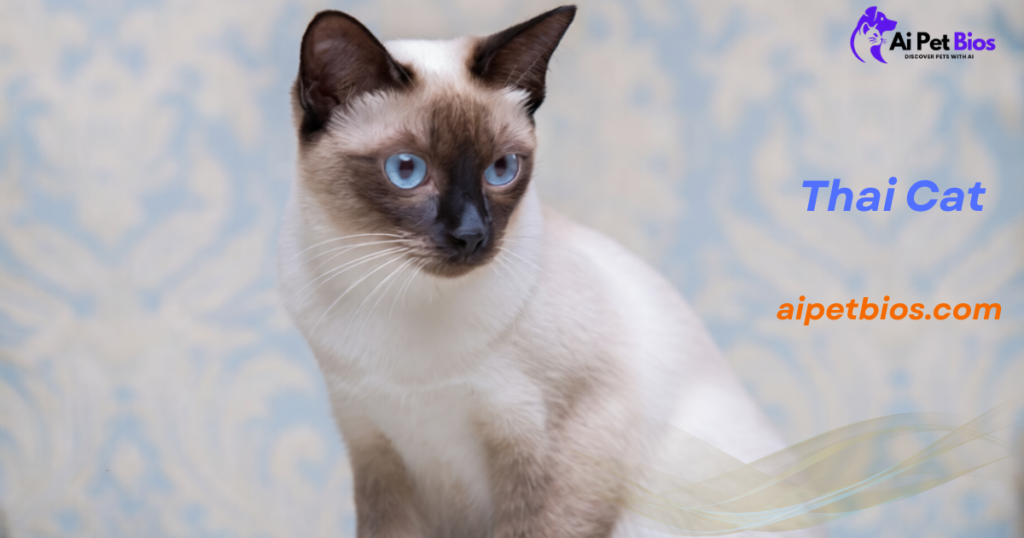
Featured Snippet Answer (45 words): Thai cats feature naturally pointed coloring in seal point (brown body, dark points), chocolate, blue, and cream variations. Their rounded face, medium muscular build, and bright blue eyes create distinctive natural beauty without extreme modifications typical of other breeds.
Thai cat colors include:
- Seal Point (60% of breed): Brown body, dark brown points
- Chocolate Point (25%): Cream body, chocolate points
- Blue Point (10%): Grey body, slate-blue points
- Cream Point (5%): Pale cream, soft cream points
Thai cat seal point remains most recognized. Their thai cat ancient appearance reflects natural breeding—no artificial modification needed. Full color develops over 1-2 years from nearly white kittens.
Thai Cat vs Siamese (Complete Comparison)
Featured Snippet Answer (52 words): Thai cats are the original natural breed from Thailand, while modern Siamese represent Western selective breeding emphasizing extreme features. Thai cats offer calmer temperament, moderate vocalization, natural body structure, and longer lifespan (12–16 vs. 10–14 years). Choose Thai for balanced companionship; Siamese for intensity.
What This Means in Real Life: A Thai cat owner reports: “My cat is pleasant, not exhausting. She’s affectionate but respects my boundaries.”
A modern Siamese owner reports: “My cat demands constant attention, yowls loudly, and gets upset when I’m not available. Neighbors complain about noise.”
These are actual experiences showing why informed owners increasingly choose Thai cats. They’re the easier, more balanced choice for most families.
👉 Compare with Tonkinese Cats ➜
Thai Cat Training & Health Management
Featured Snippet Answer (52 words): Thai cats are highly trainable, learning tricks through positive reinforcement. They require mental stimulation to prevent boredom-related problems. Unlike stubborn breeds, they actively enjoy learning and pleasing owners, making training rewarding for both cat and owner throughout their life together.
Training Methods That Work:
- Clicker Training: Click immediately when they perform desired behavior, reward with treats. Thai cats typically learn within 3-5 repetitions.
- Interactive Games: Fetch, “come when called,” target training. Thai cats enjoy games because they’re intelligent enough to understand them.
- Puzzle Toys: Prevent destructive behavior through engagement. Rotate toys weekly to maintain novelty and interest.
- Key Point: Intelligence requires daily mental stimulation (30-60 minutes minimum). Without enrichment, even naturally good-natured cats develop destructive behaviors.
Health Management & Lifespan: The thai cat lifespan typically extends 12–16 years with proper care. Some individuals exceed 16 years under exceptional conditions. Factors extending longevity include:
Quality Nutrition: High-protein diet (35%+ minimum) supporting muscular development and metabolic health throughout life. Named meat proteins (chicken, turkey, beef) listed as first ingredient.
Regular Veterinary Care: Annual wellness exams for adults, twice yearly for seniors (age 7+). Regular bloodwork after age 7 catches problems early. According to the Feline Health Institute, natural breeding results in fewer genetic problems than extreme breeds.
Preventive Dental Care: Most common issue in cats. Regular brushing and professional cleanings prevent serious problems. Bad breath is primary warning sign.
Weight Management: Obesity leads to diabetes, joint problems, and shorter lifespan. Maintain healthy weight through controlled portions and daily interactive play.
Common Health Considerations:
- Dental disease (preventable with regular care)
- Respiratory sensitivity (inherited from Siamese ancestry; manage environment)
- Kidney disease (detected early with bloodwork)
- Heart conditions (rare; responsible breeders screen)
Grooming, Diet & Nutrition Management
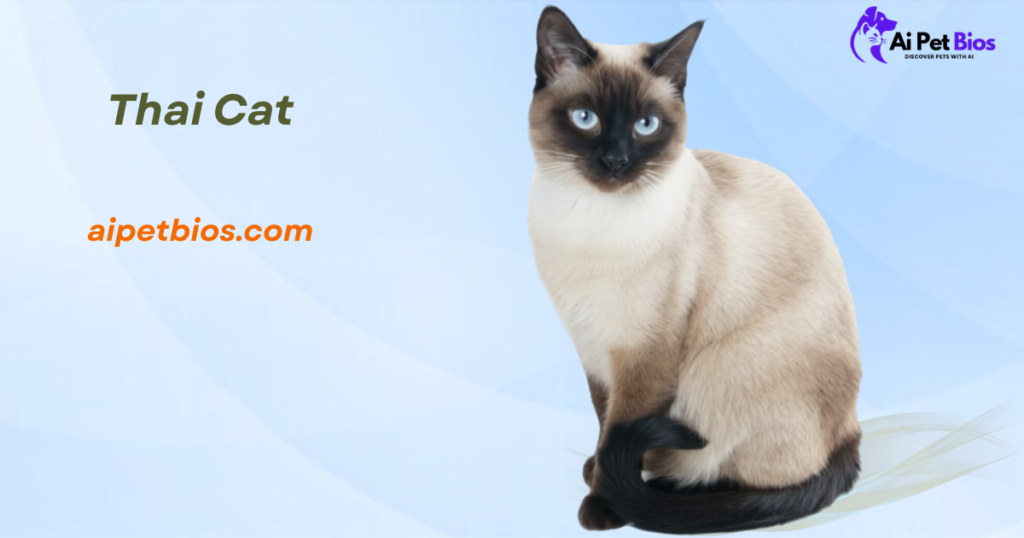
Grooming (Featured Snippet – 50 words): Thai cats require minimal grooming due to short coats. Weekly brushing prevents shedding and mats, maintaining coat health. Monthly nail trimming, ear cleaning, and eye maintenance ensure overall health. Their low-maintenance coat and calm temperament make grooming sessions easy and stress-free for owners.
Weekly Grooming Routine:
- Brush with soft slicker brush (removes loose hair, prevents matting, distributes natural oils)
- Trim nails every 2-3 weeks (prevents furniture damage, prevents ingrown nails)
- Inspect and clean ears (prevents infections, checks for abnormalities)
- Brief eye check for tear stains (common in pointed breeds)
Monthly Deep Grooming:
- Optional bathing (refreshes coat, reduces loose hair, supports skin health)
- Skin inspection (checks for dry patches, parasites, abnormalities)
- Weight monitoring (track body condition, adjust food if needed)
Nutrition (Featured Snippet – 52 words): Thai cats require high-protein diets (35%+ minimum) supporting muscular health and longevity. Feed adults twice daily with quality wet/dry food combinations. Monitor portions to prevent obesity-related diseases. Essential amino acid taurine supports heart and eye health throughout their life.
Feeding Schedule & Nutritional Requirements:
- Kittens: 3-4 meals daily (support rapid growth and development)
- Adults (1-7 years): 2 meals daily (150-250 calories total depending on metabolism)
- Seniors (7+): 2-3 smaller meals daily (easier to digest, age-appropriate nutrition)
Quality Food Indicators:
- First ingredient: Named meat protein (chicken, turkey, beef, not “meat by-products”)
- Minimum 35% crude protein (obligate carnivores require high protein)
- AAFCO certified (meets nutritional standards)
- No artificial preservatives (use natural preservation)
- Taurine included (essential amino acid cats cannot manufacture)
Best Approach: 60% quality wet food, 40% quality dry food. This combination provides hydration benefits of wet food with convenience of dry food.
Weight Management: Obesity leads to diabetes, joint problems, and shorter lifespan. Maintaining healthy weight extends lifespan by 2-3 years on average. Monitor portions carefully, use food scale rather than eyeballing, ensure regular interactive play (30-60 minutes daily).
Thai Cat Price Guide (USA & UK 2026 Pricing)
Featured Snippet Answer (52 words): Thai cat pricing varies significantly: USA pet quality costs $800–$1,500 from reputable breeders; show quality reaches $1,200–$1,800. UK pricing ranges £600–£1,000. Prices reflect breeder reputation, health certifications, and pedigree quality. Adoption alternatives cost $150–$400 USA, £100–£300 UK through rescue organizations.
Detailed USA Pricing:
- Pet quality (most common): $800–$1,500 (healthy kitten with no breeding rights)
- Show quality: $1,200–$1,800 (high conformation, show potential)
- Premium/championship bloodlines: $1,500–$2,000+ (rare bloodlines, extensive pedigree)
- Rescue/adoption: $150–$400 (adult cats, usually spay/neuter already done)
Detailed UK Pricing:
- Pet quality: £600–£1,000 (from established GCCF-registered breeders)
- Show quality: £900–£1,300 (excellent conformation)
- Premium: £1,200–£1,500+ (imported lines, champion ancestry)
- Rescue: £100–£300 (through feline rescue centers)
What Affects Price:
- Breeder reputation and experience (established breeders command higher prices)
- Health certifications and genetic testing (adds to cost but ensures quality)
- Pedigree quality and bloodline (champion ancestors increase value)
- Coat color rarity (seal point common, orange rare)
- Geographic location (major cities more expensive than rural areas)
Finding Reputable Breeders: Finding thai cat breeders usa requires connecting with TICA-registered breeders, regional cat clubs, or breed-specific rescues. Thai cat breeders uk work through GCCF-registered facilities and established breed societies. Expected wait time from established breeders: 3–8 months. This is normal and indicates responsible breeding practices (not overbreeding for profit).
Breeder Evaluation Checklist:
✅ TICA/CFA registered and verifiable
✅ Health guarantee in writing
✅ References from previous buyers available
✅ Health screening documentation provided
✅ Willing to discuss breed requirements honestly
✅ Available for post-adoption support
✅ Kitten socialization evident
Red Flags to Avoid:
❌ Won’t provide health records
❌ Multiple litters available constantly
❌ Prices significantly below market average
❌ Pressure to buy immediately
❌ Limited communication or no facility visits allowed
❌ No health guarantee offered
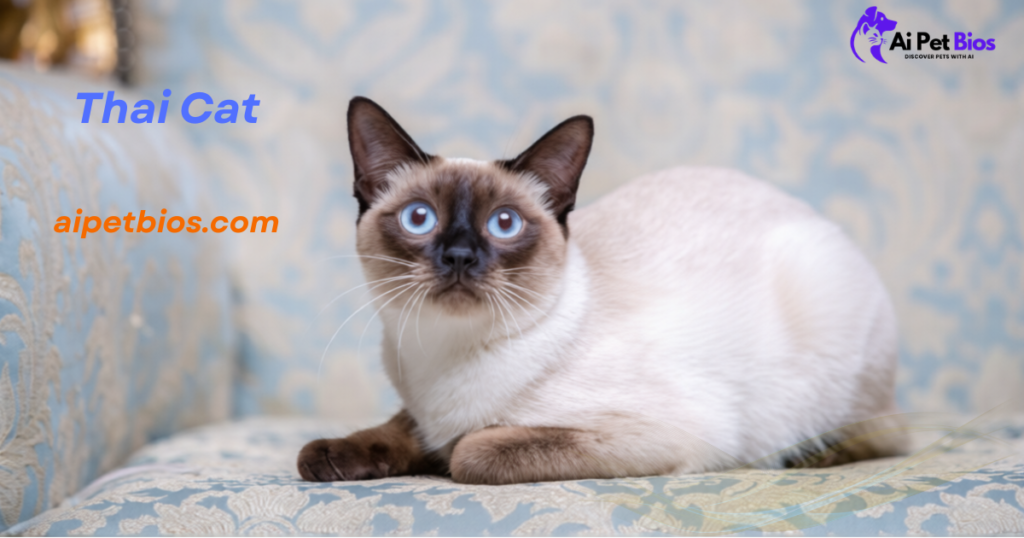
Is Thai Cat Right for First-Time Owners? (Honest Assessment)
Featured Snippet Answer (54 words): Thai cats are ideal for first-time cat owners seeking intelligent, affectionate companions. Unlike high-maintenance breeds, they balance social needs with independence. They adapt to apartment or house living, get along with children and other pets, and require only moderate daily interaction from owners.
Perfect For:
✅ Families with Children: Patient with chaos and activity. Natural patience with children’s energy. Won’t randomly scratch or bite when overwhelmed. Actually enjoy family interaction and household activity.
✅ Single Professionals: Tolerate 8-hour work days without developing separation anxiety. Still genuinely bond and greet you meaningfully when you return home. Evening playtime is bonding experience sufficient for emotional needs.
✅ Apartment Dwellers: Moderate vocalization (unlike loud modern Siamese). Adapt well to smaller spaces. Don’t need outdoor access to thrive. Natural calm demeanor prevents stress-related problems.
✅ First-Time Cat Owners: Forgiving and responsive to positive training. Benefit from your presence without being demanding. Lower stress ownership experience than high-maintenance breeds.
NOT Ideal For:
❌ If you want completely independent cats: Thai cats are too social; they need human interaction. Better options: Russian Blue, British Shorthair (more independent).
❌ If you have zero time for daily interaction: Minimum 30-60 minutes interactive play needed daily. Without this, behavior problems develop. Better options: Cats with lower social needs.
❌ If you travel constantly (monthly or more): They develop bonds and miss you. Repeated separations cause stress. Better options: Pet sitters or boarding support needed.
❌ If you prefer completely silent cats: Thai cats communicate expressively throughout the day. They’ll “talk” to you meaningfully. Better options: Cats with less vocalization like Scottish Fold.
Requirements for Success:
✅ 30-60 minutes daily interactive play
✅ Multi-level cat tree for climbing
✅ Puzzle toys and enrichment
✅ Quality diet (35%+ protein)
✅ Regular veterinary care
✅ Patient, positive reinforcement training approach
✅ Understanding of breed-specific needs
Pros & Cons (Honest Assessment)
✅ 10 Major Advantages
- Perfectly balanced temperament
- Exceptionally intelligent and trainable
- Genuine loyalty without dependency
- Excellent family compatibility
- Moderate vocalization (apartment-friendly)
- Natural, authentic beauty
- Better health than extreme breeds
- Long lifespan (12–16 years)
- Highly responsive to training
- Reasonable acquisition cost ($800–$1,500)
❌ 10 Real Disadvantages
- Genuine rarity (requires research)
- Limited breeder networks
- Long wait times (3–8 months)
- Geographic concentration
- Require regular interaction
- Intelligence requires enrichment
- Few vets know the breed well
- Significant initial investment
- Moderate activity requirements (30-60 min daily)
- Ongoing health commitment
Frequently Asked Questions
Is Thai cat the same as Siamese?
No. Thai cats are the original natural breed from Thailand. Modern Siamese resulted from 70+ years of Western selective breeding. Thai cats offer Siamese beauty without extreme personality demands.
How much does a Thai cat cost?
$800–$1,500 in USA, £600–£1,000 in UK from reputable breeders. Show quality costs more. Adoption alternatives: $150–$400 (USA), £100–£300 (UK).
What breed are Thai cats?
Thai cats are a distinct domestic breed originating from Thailand. Recognized by TICA, CFA, and FIFe, they represent the original natural feline that existed in Thai temples for centuries.
Are Thai cats rare?
Yes, moderately. Thai cats are rarer than Siamese but more available than exotic breeds. Rarity varies by location; USA and UK have established breeder networks.
Are Thai cats friendly?
Absolutely. Thai cats form deep bonds with owners while maintaining healthy independence. They enjoy family interaction, get along with children and other pets, and actively seek human companionship without being obsessive.
🎯 Your Next Action Steps
Step 1: Research (This Week)
- Confirm Thai cat fits your lifestyle
- Read our Siamese Cat Guide ➜ for comparison
- Assess daily schedule (need 30-60 min daily)
Step 2: Find Breeders (Weeks 2-3)
- Search TICA breeder directory
- Contact local cat clubs
- Verify TICA/CFA registration
Step 3: Evaluate Breeders (Weeks 3-4)
- Request health records and references
- Ask about health guarantees
- Verify health screening
Step 4: Home Preparation (Month 1)
- Multi-level cat tree
- Interactive toys
- Quality food and litter
- Schedule vet appointment
Step 5: Join Communities (Ongoing)
- Thai cat Facebook groups
- Local cat clubs
- Online breed forums
💫 Powerful Conclusion
Not all “Siamese” cats are what you think. Here’s the truth most people miss: Thai cats are the breed that changes your perspective on cat ownership.
They’re not the dramatic modern Siamese requiring constant attention. They’re not independent cats that ignore you. They’re perfectly balanced.
You get an intelligent companion that understands you, a deeply loyal friend that respects boundaries, natural beauty without extreme modification, and a genuinely affectionate family member that just enhances life.
Real owners report: Coming home to genuine greetings, evening playtime that strengthens bonds, a companion that’s happy when you’re happy, loyalty lasting 12-16+ years.
If you’ve been looking for a cat that loves you without drama, that’s intelligent without being neurotic, that bonds deeply without being obsessive—the Thai cat is calling.
Your perfect companion might be waiting on a breeder’s waiting list right now. Every day you wait is one less day with them.
The Thai cat is ready for you. The question is: are you ready for them?
Disclaimer
This article provides informational content and is not a substitute for professional veterinary advice. Always consult licensed veterinarians before acquisition, for health concerns, or medical decisions.
Prices reflect 2026 market conditions and vary by location. Verify all breeder credentials, request comprehensive health documentation, and research thoroughly before commitment. TICA, CFA, and FIFe maintain official breed standards and certified breeder directories.
[instant_emoji_reactions]

Want Popular On Google? | Lust Quality Backlinks That Force-fed
I’m an SEO Expert, Guest Posting Specialist, and Web Developer helping websites increase rankings, traffic, and authority using clean, white-hat strategies 🚀
I focus on high-authority guest posts, safe backlinks, SEO-optimized content, and technically sound websites—so your site doesn’t just rank, it stays ranked.
What I help you with:
✅ SEO (On-page, Off-page & Technical)
✅ Guest Posts on Real, Relevant Sites
✅ High-Quality Link Building
✅ Keyword Research & Content Strategy
✅ SEO-Friendly Website Development
📈 No spam. No shortcuts. Only results.
👉 Need backlinks that actually work?
📩 Let’s connect: https://wa.me/+923006932631
1 thought on “Fantastic Thai Cat: The Ultimate, Exquisite & Awesome Breed Guide 2026”
Comments are closed.