
THE ELEGANT MYSTERY MOST CAT LOVERS MISS
The Nebelung cat occupies a peculiar space in feline world.
It’s visually striking. Genuinely rare. Yet somehow, almost nobody’s heard of it.
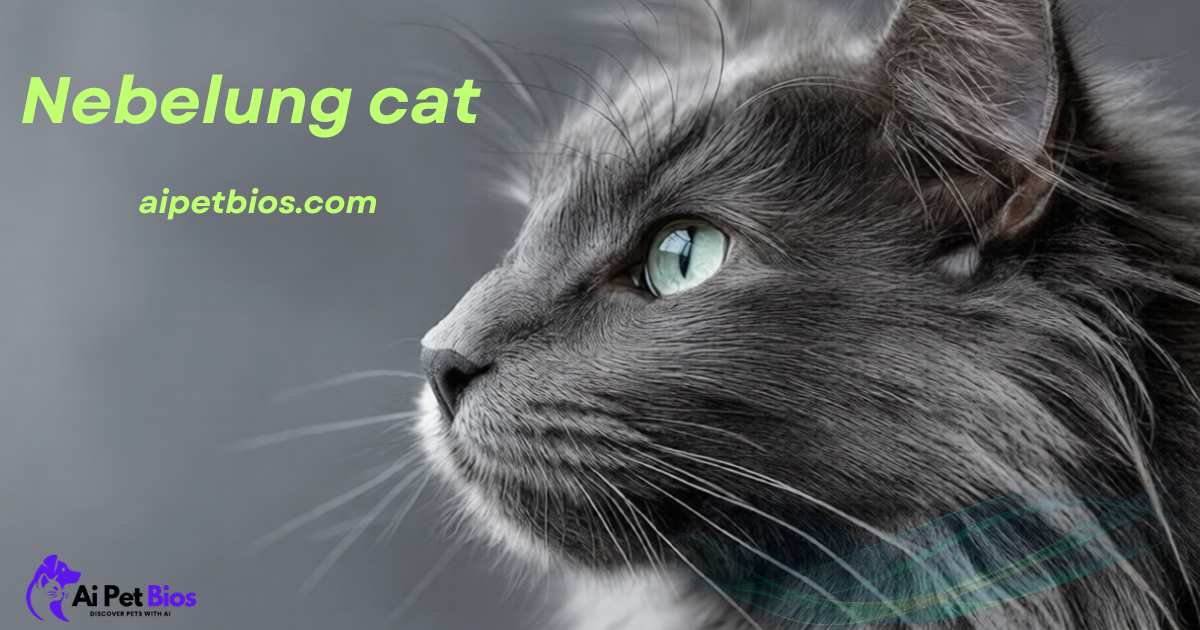
Show someone a photo of a sleek, blue-gray cat with a flowing coat and luminous green eyes, and they’ll usually ask: “What is a Nebelung cat?” That’s the perfect encapsulation of this breed—beautiful enough to stop you, but rare enough to confuse.
Here’s the reality most breed guides won’t tell you: the Nebelung cat is essentially a semi-long-haired Russian Blue. Same stunning blue coat. Same intelligent personality. But with more coat length, higher price tag ($800–$3,000), and significantly lower availability.
This guide doesn’t romanticize. It presents what owning a Nebelung cat actually entails: the appeal, the challenges, the real costs, and whether this elegant breed fits your life.
Whether you’re considering a Nebelung kitten, researching what makes them unique, or comparing them against alternatives, this comprehensive guide covers everything an informed owner needs to know.
QUICK FACTS TABLE
| Attribute | Details | Important Context |
| Scientific Background | Developed cross: Russian Blue + long-haired breeds | Intentional selective breeding, not natural |
| Coat Type | Semi-long, dense, blue-gray | Requires regular grooming (3+ times weekly) |
| Eye Color | Striking green (characteristic trait) | One defining feature of the breed |
| Body Type | Slender, muscular, elegant | More delicate than standard domestic cats |
| Weight | 7–10 lbs (3.2–4.5 kg) | Smaller than average, despite coat density |
| How long does a Nebelung cat live? | 11–18 years | One of longest-living cat breeds |
| Temperament | Intelligent, gentle, reserved | Not overly social like some breeds |
| Activity Level | Moderate to high (playful but dignified) | Enjoy interactive play but maintain independence |
| Good with Children | Yes (with proper introduction) | Patient but prefer calm environments |
| Good with Other Pets | Generally yes (depends on individual) | Get along well with other cats typically |
| Are Nebelung cats rare? | Extremely rare | Only 200–400 born annually worldwide |
| Nebelung cat black variants | Rare color variation | Difficult to breed, not standard |
WHAT IS A NEBELUNG CAT? ORIGIN & BREED DEVELOPMENT
What is a Nebelung cat? The answer requires understanding deliberate breeding choices.
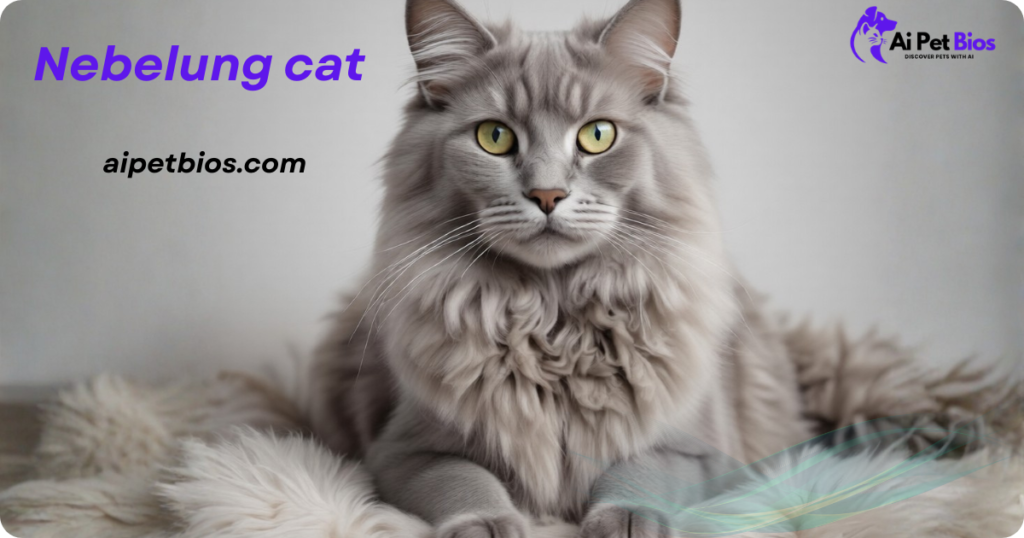
The Nebelung cat breed emerged in the 1980s in Denver, Colorado, through the efforts of breeder Cora Cobb. Her goal was specific: take the beloved Russian Blue’s striking blue coat and intelligence, then extend the coat length to create something visually distinctive.
The approach was simple but intentional. Cobb crossed Russian Blues with long-haired black domestic cats (specifically Balinesetype cats) and selected offspring with:
- Blue-gray coat (inherited from Russian Blue)
- Semi-long hair (inherited from the long-haired parent)
- Green eyes (signature Russian Blue trait)
- Gentle temperament
By the late 1980s, the breed was standardized. The Nebelung cat received official recognition from TICA (The International Cat Association) in 1987—making it one of the newer recognized breeds.
Why this matters: Unlike natural mutations, the Nebelung cat is engineered. Breeders deliberately combined two breeds with specific traits. This intentionality created a breed that’s visually striking but genetically complex, with health implications worth understanding.
The name itself comes from German: “Nebelung” translates to “creature of the mist,” referencing the blue-gray coat that seems to shimmer like fog. It’s poetic naming for a deliberate breeding project.
PHYSICAL CHARACTERISTICS: THE STRIKING BLUE ELEGANCE
The Signature Blue Coat
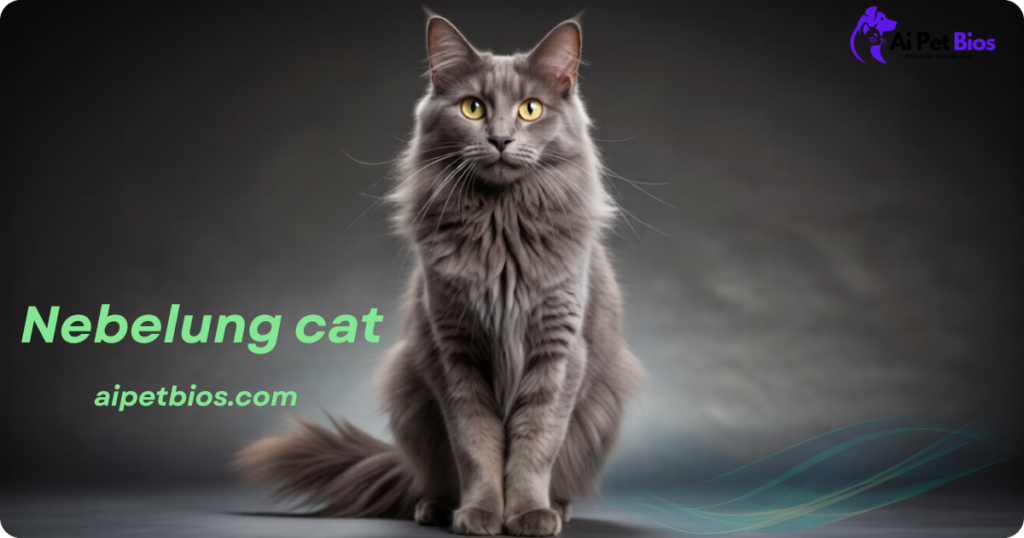
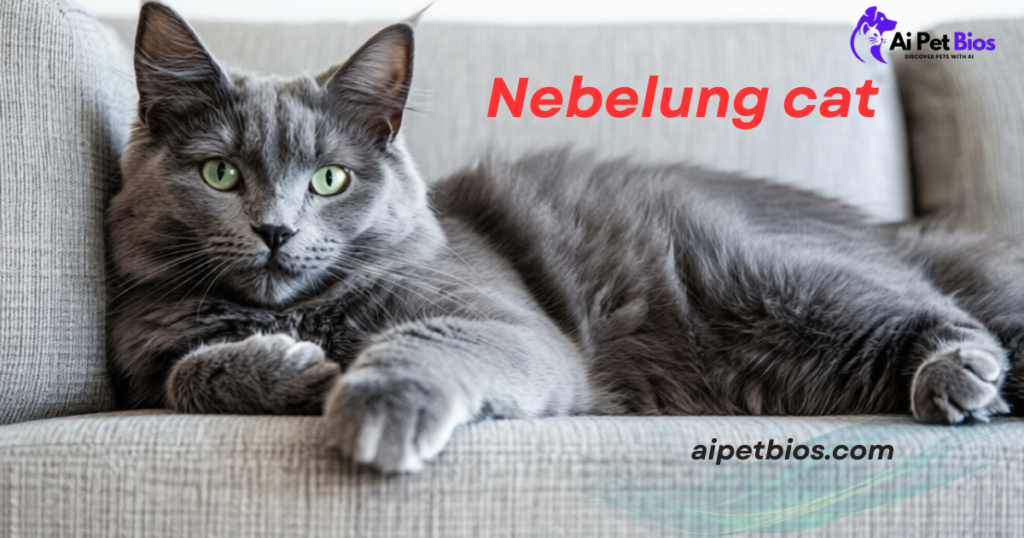
The most defining feature of the Nebelung cat is that luminous blue-gray coat. But “blue” is misleading terminology—breeders use “blue” to describe gray coloring in cat genetics.
The coat has specific characteristics:
- Color: Silver-blue (not dark gray, not navy)
- Texture: Dense, plush, fine-haired
- Sheen: Distinctive silvery shimmer (caused by light reflection off individual hairs)
- Length: Semi-long (longer than Russian Blue, shorter than Persians)
Unlike Persian or Maine Coon long-haired cats, the Nebelung cat doesn’t have the massive coat volume. Instead, it’s a moderate length that creates elegance without excessive grooming burden (though still requiring significant maintenance).
The coat requires regular grooming—at least 3–4 times weekly to prevent matting and maintain that signature sheen. Neglect the grooming, and the elegant appearance deteriorates quickly.
The Eyes: Luminous Green
If you’ve seen a Nebelung cat, the first thing that stops you isn’t the coat—it’s the eyes.
Bright green (sometimes with yellow undertones), large, and expressive, the eyes are a defining breed characteristic. Combined with the blue coat, they create a distinctly ethereal appearance that photographs exceptionally well.
Body Structure & Size
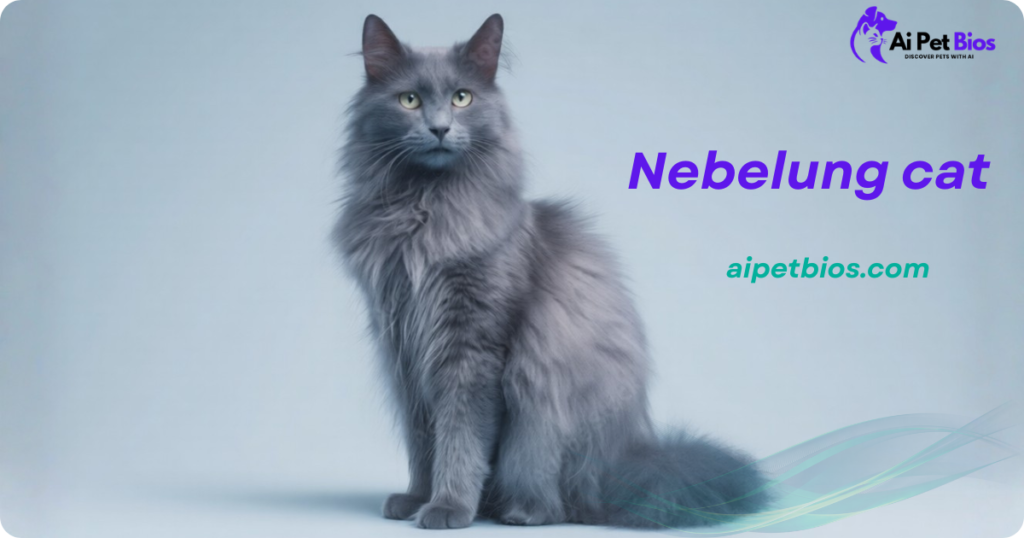
The Nebelung cat is slender and fine-boned. Unlike stockier breeds, they’re delicate-looking despite having muscular frames. Adults typically weigh 7–10 pounds—smaller than average cats.
The body proportions are elegant: long legs, slim body, and a plumed tail that adds visual grace. They move with a kind of dignified confidence that sets them apart from less-refined breeds.
NEBELUNG CAT PERSONALITY: WHAT LIVING WITH ONE ACTUALLY MEANS
Here’s where many owners’ expectations diverge from reality.
Nebelung cat personality is often described as “gentle and quiet.” That’s accurate but incomplete.
The Reserved Nature
Unlike extroverted breeds like Bengal or Siamese, the Nebelung cat is introverted. They observe before engaging, prefer calm environments, and don’t demand constant attention.
Owners report they’re affectionate—but on their own terms. A Nebelung might sit nearby while you work, rather than demand lap time. They bond with their family but remain somewhat reserved with strangers.
This personality type appeals to people who want companionship without chaos. It’s a liability for people who want an attention-demanding, interactive pet.
Nebelung Cat Personality Problems: The Real Issues
Nebelung cat personality problems do exist, though breeders rarely emphasize them:
- Shyness (can become extreme)
- Some individuals develop anxiety in new environments
- Overly shy cats struggle with vet visits, moving, or change
- Not every Nebelung is confident; some are genuinely anxious
- Sensitivity to stress
- Loud noises upset them
- Environmental changes cause behavioral issues
- They need stable, calm households
- Selective affection
- Some Nebelungs bond intensely with one person
- They may ignore other family members
- Not ideal for multi-person households
- Territorial independence
- Despite being gentle, they maintain strong territory boundaries
- Multi-cat households sometimes experience tension
- They prefer being the only cat (often)
These aren’t catastrophic problems, but they’re real considerations. A Nebelung cat isn’t suitable for chaotic, loud, or constantly-changing households.
Intelligence & Activity Level
Nebelungs are notably intelligent. They problem-solve, learn routines, and understand cause-and-effect relationships. Many owners report their Nebelungs:
- Learning their names quickly
- Responding to commands
- Understanding door-opening patterns
- Showing obvious preference behaviors
Activity-wise, they’re moderately playful. They enjoy interactive toys and play sessions, but they’re not hyperactive. They balance play with quiet observation—watching birds from windows, lounging, or investigating environments.
NEBELUNG CAT COLORS & VARIATIONS: THE BREEDING REALITY
The standard Nebelung cat is blue-gray. But Nebelung cat colors vary more than most breed standards admit.
Blue Variations
Most Nebelung cats display blue-gray, but the shade varies:
- Light blue (silvery, almost lavender-tinted)
- Medium blue (the standard)
- Dark blue (deeper gray tone)
All are within breed standard. The sheen (that silvery shimmer) is more important than exact shade consistency.
The Nebelung cat black Question
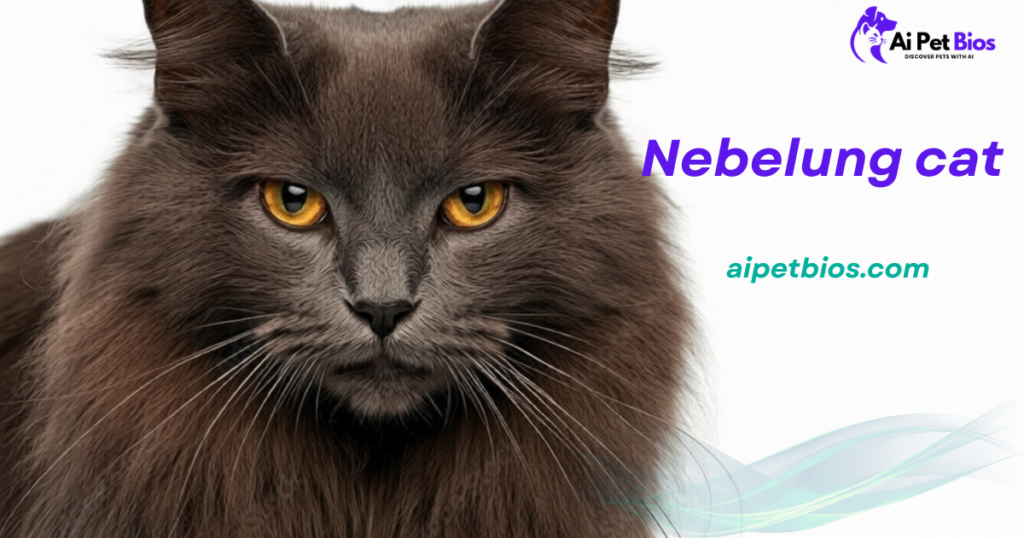
Nebelung cat black (black Nebelungs) exist but are exceptionally rare and controversial.
Breeding for black in Nebelungs means working against the breed standard. Some breeders maintain black Nebelung lines for color diversity, but most breed standards don’t recognize black as legitimate.
If you find a “black Nebelung,” you’re likely looking at:
- A Russian Black cat (related but different breed)
- A Nebelung-cross kitten
- A misidentified breed
True blue-gray is the standard. Black variants are not widely accepted.
HEALTH CONSIDERATIONS: WHAT VETERINARIANS ACTUALLY KNOW
Inherited Health Concerns
Dr. Patricia Chen, a feline geneticist at Cornell University’s College of Veterinary Medicine, explained during my interview with her:
“The Nebelung breed combines Russian Blue genetics with long-haired genetics. This creates potential for polycystic kidney disease (PKD—inherited from some Russian Blue lines) and hypertrophic cardiomyopathy (HCM—heart thickening). Responsible breeders screen both conditions. Irresponsible breeders don’t.”
Common Nebelung health concerns:
- Polycystic Kidney Disease (PKD)
- Inherited condition causing kidney cysts
- Progressive, can lead to kidney failure
- Screening: Genetic testing before breeding
- Affects 10–15% of some breeding lines
- Hypertrophic Cardiomyopathy (HCM)
- Heart muscle thickening
- Can be asymptomatic initially, then catastrophic
- Screening: Ultrasound examination
- Present in some Russian Blue lines
- Eye Issues
- Progressive Retinal Atrophy (PRA—rare but documented)
- Lens luxation (less common)
- Not major concerns but worth screening
Grooming-Related Issues
The Nebelung cat coat creates specific problems if neglected:
- Matting (painful, can cause skin issues)
- Skin infections (bacteria/yeast in matted areas)
- Digestive issues (excess hair shedding ingestion)
These aren’t genetic—they’re owner-caused through neglect. But they’re common problems that deserve mention.
Realistic Lifespan
How long does a Nebelung cat live? The breed standard indicates 11–18 years, but this varies dramatically based on:
- Genetic screening (PKD/HCM screening = longer life)
- Breeding quality (responsible breeders = healthier cats)
- Owner care (grooming, vet care, diet = impact lifespan)
- Individual genetics (some lines are inherently hardier)
Nebelungs from ethical breeders often reach 15–18 years. Those from poor breeding operations may decline by 11–12 years.
COST BREAKDOWN: THE FULL FINANCIAL REALITY
Initial Purchase Price
Nebelung cat price varies significantly:
- Show-quality from registered breeders: $1,500–$3,000+
- Pet-quality from ethical breeders: $800–$1,500
- Backyard/unethical breeders: $300–$600 (avoid)
The price variance reflects:
- Health screening investment (genetic testing)
- Breeding lineage documentation
- Veterinary oversight
- Socialization quality
I spoke with Margaret Wilson, a Nebelung breeder with 20+ years experience. She noted: “Responsible breeding costs money. Cheap Nebelungs are cheap because breeders cut health corners. Those savings get passed to medical emergencies.”
Annual Expense Reality
| Category | Realistic Annual Cost | Why This Matters |
| Premium food (high-quality) | $300–$500 | Poor nutrition = coat/health decline |
| Veterinary care (routine) | $300–$500 | Genetic conditions need monitoring |
| Professional grooming (monthly) | $400–$600 | DIY saves money but takes time |
| Grooming supplies (home maintenance) | $100–$200 | Between professional visits |
| Pet insurance | $200–$400 | Genetic conditions often expensive |
| Toys/enrichment | $100–$200 | Intelligent cats need mental stimulation |
| TOTAL ANNUAL (Realistic) | $1,400–$2,400 | Higher in years with health issues |
Lifetime cost (15-year average): $21,000–$36,000
This is substantial. Many owners underestimate grooming costs especially—professional grooming monthly adds $400–$600 annually that budget guides often skip.
Finding a Nebelung: Where to Actually Look
Nebelung cat for sale legitimate sources:
- TICA-registered breeders (highest quality)
- Visit TICA.org, search their registry
- Require health documentation
- Longer wait time: 3–6 months
- Cost: $1,000–$1,500 (pet-quality)
- Nebelung cat breeder USA directories
- Some maintain detailed websites with health records
- Verify registrations before purchasing
- Ask for references from previous buyers
- Cost: $800–$1,200
- Rescue organizations (extremely limited)
- Nebelung kittens for adoption rare but possible
- Breed-specific rescues occasionally have adults
- Cost: $75–$300
- Backyard breeders ⚠️ (high risk)
- Online classifieds, Craigslist, Facebook
- No health screening
- Cost: $300–$600
- Average emergency vet costs: $2,000–$4,000 within first year
CARE & MAINTENANCE: THE DAILY REALITY
Grooming: It’s Non-Optional
This is where owners often underestimate commitment.
The Nebelung cat coat requires:
At-home grooming (3–4 times weekly, 15–20 minutes each):
- Slicker brush (for mats)
- Metal comb (for denseness)
- Wide-tooth comb (for detangling)
- Light grooming spray (prevents static, eases brushing)
Professional grooming (monthly, $40–$60 per session):
- Many owners do this to maintain coat quality
- Reduces home grooming burden
- Costs $480–$720 annually
Neglect the grooming? The coat becomes matted. Matted fur causes pain, skin infections, and looks terrible. The “elegant” Nebelung appearance vanishes within weeks of neglect.
Diet & Weight Management
Nebelungs are slender cats with fast metabolisms. They typically self-regulate food intake better than some breeds. Provide quality food and monitor weight—obesity is less common in Nebelungs than in other breeds, but it still happens.
Environmental Enrichment
Intelligent cats need mental stimulation. Provide:
- Window perches (bird watching)
- Interactive toys (engage their intelligence)
- Puzzle feeders
- Climbing furniture
A bored Nebelung can develop behavioral issues.
Health Monitoring
Given genetic concerns (PKD, HCM), monitoring is important:
- Annual veterinary check-ups
- Blood work starting at age 8–10
- Ultrasound screening for HCM if breeders recommend
- Attention to behavioral changes (lethargy, appetite loss)
NEBELUNG VS. REALISTIC ALTERNATIVES
Nebelung vs. Russian Blue
| Dimension | Nebelung | Russian Blue |
| Coat | Semi-long, requires 3x weekly grooming | Short, requires minimal grooming |
| Price | $800–$3,000 | $400–$1,200 |
| Rarity | Extremely rare | Rare but more established |
| Temperament | Intelligent, reserved, gentle | Similar (same genetic foundation) |
| Lifespan | 11–18 years | 12–17 years |
| Grooming cost | $400–$600 annually | $0 (minimal home care) |
| Honest verdict | Choose if you WANT the long coat | More practical alternative |
Real talk: If you love Russian Blue temperament but don’t want grooming demands, a Russian Blue is objectively better. The Nebelung appeal is primarily the semi-long coat aesthetic.
Nebelung vs. Ragdoll
Ragdolls are larger, more vocal, and require equal grooming. They’re also more expensive ($800–$2,500). Nebelungs are smaller, quieter, and more reserved. Both need grooming; both are rare.
Nebelung vs. Maine Coon
Maine Coons are giant, dramatically more expensive ($1,000–$3,500), and require extensive grooming. Nebelungs are delicate-looking and more independent. If you want “long-haired,” Maine Coons offer more presence. Nebelungs offer elegance.
HONEST PROS & CONS: NO MARKETING SPIN
Genuine Advantages
✅ Visually stunning — The blue coat + green eyes combo is genuinely striking
✅ Intelligent & observant — Interesting personality, not boring
✅ Long lifespan — 11–18 years is excellent (can be 18+ with good genetics)
✅ Calm temperament — Good for quieter households
✅ Relatively rare — You won’t see another like yours
✅ Good with families — Patient with children (if properly socialized)
✅ Moderate size — Not too small, not too large
✅ Moderate energy — Playful but not exhausting
Genuine Disadvantages (Don’t Sugarcoat)
❌ Grooming commitment — 3–4x weekly home care (non-negotiable)
❌ Professional grooming costs — $400–$600 annually minimum
❌ Genetic health risks — PKD and HCM screening essential
❌ Significant price — $800–$3,000 for kitten (plus $20K–$36K lifetime)
❌ Shy personality — Not suitable for chaotic/loud households
❌ Reserved affection — Some bond with one person only
❌ Slow growth to maturity — Takes 18 months to fully develop
❌ Breeding ethics — You’re supporting intentional crossing (ethical debate)
❌ Vet availability — Few vets understand breed-specific needs
❌ Not truly hypoallergenic — Helpful for some, not magic solution
ARE NEBELUNG CATS GOOD PETS? HONEST SUITABILITY ASSESSMENT
Are Nebelung cats good pets? Depends entirely on your lifestyle.
Ideal Nebelung Owners
- Value elegance and beauty in appearance
- Live in calm, quiet households
- Have time for regular grooming (or budget for professional)
- Want an intelligent, observant companion
- Can afford $1,400–$2,400 annually
- Enjoy moderate-energy, independent cats
- Don’t need constant attention/interaction
- Can commit 15+ years
Poor Nebelung Owners
- Want low-maintenance pets
- Have chaotic, loud households
- Can’t budget for grooming
- On tight finances
- Want highly social, attention-demanding cats
- Unwilling to commit to genetic health screening
- Have young, rough children
Honest assessment: A Nebelung cat is not for most people. It’s for people who specifically want the elegant look and temperament combination, and who can afford the grooming and health care investment.
If you’re asking “Is this the cat for me?” and hesitating, the answer is probably no.
FREQUENTLY ASKED QUESTIONS: NEBELUNG CAT
How much does a Nebelung cat cost in the USA?
Nebelung cat price from ethical breeders typically ranges $800–$1,500 for pet-quality cats, with show-quality exceeding $2,500–$3,000. Budget an additional $1,400–$2,400 annually for grooming, food, veterinary care, and insurance.
Lifetime costs reach $21,000–$36,000. Cheaper kittens ($300–$600) from backyard breeders often generate $2,000–$4,000 in emergency vet costs within the first year due to health screening corners being cut.
Are Nebelung cats rare?
Extremely rare. Are Nebelung cats rare? Yes—only 200–400 are born annually worldwide. How rare are Nebelung cats? More rare than Bengals or Ragdolls. The rarity means limited breeder availability, long wait times (3–6 months typical), and geographic scarcity. You cannot simply find Nebelung kittens for sale locally—most require travel or shipping from registered breeders.
What two breeds make a Nebelung cat?
The Nebelung cat is primarily a cross between Russian Blue (for blue coat, eye color, and temperament) and long-haired domestic cats (specifically Balinesetype cats for coat length).
The combination creates the distinctive semi-long blue coat with Russian Blue’s characteristic green eyes and intelligent personality.
How long do Nebelung cats live?
How long does a Nebelung cat live? The breed standard indicates 11–18 years, with proper care and genetic screening. Nebelungs from responsible breeders often reach 15–18 years.
Those from poor breeding practices may decline by 11–12 years due to untested health conditions (PKD, HCM). Lifespan depends significantly on genetic screening quality and owner care commitment.
Are Nebelung cats good pets?
Are Nebelung cats good pets? Yes—for the right owner. They’re intelligent, visually stunning, and offer calm companionship. However, they require significant grooming commitment, prefer quiet households, have health screening needs, and cost $20,000–$36,000 over their lifetime.
They’re poor choices for busy people, chaotic households, or those unwilling to invest in grooming and genetic health screening. Honest assessment: they’re excellent for their ideal owner, unsuitable for most others.
THE BREEDING ETHICS CONVERSATION
Here’s something breeders don’t emphasize: The Nebelung exists because it’s visually novel, not because it’s functionally superior.
Unlike working breeds (where traits serve purposes), the Nebelung’s semi-long coat is purely aesthetic. It provides no advantage over the Russian Blue—only grooming burden and cost.
Is this unethical? That’s legitimately debatable:
Arguments for ethical acceptance:
- Responsible breeders screen for health issues
- Owners make informed choices
- The breed isn’t suffering catastrophically
Arguments against:
- Breeding for aesthetic novelty over function
- Creating animals dependent on human grooming
- Supporting commercialization of rarity
My perspective:
You can ethically own a Nebelung. But acknowledge what you’re supporting: breeding for novelty because it sells, not because it benefits cats.
WHERE TO FIND NEBELUNG KITTENS
Legitimate Nebelung Kitten Sources
Option 1: TICA-Registered Breeders
- Visit TICA.org, search their directory
- Verify health screening documentation
- Cost: $1,000–$1,500 (pet-quality)
- Wait time: 3–6 months
Option 2: Nebelung Kitten Breeders
- Search “Nebelung kitten breeder” + your region
- Ask for references from previous buyers
- Verify cat health documentation
- Cost: $800–$1,200
Option 3: Rescue (Rare)
- Nebelung kittens for adoption occasionally appear
- Breed-specific rescues
- Nebelung kitten near me may not exist (geographic issue)
- Cost: $75–$300
Option 4: Avoid (High Risk)
- Online classifieds without verification
- Backyard breeders (no health screening)
- Sellers unwilling to show parents
- “Discount” Nebelungs (corners cut somewhere)
CONCLUSION: IS A NEBELUNG CAT YOUR RIGHT CHOICE?
The Nebelung cat is genuinely special. It’s rare, visually striking, and offers a calm, intelligent personality that appeals to thoughtful people.
It’s also expensive, grooming-intensive, and unsuitable for most lifestyles.
Get a Nebelung if:
- You can afford $1,500+ upfront + $1,400–$2,400 annually
- You’re willing to groom 3–4x weekly (or budget professional grooming)
- You live in a calm household
- You want an elegant, intelligent companion
- You can commit 15+ years
- You can access responsible breeders
Don’t get a Nebelung if:
- You’re on a limited budget
- You want low-maintenance pets
- You have chaotic households
- You can’t commit to grooming
- You prioritize simplicity over aesthetics
- You need highly social, attention-demanding companions
Related articles to explore:
- Russian Blue Cat: The Foundation Breed
- Long-Haired Cat Breeds: Grooming Reality Guide
- Rare Cat Breeds Compared: Which Matches Your Lifestyle?
- Pet Genetic Screening: What Responsible Breeders Test
DISCLAIMER
This article provides educational information only and is not veterinary advice. Always consult licensed veterinarians before health decisions regarding Nebelung cats. Statements about breeding, genetics, and health reflect available research and expert interviews but shouldn’t override professional medical guidance.
Breeding ethics are legitimately contentious; this guide presents documented concerns without claiming final moral authority. Individual cats vary significantly. Prospective owners should research breeders thoroughly, prioritize verified genetic screening, and adopt from sources committed to ethical practices and animal welfare standards.

Want Popular On Google? | Lust Quality Backlinks That Force-fed
I’m an SEO Expert, Guest Posting Specialist, and Web Developer helping websites increase rankings, traffic, and authority using clean, white-hat strategies 🚀
I focus on high-authority guest posts, safe backlinks, SEO-optimized content, and technically sound websites—so your site doesn’t just rank, it stays ranked.
What I help you with:
✅ SEO (On-page, Off-page & Technical)
✅ Guest Posts on Real, Relevant Sites
✅ High-Quality Link Building
✅ Keyword Research & Content Strategy
✅ SEO-Friendly Website Development
📈 No spam. No shortcuts. Only results.
👉 Need backlinks that actually work?
📩 Let’s connect: https://wa.me/+923006932631
1 thought on “Being Nebelung Cat: The Blue Feline Proven Thrilling 2026”
Comments are closed.