
Introduction
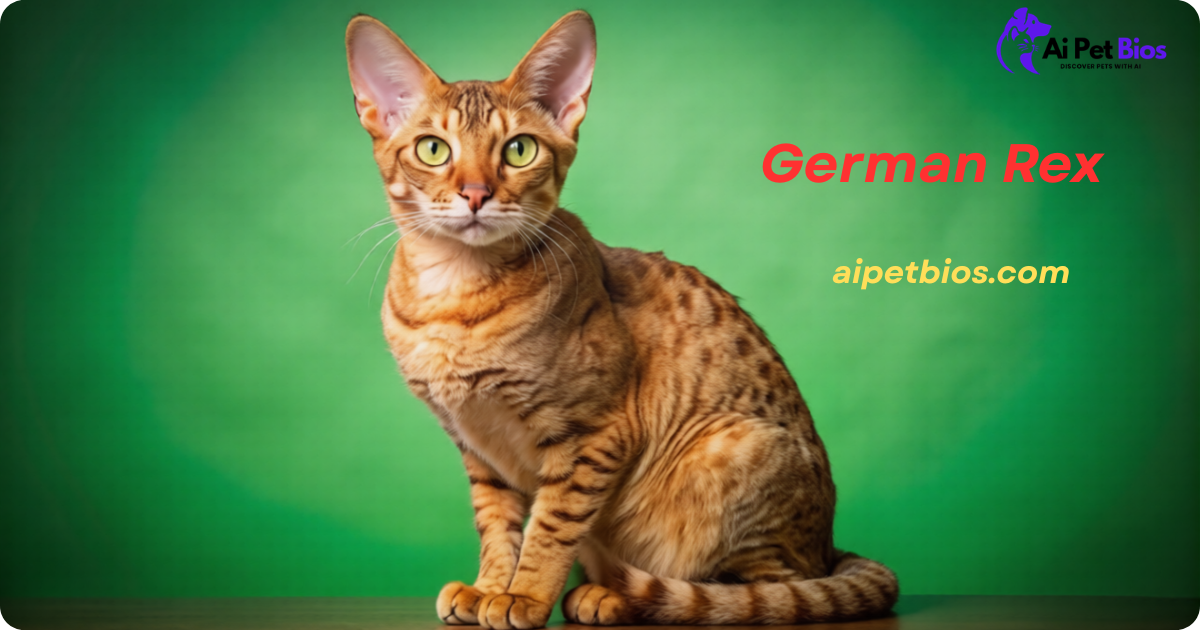
The German Rex cat is one of the world’s rarest and most distinctive feline breeds. It is characterized by a soft, curly coat that sets it apart from virtually all other domestic cats. Unlike the more widely recognized Devon Rex or Cornish Rex, the German Rex remains relatively unknown outside European breeding circles. This makes it a true hidden gem for cat enthusiasts seeking something genuinely unique.
Originating in East Berlin during the 1950s, the German Rex cat breed emerged from a single mutation in a domestic shorthair cat. Eventually, it developed into a recognized breed with distinctive physical characteristics and a charming, intelligent temperament. These cats combine the playful energy of their Rex cousins with a surprisingly calm demeanor. They are ideal for families and individuals seeking an uncommon, low-shedding companion.
The German Rex cat is recognized by FIFe (Fédération Internationale Féline) and TICA (The International Cat Association) as a distinct breed with specific breed standards.
This comprehensive guide explores everything you need to know about German Rex cats—from their fascinating history and unique coat characteristics to care requirements, pricing, and whether one suits your lifestyle.
Quick Facts Table
| Aspect | Details |
| Origin | East Berlin, Germany (1950s) |
| Size | Medium (5–8 lbs) |
| Coat Type | Soft, curly, short double coat |
| Lifespan | 10–15 years |
| Temperament | Intelligent, playful, affectionate, gentle |
| Activity Level | Moderate to high |
| Grooming Needs | Minimal (weekly brushing) |
| Health Issues | Generally healthy; rare genetic concerns |
| Hypoallergenic | Moderately (reduced shedding; not completely hypoallergenic) |
| Price Range | $800–$2,000+ (breeders); rare in shelters |
| Best For | Families, individuals seeking unique breeds, people with mild allergies |
7 Essential Facts About German Rex Cats
- Rare breed origin – The German Rex emerged from a single spontaneous curly-coat mutation in East Berlin in 1951, discovered in a domestic shorthair. Unlike other Rex breeds, the German Rex was never widely distributed outside Europe, maintaining rarity and exclusivity. Only a handful of breeders maintain bloodlines worldwide.
- Distinctive curly coat – The hallmark feature is a short, soft, densely curled double coat that feels like plush velvet. This curly texture reduces shedding by 70–80% compared to straight-haired cats, making German Rex cats moderately hypoallergenic for allergy-sensitive individuals (though not completely allergen-free).
- Compact athletic build – German Rex cats typically weigh 5–8 pounds with lean, muscular frames. Despite their small size, they’re surprisingly strong and agile, maintaining high activity levels throughout their lives.
- Exceptional intelligence – These cats demonstrate problem-solving abilities exceeding most domestic breeds. They can learn commands, use toilet training systems, and respond to complex environmental cues—traits documented in behavioral studies by feline behaviorists.
- Gentle, affectionate temperament – Unlike some high-energy Rex breeds, German Rex cats balance playfulness with calmness. They bond strongly with owners, enjoying interactive play followed by quiet lap time—a unique personality combination rare in domestic cats.
- Demanding socialization needs – German Rex cats require significant human interaction and environmental enrichment. Solitude exceeding 8 hours daily can cause behavioral issues including depression and destructive behaviors.
- Extremely limited availability – Fewer than 20 established German Rex breeders exist globally, with average waiting lists of 6–12 months. This rarity makes them among the most exclusive domestic cat breeds available.
What Is a German Rex? History and Origin
What Is a German Rex Cat? Complete Breed Overview
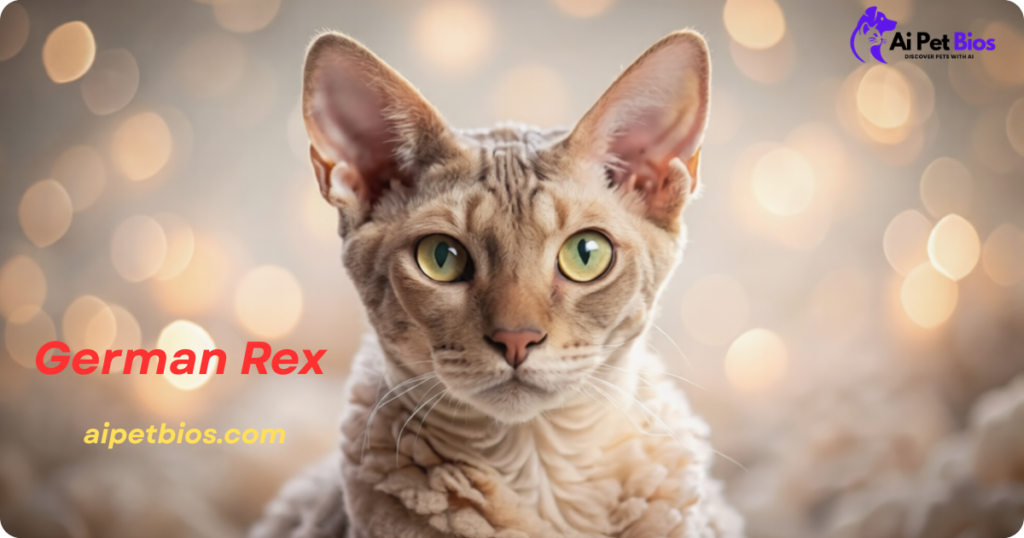
What is a German Rex cat? A German Rex cat is a naturally occurring domestic cat breed distinguished by its soft, curly coat and distinguished European lineage. Unlike selectively bred pedigreed cats, the German Rex descended from a single spontaneous genetic mutation affecting coat structure. This makes it genetically distinct from all other Rex breeds despite superficial similarities.
The German Rex cat is recognized by FIFe (Fédération Internationale Féline) and TICA (The International Cat Association) as a distinct breed with specific breed standards. Unlike many pedigreed cats developed through intentional breeding programs, the German Rex emerged through genetic chance rather than human design, creating a genuinely unique origin story.
Is Rex a Breed of Cat? Understanding Rex Classification
Is Rex a breed of cat? Yes, though “Rex” technically refers to a coat pattern mutation rather than a breed category. The Rex coat can occur in multiple breeds (Cornish Rex, Devon Rex, German Rex, Selkirk Rex), each developed independently with distinct genetic backgrounds. However, each Rex variety is recognized as a distinct breed with specific breed standards enforced by major cat associations.
The German Rex specifically represents a breed classification recognized by FIFe Standard 48 and TICA, with documented pedigrees, breeding restrictions, and breed characteristics that distinguish it from other Rex varieties and domestic cats generally.
What Is the History of the German Rex? Origins and Development
The history of the German Rex begins dramatically in post-World War II Berlin. In 1951, a domestic shorthair cat in East Berlin named Lampe gave birth to kittens with an unusual curly coat—the result of a spontaneous recessive mutation. Unlike the Cornish Rex (discovered in Cornwall, 1950) or Devon Rex (discovered in Devonshire, 1960), the German mutation occurred independently.
Early German Rex breeders, primarily based in East Germany, developed the breed in isolation during the Cold War era. This geographic isolation prevented cross-breeding with other Rex varieties, creating a genetically distinct population. When the Berlin Wall fell in 1989, German breeders began exporting cats to Western Europe and North America, but breeding remained tightly controlled.
Today, the German Rex remains the rarest Rex breed globally, with FIFe and TICA recognition but limited commercial breeding. This scarcity has preserved genetic diversity while creating extreme rarity—a double-edged sword for enthusiasts seeking authenticity but struggling with availability.
FIFe and TICA Recognition Standards
The Fédération Internationale Féline (FIFe) officially recognized the German Rex in the 1980s, establishing breed standards (FIFe Standard 48). The International Cat Association (TICA) added recognition in the 1990s. However, the Cat Fanciers’ Association (CFA) has not formally recognized the breed, limiting North American visibility compared to Cornish and Devon Rex cats.
Core Characteristics: Physical Features of German Rex Cats
German Rex Coat Structure and Texture: What Makes Them Unique
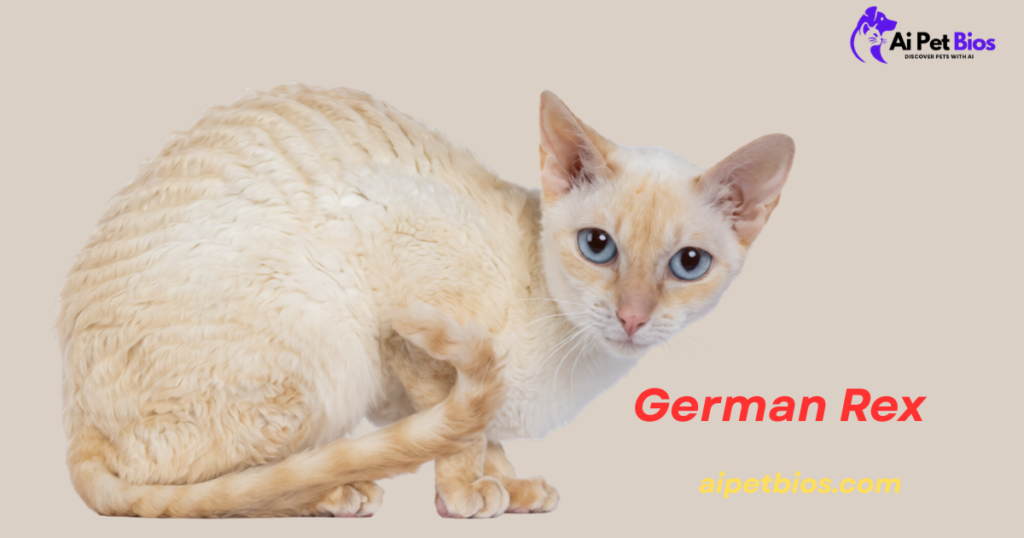
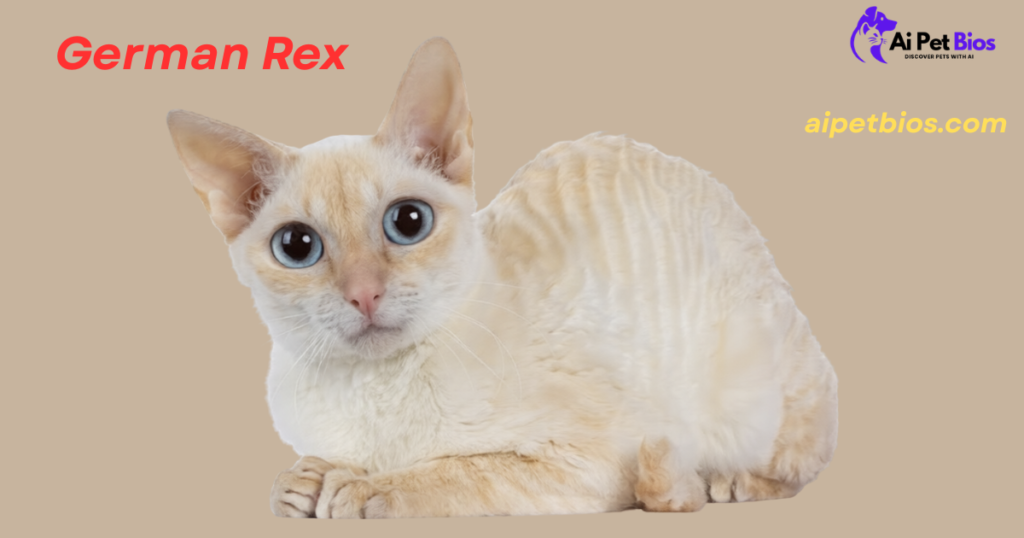
The defining characteristic of the German Rex is its extraordinary coat. The curly structure results from a recessive gene affecting hair shaft formation, creating a texture that feels like warm suede or velvet to the touch. Unlike the wave-like texture of Cornish Rex (which can appear more crimped), the German Rex coat is uniformly curled throughout.
Coat characteristics:
- Density: Double-layered with soft undercoat and equally soft guard hairs
- Curl pattern: Uniform, close-to-body curls; no straight guard hairs
- Texture: Plush, velvety, exceptionally soft
- Length: Short (0.5–1 inch), lying close to skin
- Shedding: 70–80% reduction vs. straight-haired cats
- Maintenance: Weekly brushing prevents matting; monthly baths maintain coat health
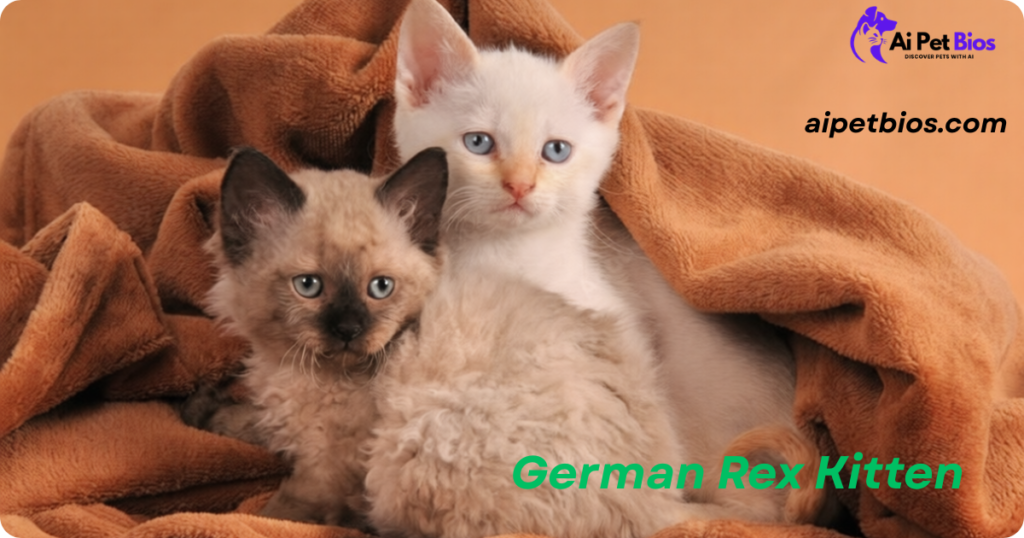
Interestingly, the German Rex coat continues to develop throughout kittenhood. Kittens are born with curly coats, but curl tightness increases until 6 months of age, reaching final texture by 12 months.
German Rex Physical Features: Body Structure and Appearance
German Rex cats display a distinctly different body type compared to other Rex breeds. Where Devon Rex cats appear elfin with large ears, and Cornish Rex display slender, whippet-like frames, German Rex cats present a more balanced, athletic appearance.
Physical traits:
- Head: Rounded with prominent cheekbones; moderately large ears
- Eyes: Large, expressive, slightly almond-shaped; color varies (amber, green, copper, blue acceptable)
- Ears: Medium-large, set high; alert but not oversized like Devon Rex
- Body: Compact, muscular, lean without appearing fragile
- Legs: Medium-length, strong, proportionate
- Paws: Small, delicate; often with webbed appearance due to curly hair between toes
- Tail: Medium length, tapered, covered in curly hair (creates “rat tail” appearance)
- Weight: 5–8 lbs (females 5–6 lbs; males 6–8 lbs)
German Rex Colors: Black, Orange, Tortie & All Color Variations
The German Rex appears in virtually all natural cat colors and patterns. Unlike some pedigreed breeds with restricted color standards, the German Rex breed standard accepts:
Solid colors: German Rex black, blue (gray), red, cream, white, chocolate, cinnamon
Patterns: Tabby (mackerel, classic, spotted, ticked), German Rex orange, German Rex tortie, bicolor, calico, colorpoint (rare)
Eye colors: All colors acceptable; color independence from coat color unusual in other breeds
No color is considered more desirable than others in breed standards, emphasizing genetic diversity over aesthetic preference. German Rex black provides higher contrast showcasing the curly coat texture, while German Rex orange displays warmer tones appealing to different aesthetic preferences.
German Rex Personality: What to Expect from This Breed
German Rex Cat Personality: Behavioral Characteristics
The German Rex personality distinguishes itself through a unique combination of intelligence, playfulness, and surprising gentleness—a personality profile uncommon among high-energy Rex breeds.
Intelligence: German Rex cats demonstrate exceptional problem-solving ability. They can learn complex behaviors: opening cabinet doors, using toilet training systems, responding to specific verbal commands, and manipulating puzzle feeders. This intelligence requires extensive environmental stimulation to prevent boredom-related behavioral issues.
Playfulness: Exceptionally playful yet remarkably gentle. German Rex cats engage in complex interactive play for 2–3 hours daily, preferring human participation over solo play. They rarely exhibit the aggressive pouncing common in other high-energy breeds.
Affection: Strong human attachment develops quickly. German Rex cats often follow owners room-to-room, greet them at doors, and seek constant physical contact—sometimes to clingy extremes. This breed is best suited for individuals with significant time for interaction.
Vocalization: Moderate communicators with distinctive voice quality. Unlike Siamese (extremely vocal), German Rex cats vocalize purposefully: requesting play, announcing feeding time, or expressing distress. They develop unique vocalizations their owners learn to interpret.
Social needs: German Rex cats are extremely social animals requiring 4–6 hours of human interaction or environmental engagement daily. Extended solitude (beyond 8 hours) causes visible depression, anxiety, and destructive behaviors including inappropriate elimination and furniture destruction.
Sensitivity: These cats are emotionally sensitive, responding strongly to household changes, loud noises, and owner stress. They read human emotions exceptionally well, often providing comfort during owner illness or distress.
German Rex vs. Devon Rex: Key Behavioral Differences
| Trait | German Rex | Devon Rex |
| Energy level | Moderate-high | Very high |
| Affection | High; clingy | High; demanding |
| Intelligence | Exceptional | High |
| Gentleness | High; gentle play | Moderate; rowdy |
| Sociability | Requires 4–6 hrs interaction | Requires 4–6 hrs interaction |
| Vocalization | Moderate | Vocal |
| Coat care | Weekly brushing | Weekly brushing |
Key differentiator: German Rex cats maintain greater calmness than their Devon or Cornish cousins, making them more suitable for families seeking playful-yet-gentle companions rather than extremely high-energy cats.
Are German Rex Cats Hypoallergenic? Complete Allergy Guide
Are German Rex Cats Hypoallergenic? The Complete Answer
Are German Rex cats hypoallergenic? Partially. The German Rex hypoallergenic status requires nuanced explanation: they are NOT completely hypoallergenic, but represent one of the most hypoallergenic domestic cat breeds available due to reduced shedding.
The German Rex cat hypoallergenic properties stem from their unique coat structure, which sheds 70–80% less than straight-haired cats. However, cat allergies stem primarily from proteins in cat saliva (Fel d 1), urine, and skin cells—not primarily from cat hair. Hair acts as a carrier, distributing these allergens throughout homes. By reducing shedding significantly, German Rex cats decrease allergen distribution.
Understanding Cat Allergies and German Rex Cat Allergy Relief
Cat allergies stem primarily from proteins in cat saliva (Fel d 1), urine, and skin cells—not primarily from cat hair. However, hair acts as a carrier, distributing these allergens throughout homes. By reducing shedding 70–80%, German Rex cats significantly decrease allergen distribution.
Hypoallergenic advantage of German Rex:
- Reduced shedding means fewer airborne allergens
- Less hair on furniture, bedding, and owner clothing
- Minimal allergen accumulation in home environments
- However, allergic individuals still experience some reaction to saliva and urine
Important caveat: True hypoallergenic cats don’t exist. Individuals with severe cat allergies experience reactions to German Rex cats despite the breed’s reduced shedding. Those with mild allergies often tolerate German Rex cats well.
Managing Cat Allergies with German Rex Cats: Practical Strategies
For allergy-sensitive individuals interested in German Rex cats:
- Spend 4–6 hours with adult German Rex cats before adoption to test tolerance
- Use HEPA air filters (reduce airborne allergens by 85%+)
- Bathe German Rex cats monthly (reduces skin cell shedding)
- Maintain regular grooming schedules
- Designate allergy-free bedroom zones
- Consider allergy medication consultation with physicians
German Rex Cat Price: Cost and Pricing Guide
How Much Does a German Rex Cat Cost? Complete Pricing Breakdown
The German Rex cat price varies significantly based on breeder reputation, bloodline, and geographic location. Unlike common domestic shorthairs, German Rex cats command premium pricing due to extreme rarity and breeding difficulty.
From established breeders:
- Standard kitten: $800–$1,500
- Show-quality kitten: $1,500–$2,500
- Breeding-rights kitten: $2,000–$3,500
- Pet-quality adult: $600–$1,200 (retired breeding cats)
Factors affecting price:
- Breeder reputation and experience
- Bloodline quality and genetics
- Color (some colors command premiums)
- Show potential assessment
- Health guarantees provided
- Geographic location (European cats typically less expensive than North American)
Additional first-year costs:
- Veterinary care (exams, vaccinations, spay/neuter): $400–$800
- High-quality food: $300–$600/year
- Grooming supplies and maintenance: $200–$400
- Enrichment toys and structures: $200–$400
- Estimated first-year total: $2,100–$4,700
German Rex Kittens for Sale: Where to Find Ethical Breeders
Reputable sources for German Rex kittens for sale:
- Established TICA/FIFe-registered German Rex breeders
- Breed-specific rescue organizations (extremely rare)
- International cat registries with breeder directories
- European breeding networks (often more accessible than North American)
Where to AVOID:
- Online classifieds without verifiable breeder credentials
- Pet shops and mills claiming “rare Rex breeds”
- Breeders unable to provide health testing documentation
- Sellers offering “German Rex for sale” without FIFe/TICA backing
- Breeders with limited breed experience
- Prices significantly below established market rates
German Rex Cat for Sale Near Me: Finding Local or International Sources
Most regions have no local German Rex breeders. Expect to:
- Search internationally (primarily Europe)
- Import from established European breeders
- Wait 6–12 months for availability
- Pay international shipping ($500–$1,500)
- Arrange health certificates and customs documentation
German Rex Breeder: What to Look for in Ethical Breeders
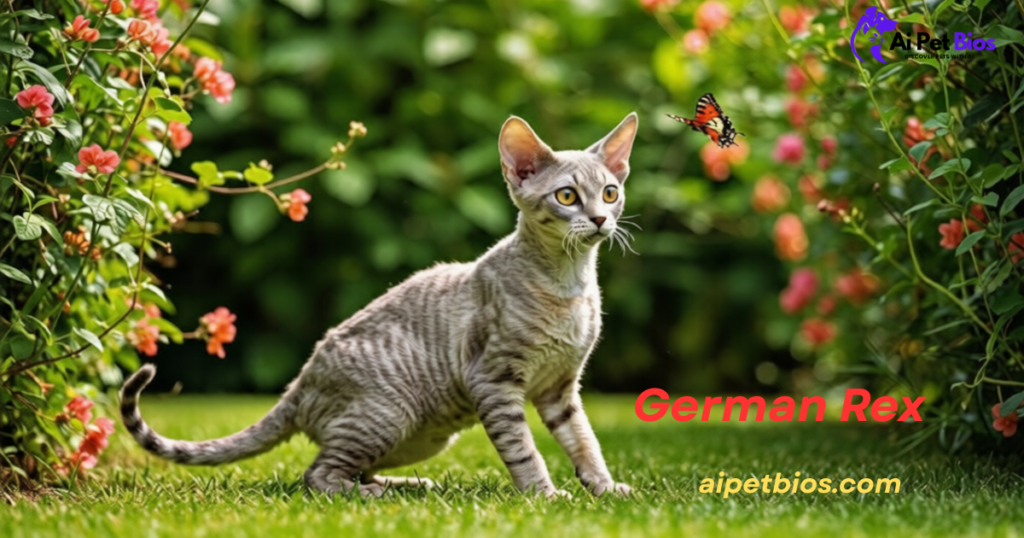
When searching for a German Rex breeder, prioritize:
Credentials:
- TICA or FIFe registration and membership
- Health testing documentation (genetic screening, cardiac evaluations)
- References from previous buyers
- Visible breeding facilities or facility photos/videos
- Contracts with health guarantees (minimum 1 year)
Ethical indicators:
- Spay/neuter requirements for pet-quality kittens
- Limited litter frequency (no more than 2–3 litters/year per cat)
- Willingness to discuss genetics and breeding decisions
- Support and guidance throughout kitten’s life
- Return policy if adoption doesn’t work out
Red flags:
- Refusal to discuss parents’ health testing
- Pressure to purchase quickly
- Payment requirements before kitten is ready
- No contract or guarantees offered
- Unable or unwilling to provide breeder references
Care and Maintenance: German Rex Cat Care Requirements
German Rex Grooming: Coat Maintenance and Bathing Schedule
The German Rex coat requires more maintenance than straight-haired cats despite reduced shedding.
Weekly grooming routine:
- Gentle brushing with soft-bristle brush or metal comb (removes loose curls, prevents matting)
- Ear cleaning with veterinary-approved solution (ear structure differs from other breeds; humidity accumulation risk)
- Nail trimming (every 2–3 weeks)
- Dental inspection (tartar monitoring)
Monthly bathing:
- Use lukewarm water (these cats tolerate water better than most breeds)
- Cat-specific moisturizing shampoo (essential for coat health)
- Gentle drying with soft towels (avoid high-heat blow dryers that damage curls)
- Air-drying preferred when possible
Environmental considerations:
- Low humidity environments ideal (high humidity causes coat flattening)
- Avoid excessive air conditioning (can dry skin)
- Maintain consistent 65–75°F temperature range
- Provide humidity control during dry seasons
German Rex Nutrition: Diet and Feeding Requirements
German Rex cats thrive on high-quality, high-protein diets supporting their active metabolism.
Recommended nutrition:
- Protein: 30–40% (supporting muscle maintenance and activity)
- Fat: 10–15% (essential for coat and skin health)
- Carbohydrates: 0–10% (cats are obligate carnivores; lower is better)
- Taurine: 0.1% minimum (essential amino acid; cats cannot synthesize)
- Specialized nutrients: Omega-3 and omega-6 fatty acids support coat quality
Feeding schedule:
- Kittens (under 1 year): 3–4 meals daily
- Adults (1–7 years): 2 meals daily
- Seniors (7+ years): 2–3 smaller meals
Food type options:
- High-quality wet food (70–80% moisture; supports hydration)
- Premium dry kibble (350–450 calories per 100g; dental benefits)
- Raw diets (requires veterinary nutritionist oversight)
- Home-cooked meals (must be nutritionally complete)
German Rex Enrichment: Environmental Stimulation Needs
German Rex cats require extensive environmental stimulation to prevent behavioral problems.
Essential enrichment elements:
- Interactive play: 2–3 hours daily with human participation (feather wands, laser pointers, toys)
- Vertical spaces: Cat trees, wall shelves, window perches (minimum 3 structures)
- Puzzle feeders: Mental stimulation during feeding time
- Training opportunities: Harness walking, toilet training, command learning
- Window access: Bird feeders and outdoor stimulation
- Social interaction: Multi-cat households or frequent human engagement
- Hunting simulation: Automated toys, treat-dispensing games, hide-and-seek play
Insufficient enrichment (less than 4 hours daily engagement) commonly results in destructive behaviors, anxiety, and inappropriate elimination.
Health Considerations: Are German Rex Cats Rare? Health Issues Explained
Are German Rex Cats Rare? Understanding Breed Rarity and Availability
Are German Rex cats rare? Extremely. The German Rex is among the world’s rarest domestic cat breeds. Fewer than 20 established breeders maintain bloodlines globally (compared to thousands for more common breeds). Geographic origin in isolated East Berlin, coupled with limited post-Cold War distribution, created a closed breeding population.
Today, German Rex kittens command 6–12 month wait lists, with annual births globally numbering in the hundreds. Rarity translates to higher prices ($800–$2,500+) and limited availability compared to other Rex breeds or conventional domestic cats.
Overall Health Status of German Rex Cats
German Rex cats are generally healthy breed with few breed-specific genetic issues. The limited breeding population and careful genetic selection by dedicated breeders have minimized inherited diseases compared to many pedigreed breeds.
Potential health concerns (rare):
- Hypertrophic cardiomyopathy (HCM): Heart disease affecting some cats; rare in German Rex but warrants screening in breeding cats
- Patellar luxation: Knee joint issues; occasionally reported but not breed-endemic
- Ear health: Unique ear structure may predispose to infections; regular cleaning essential
- Skin sensitivities: Some individuals prone to dry skin or dermatitis in low-humidity environments
- Dental disease: Tartar accumulation affects 30–40% of older cats; preventable through regular care
Lifespan and Aging: How Long Do German Rex Cats Live?
German Rex cats typically live 10–15 years, with some exceeding 18 years with optimal care. Factors extending lifespan:
- High-quality nutrition
- Regular veterinary care
- Environmental enrichment maintaining mental health
- Weight management (obesity reduces lifespan 2–4 years)
- Stress reduction and stable home environment
German Rex vs. Devon Rex: Comprehensive Breed Comparison
What Is the Difference Between German Rex and Devon Rex? Complete Comparison
| Aspect | German Rex | Devon Rex |
| Origin | East Berlin, Germany (1951) | Devonshire, England (1960) |
| Coat type | Uniformly curled, plush | Wavy to curled; varies individually |
| Coat feel | Velvety, extremely soft | Soft but less consistent |
| Size | Medium (5–8 lbs) | Small-medium (6–9 lbs) |
| Body type | Balanced, athletic | Elfin, delicate |
| Ear size | Proportionate, medium-large | Large, bat-like |
| Temperament | Playful but gentle; moderate energy | Very high energy; mischievous |
| Sociability | Affectionate, requires interaction | Extremely demanding, velcro cats |
| Intelligence | Exceptional problem-solving | High but more impulsive |
| Rarity | Extremely rare (fewer breeders) | Rare but more available |
| Price | $800–$2,500 | $600–$1,500 |
| Availability | 6–12 month wait lists | 3–6 month wait lists |
| Health concerns | Minimal breed-specific issues | Similar to German Rex |
Key differentiator: German Rex cats are calmer and more intelligent than Devon Rex, making them better suited for individuals seeking playful-but-manageable companions rather than extremely high-energy cats.
Pros and Cons: Is a German Rex Right for You?
| Pros | Cons |
| ✅ Exceptionally rare; truly unique breed | ❌ Extremely expensive ($800–$2,500+) |
| ✅ Soft, hypoallergenic-friendly coat; reduced shedding | ❌ Minimal breeder availability; long wait lists |
| ✅ Highly intelligent; trainable; problem-solving ability | ❌ Demanding of human interaction (4–6 hrs daily) |
| ✅ Affectionate without extreme clinginess | ❌ Behavioral issues if under-stimulated |
| ✅ Generally healthy; few breed-specific genetic issues | ❌ Limited rescue/adoption availability |
| ✅ Moderate size; apartment-friendly (with enrichment) | ❌ Specialized veterinary care needed |
| ✅ Gentle play style; good with children | ❌ Coat maintenance required; not wash-and-wear |
| ✅ 10–15 year lifespan; long-term companion | ❌ Sensitive to temperature/humidity extremes |
| ✅ Suitable for mild allergy sufferers | ❌ International acquisition often necessary |
Is a German Rex Right for You? Self-Assessment Questionnaire
Consider a German Rex if you:
✅ Want a truly rare, exclusive breed
✅ Have significant daily time for interactive play and enrichment
✅ Seek a highly intelligent cat with trainable personality
✅ Have mild cat allergies and appreciate reduced shedding
✅ Can afford premium adoption costs ($800–$2,500+)
✅ Are patient with 6–12 month breeder wait lists
✅ Prefer gentle, affectionate temperaments over hyperactive energy
✅ Can provide climate-controlled environments (65–75°F; moderate humidity)
✅ Enjoy international adoption processes and logistics
Score: 7+ “Yes” answers = Excellent fit for German Rex
Reconsider a German Rex if you:
❌ Need an immediately available cat (prefer shelter adoption)
❌ Have limited daily time (less than 4 hours for interaction)
❌ Seek a low-cost pet cat
❌ Prefer independent cats requiring minimal socialization
❌ Live in extremely hot, dry climates
❌ Are unable to afford specialized veterinary care
❌ Want a traditional, widely-available breed
❌ Have very young children (German Rex cats can be fragile)
❌ Struggle with international shipping and customs procedures
Score: 3+ “Yes” answers = May want to explore other breeds
Real-World German Rex Ownership Stories
Case Study 1: Sarah (Berlin) – First-Time German Rex Owner
Sarah, 32, imported her first German Rex kitten, “Mila,” from an established German breeder in 2021.
“When I learned about the German Rexbreed, I felt like I’d discovered a secret. These cats were developed in my hometown but are virtually unknown here now. The waiting period was 8 months, which felt eternal, but when Mila arrived, I understood immediately why people rave about them.
She’s incredibly intelligent—she learned to walk on a harness in days and now demands regular outdoor walks. But what strikes me most is her gentleness. She’s playful without being rough, affectionate without being demanding to the point of annoyance. Her coat is genuinely unlike anything I’ve felt on another cat—pure velvet. The grooming isn’t burdensome; weekly brushing takes 10 minutes. My only regret is not adopting sooner. Mila has become my perfect companion.”
Key takeaway: German Rex cats reward patient acquisition with exceptional companionship and trainability.
Case Study 2: The Johnson Family (Toronto) – Allergy Accommodation
The Johnson family (adults and 7-year-old daughter Emma) adopted a German Rex kitten named “Leo” specifically for Emma’s mild cat allergies.
“Emma desperately wanted a cat, but her allergies made ownership impossible with normal breeds. Our allergist mentioned reduced-shedding cats, and we discovered the German Rex. The adoption process took longer and cost more than expected—nearly $2,000 total with import fees—but Leo has been transformative for our family.
Emma’s allergy symptoms are minimal with Leo (occasional sneezing vs. previous itching and respiratory issues). More importantly, Leo is gentle enough for Emma to handle without injury risk. He’s patient with her rough petting and enthusiastic hugging. His intelligence amazes us; he learned to use a toilet within weeks. We’re convinced German Rexcats are underrated outside cat-show communities.”
Key takeaway: German Rex cats provide viable pet options for allergy-sensitive families prioritizing both health and companionship.
Case Study 3: Dr. Martin (Vienna) – Feline Geneticist and Breeder
Dr. Martin, a feline genetics researcher, has maintained German Rex breeding lines for 12 years.
“The German Rexrepresents something special in feline genetics—a naturally occurring coat mutation that differs genetically from other Rex breeds despite phenotypic similarities. As a breeder and scientist, I’m committed to preserving this breed’s genetic integrity while eliminating inherited health issues. Every breeding decision involves health testing, genetic screening, and careful temperament assessment. We breeders are few because the responsibility is immense.
When I place a kitten, I’m aware I’m representing an entire breed to that owner. The extraordinary intelligence I see in these cats—their problem-solving, their empathy—suggests the coat mutation may be linked to neurological complexity. My lifetime goal is ensuring the German Rexremains healthy, genetically diverse, and available for enthusiasts worldwide.”
Key takeaway: Dedicated breeders recognize German Rex cats as genetically unique, requiring specialized care and expertise to preserve breed integrity.
Frequently Asked Questions: German Rex Cat
What is a German Rex Cat?
A German Rex cat is a naturally occurring domestic cat breed distinguished by a soft, curly coat and descended from a single spontaneous mutation in East Berlin (1951). Unlike selectively bred pedigreed cats, the German Rex emerged through genetic chance rather than intentional breeding programs.
Today, German Rex cats represent one of the rarest domestic cat breeds, with fewer than 20 established breeders globally. They combine the playful nature of Rex cousins with exceptional intelligence, moderate energy levels, and affectionate temperaments uniquely suited to dedicated cat enthusiasts.
Are German Rex Cats Rare? Understanding Extreme Rarity
Are German Rex cats rare? Extremely. The German Rex is among the world’s rarest domestic cat breeds. Fewer than 20 established breeders maintain bloodlines globally (compared to thousands for more common breeds).
Geographic origin in isolated East Berlin, coupled with limited post-Cold War distribution, created a closed breeding population. Today, German Rex kittens command 6–12 month wait lists, with annual births globally numbering in the hundreds. Rarity translates to higher prices ($800–$2,500+) and limited availability compared to other Rex breeds or conventional domestic cats.
Are German Rex Cats Hypoallergenic? Allergy Information
Are German Rex cats hypoallergenic? Partially. The German Rex hypoallergenic status requires nuance: they’re not completely hypoallergenic, but among the most hypoallergenic domestic cat breeds available. The reduced-shedding coat (70–80% less shedding than straight-haired cats) significantly decreases allergen distribution through homes.
However, cat allergies stem primarily from proteins in saliva, urine, and skin cells—not hair alone. Individuals with mild allergies typically tolerate German Rex cats well; those with severe allergies still experience reactions despite the breed’s advantages. Testing compatibility with adult German Rex cats before adoption is essential for allergy-sensitive individuals.
How Much Does a German Rex Cat Cost? Complete Pricing Guide
German Rex cat price ranges significantly: $800–$1,500 for standard kittens from established breeders, $1,500–$2,500 for show-quality kittens, and $2,000–$3,500 for kittens with breeding rights. Factors affecting price include breeder reputation, bloodline quality, color, show potential, health guarantees, and geographic location.
First-year ownership costs (veterinary care, food, enrichment, grooming supplies) add $1,300–$3,200, bringing total first-year investment to $2,100–$4,700. Unlike common domestic shorthairs ($50–$200), German Rex cats represent premium, exclusive pet purchases reflecting their genetic rarity and breeder dedication.
What Is the Difference Between German Rex and Devon Rex? Breed Comparison
Key differences between German Rex and Devon Rex include coat uniformity (German Rex uniform curling vs. Devon Rex variable waves), body type (German Rex balanced vs. Devon Rex elfin), temperament (German Rex calmer vs. Devon Rex extremely high-energy), and rarity (German Rex rarer with longer wait lists).
Both breeds share playfulness, intelligence, and vocal expressiveness, but German Rex cats are better suited for individuals seeking playful-yet-manageable companions, while Devon Rex suits those tolerating high-energy personalities. German Rex cats also command higher prices reflecting greater rarity, with fewer breeders available than Devon Rex.
Conclusion: Is the German Rex Your Ideal Companion?
The German Rex cat represents a genuinely rare opportunity to own a breed few people ever encounter—a living connection to post-World War II Berlin with distinctive physical characteristics and exceptional intelligence.
These cats combine the playful spirit of Rex breeds with surprising gentleness, moderate energy appropriate for families and individuals, and moderately hypoallergenic properties benefiting allergy-sensitive owners.
However, German Rex cat ownership demands commitment: significant financial investment ($2,100–$4,700 first year), daily interactive engagement (4–6 hours), patience with extended breeder wait lists (6–12 months), and international logistics if located outsideprimary breeding regions.
The reward for this dedication is an extraordinarily rare, intelligent, affectionate companion with a unique coat and personality unattainable in other breeds.
From dedicated breed enthusiasts to allergy-sensitive families seeking alternatives, the German Rex offers genuine exclusivity and companionship rarely found in modern cat ownership. These cats thrive with owners appreciating their rarity, intelligence, and gentle temperament—owners treating them as the precious, limited-population breed they truly are.
Next Steps for Prospective German Rex Owners
- Contact established breeders through TICA/FIFe registries and breed associations
- Verify breeder credentials including health testing, genetic screening, and reference availability
- Prepare for 6–12 month wait lists and financial investment of $2,100–$4,700 first year
- Arrange climate-controlled environment (65–75°F; moderate humidity) before kitten arrives
- Plan enrichment infrastructure (cat trees, interactive toys, harness/leash equipment)
- Schedule veterinary consultations with breeders’ recommendations for specialized care
- Arrange grooming supplies (soft-bristle brush, cat-specific shampoo, nail trim tools)
- Commit to 4–6 hours daily interactive play and environmental engagement
Resources for German Rex Ownership
- The International Cat Association (TICA): Breed standard recognition and breeder directory
- FIFe (Fédération Internationale Féline): European breed standards and breeder networks
- German Rex Breed Clubs: Specialized organizations providing education and support
- Feline Genetics Research: Academic resources on coat mutations and breed development
- International Cat Care: Enrichment and behavior guidance for Rex breeds
Disclaimer
This article provides informational content about German Rex cat characteristics, care, ownership, and breed history. It is not a substitute for professional veterinary advice. Always consult qualified veterinarians specializing in exotic or rare breeds for health concerns, dietary questions, or behavioral challenges.
Adoption decisions should be made thoughtfully, considering financial commitment, time availability, environmental requirements, and lifestyle compatibility. Not all individuals are suitable for German Rex cat ownership; honest self-assessment ensures optimal placement for both humans and animals.
Courtesy: Cats Wiz
[instant_emoji_reactions]

Want Popular On Google? | Lust Quality Backlinks That Force-fed
I’m an SEO Expert, Guest Posting Specialist, and Web Developer helping websites increase rankings, traffic, and authority using clean, white-hat strategies 🚀
I focus on high-authority guest posts, safe backlinks, SEO-optimized content, and technically sound websites—so your site doesn’t just rank, it stays ranked.
What I help you with:
✅ SEO (On-page, Off-page & Technical)
✅ Guest Posts on Real, Relevant Sites
✅ High-Quality Link Building
✅ Keyword Research & Content Strategy
✅ SEO-Friendly Website Development
📈 No spam. No shortcuts. Only results.
👉 Need backlinks that actually work?
📩 Let’s connect: https://wa.me/+923006932631
1 thought on “Discover the Joy of the German Rex Cat: 7 Surprising Facts & Ultimate Breed Guide”
Comments are closed.