
Introduction
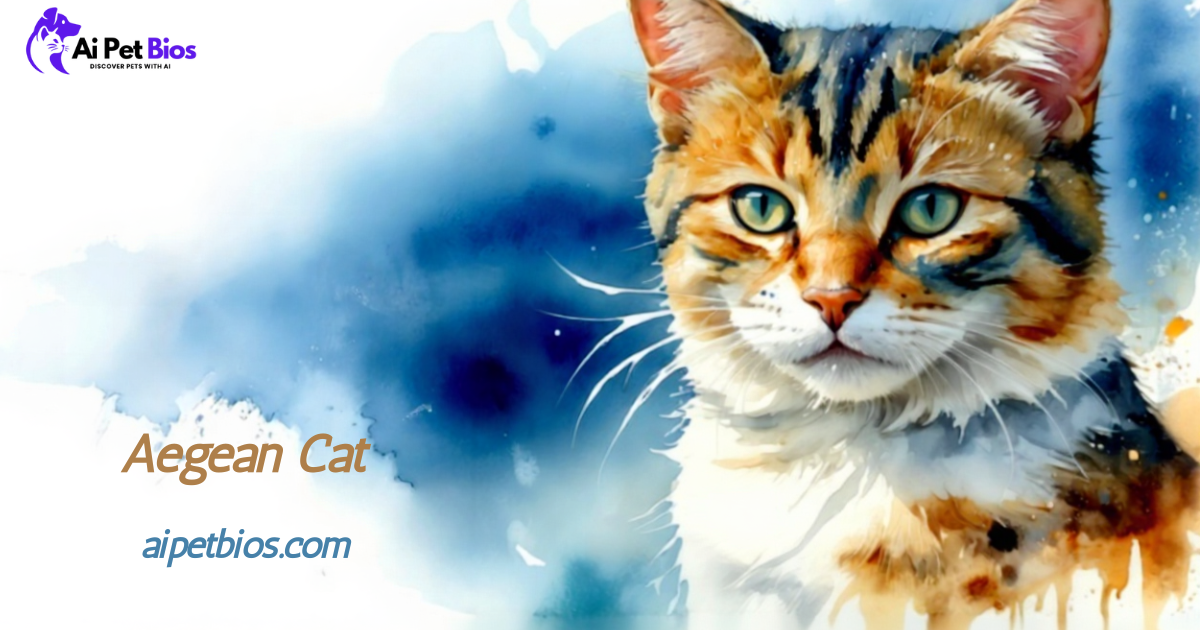
Aegean cat enthusiasts often marvel at how this ancient breed, hailing from sun-drenched Greek islands, combines wild independence with heartfelt companionship. Picture a sleek feline darting along azure shores, chasing waves and befriending fishermen – that’s the essence of the Aegean cat.
As one of the oldest domesticated cats, this natural landrace has evolved over millennia without human meddling, making it a resilient and adaptable pet. In this guide, we delve into everything from their storied origins to practical care, helping you decide if this charming island native fits your home.
Whether you’re drawn to their playful antics or striking looks, the Aegean cat promises a rewarding bond for the right owner.
Quick Facts Table
| Fact Category | Details |
| Origin | Cycladic Islands, Greece |
| Size | Medium (7-10 pounds) |
| Coat | Semi-long, bicolor or tricolor with dominant white |
| Eye Color | Almond-shaped, shades of green (sometimes blue or yellow) |
| Lifespan | 9-12 years |
| Personality | Friendly, intelligent, active, vocal |
| Grooming Needs | Moderate (weekly brushing) |
| Health | Generally robust, no breed-specific genetic diseases |
| Activity Level | Moderate to high |
| Good With | Families, children, other pets |
| Rarity | Common in Greece, rare elsewhere |
| Price Range | $300-$500 (if available) |
Origin & History
The Aegean cat traces its roots to the Cycladic Islands in the Aegean Sea, where it emerged as a natural landrace over 10,000 years ago. Archaeological finds from nearby Cyprus suggest early domestication, with cats likely arriving in Greece aboard ancient fishing and trading vessels. These felines earned their keep by hunting rodents, becoming invaluable to island communities.
Greeks prize the Aegean cat as a national treasure, the only native breed to their homeland. They share ancestry with Turkish breeds like the Angora, reflecting centuries of regional exchange. While feral populations thrive in fishing ports and cafes, formal breeding started in the 1990s by Greek fanciers. Despite this, major organizations like the Cat Fanciers’ Association do not recognize them, keeping the breed rare outside Greece and Turkey.
Today, these cats symbolize resilience, adapting from wild island life to domestic companionship. Their history underscores a bond with humans forged through utility and affection, not selective breeding.
Physical Characteristics
Aegean cat characteristics shine through their medium-sized, muscular frames, typically weighing 7-10 pounds. They boast lean bodies built for agility, with strong legs and large, round paws perfect for hunting or playful leaps.
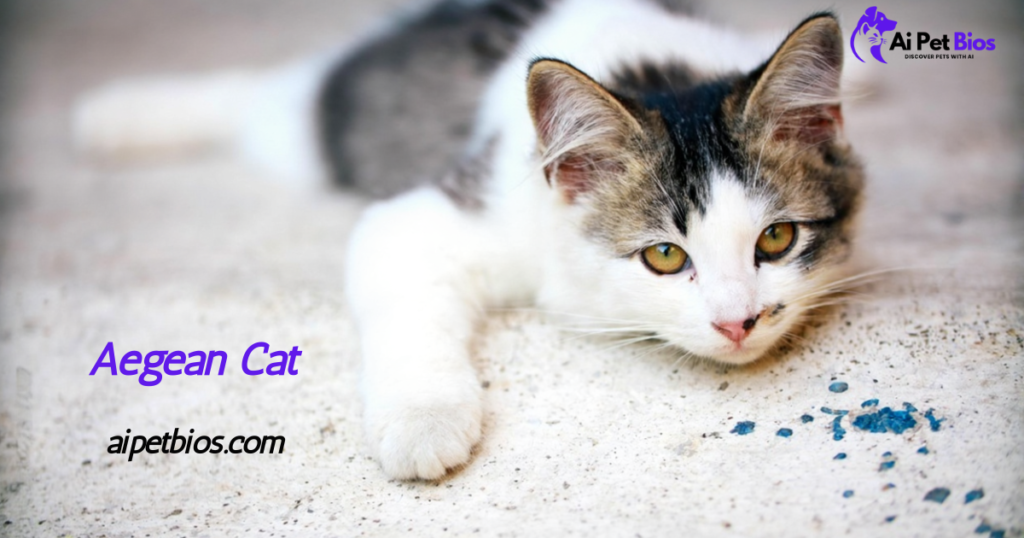
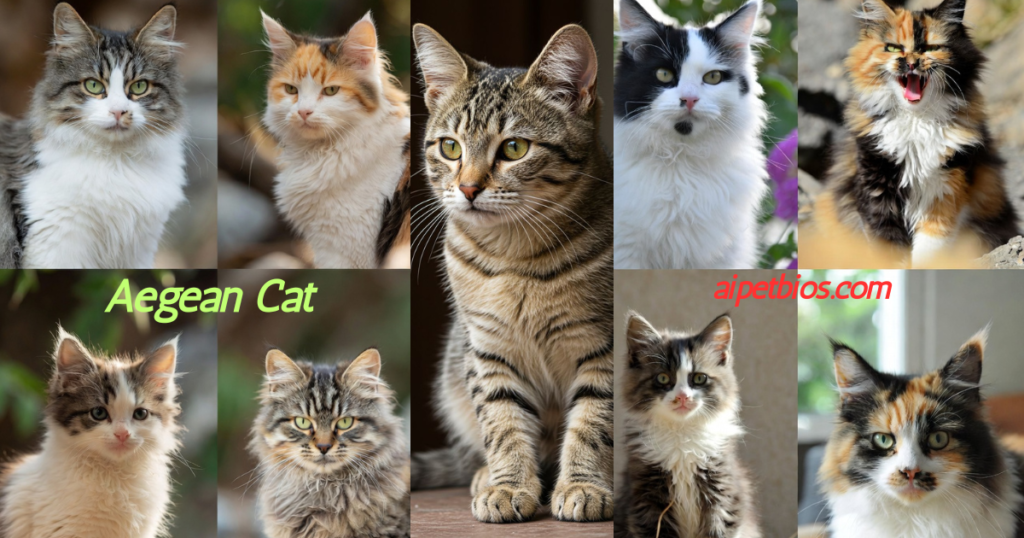
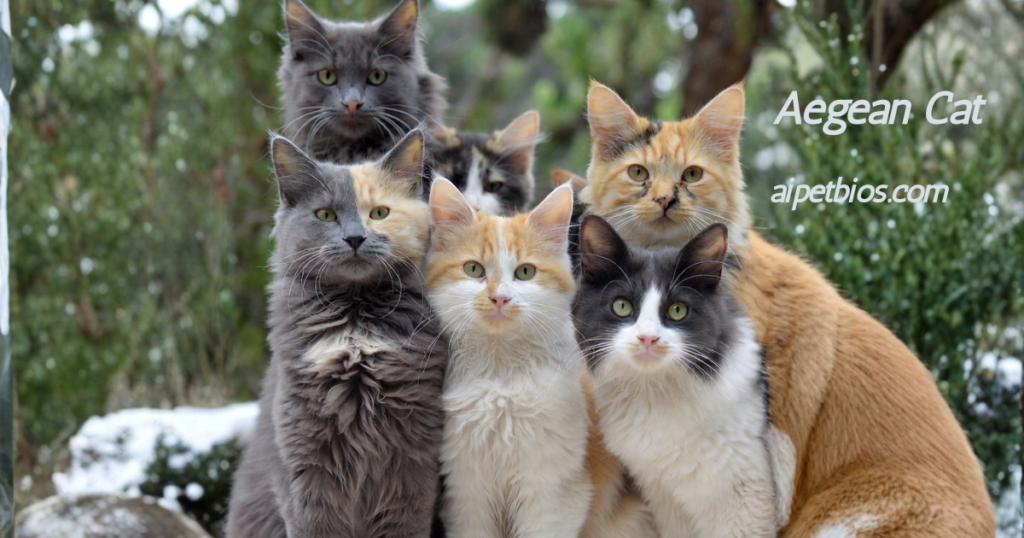
Their semi-long coats adapt seasonally – bushy in winter for warmth, shedding to appear shorthaired in summer. Predominantly white (covering 25-90% of the body), coats feature bicolor or tricolor patterns in black, red, blue, cream, or grey, often with tabby stripes. Aegean cat colors vary widely, including Aegean cat black and white, Aegean cat white, and Aegean cat orange accents.
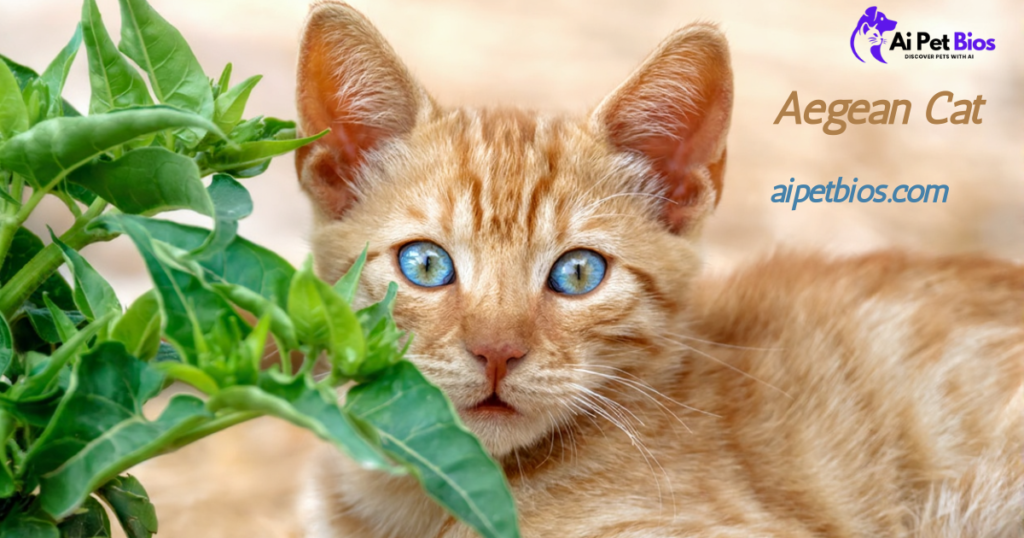
Heads display rounded features with wide-set ears that have rounded tips and fur coverage. Almond-shaped eyes gleam in green hues, occasionally blue or yellow, adding to their expressive gaze. Tails are long, thick, and sometimes hooked, enhancing balance during adventures.
Overall, their appearance reflects island origins – sturdy yet elegant, ready for both relaxation and action.
Personality & Temperament
Aegean cat personality captivates with a mix of sociability and independence. These cats form strong bonds, greeting family members with enthusiasm and enjoying laps or shoulders for cuddles.
Intelligent and communicative, they chirp and meow to express needs, making interactions lively. Their playful energy suits active homes, where they chase toys or explore heights. Aegean cats adapt well to apartments but crave attention, disliking long solos.
Friendly with children, dogs, and other cats, they thrive in bustling environments. Their love for water sets them apart – expect paw-dipping in bowls or fascination with faucets. While affectionate, they retain a curious, hunter’s instinct, making them engaging companions.
Diet & Feeding Guide
Feed your Aegean cat high-quality, protein-rich food to match their active lifestyle. Opt for wet or canned options with fish like salmon or tuna, providing essential taurine and omega-3s for coat health.
Portion control prevents obesity – adults need about 200-300 calories daily, split into two meals. Avoid fillers like corn or wheat; choose age-appropriate formulas for kittens, adults, or seniors.
Fresh water is crucial, especially given their water affinity – consider fountains to encourage drinking. Treats should comprise no more than 10% of intake; try freeze-dried fish for variety.
Consult vets for personalized plans, and monitor weight through regular weigh-ins.
(For affiliate: Recommend brands like Blue Buffalo Wet Cat Food for balanced nutrition.)
Grooming & Maintenance
Groom Aegean cats weekly with a slicker brush to remove loose hair and prevent mats. Their semi-long coats shed more in spring, so increase sessions during seasonal changes.
Trim nails monthly to avoid scratches, and clean ears every few weeks with cat-safe solutions. Brush teeth regularly using veterinary toothpaste to ward off plaque.
Bathing is rare unless needed, but their water love makes it tolerable. Introduce routines early for stress-free maintenance.
For aegean cat litter, choose clumping varieties for easy cleanup – suggest World’s Best Cat Litter for odor control.
Address aegean cattle shed by providing scratching posts to manage natural shedding behaviors.
Common Health Concerns (Informational Only)
Aegean cats boast robust health, free from most genetic diseases thanks to natural evolution. However, like all felines, they may face obesity if overfed or inactive.
Dental issues can arise without brushing, and ear infections from dirt buildup. Annual vet visits detect early signs of common ailments like kidney problems in seniors.
Aegean cat lifespan averages 9-12 years with proper care. Vaccinations and parasite prevention are key.
This information educates; always seek professional veterinary advice.
Training & Care Tips
Train Aegean cats using positive reinforcement – their intelligence makes them quick learners for tricks like fetch or leash walking. Start with basic commands, rewarding with treats.
Provide enrichment: cat trees, puzzle toys, and interactive wands keep them stimulated. Secure homes by removing toxins and covering aquariums, given their fishing instincts.
For aegean catering to their needs, create safe outdoor enclosures like catios. Socialize early for harmonious living with pets.
Regular play sessions combat boredom, and monitor for stress signs like excessive meowing.
Pros and Cons (Balanced View)
Pros:
- Affectionate and family-friendly.
- Low health risks.
- Adaptable to various homes.
- Playful and engaging personality.
- Minimal grooming compared to longhaired breeds.
Cons:
- Requires attention; dislikes solitude.
- Rare availability outside Greece.
- Potential for high energy demanding playtime.
- Shedding increases seasonally.
- Curiosity may lead to mischief, like water play.
Is This Right for You?
Consider an Aegean cat if you seek a sociable, active companion for a lively household. They suit families with kids or other pets, provided you offer interaction and enrichment.
If you travel often or prefer low-energy pets, they might not fit – their need for company is key. Budget for aegean cat price, around $300-$500, plus import costs if sourcing from Greece.
Assess your lifestyle: Do you enjoy playful, vocal cats? Can you provide safe outlets for their island spirit? If yes, this breed brings joy and loyalty.
For aegean cats for sale, check reputable Greek breeders or rescues, ensuring health certifications.
Frequently Asked Questions
Are Aegean cats rare?
Yes, Aegean cats remain rare outside Greece and Turkey, where they thrive as feral or domestic pets. Acquiring one often involves traveling to their homeland.
Are Aegean cats tabby cats?
Many Aegean cats display tabby markings in their coats, alongside bicolor patterns, but not all are strictly tabbies.
What is an Aegean cat?
An Aegean cat is a natural Greek breed from the Cycladic Islands, known for medium size, semi-long fur, and friendly temperament.
Are Aegean cats vocal?
Aegean cats are moderately vocal, using meows and chirps to communicate needs and affections effectively.
Aegean cat pronunciation?
Pronounce it as “ee-JEE-an cat,” reflecting its Greek origins.
Conclusion
Embracing an Aegean cat means welcoming a piece of ancient Greece into your home – a resilient, loving feline that enriches daily life with play and companionship. Their natural health and adaptability make them a hidden gem for cat lovers.
For more, explore our guides on similar breeds like the Turkish Angora or cat grooming essentials. Consider affiliate products like interactive toys from Chewy to keep your pet engaged.
Disclaimer: This article provides general information; consult a veterinarian for specific health advice.

Want Popular On Google? | Lust Quality Backlinks That Force-fed
I’m an SEO Expert, Guest Posting Specialist, and Web Developer helping websites increase rankings, traffic, and authority using clean, white-hat strategies 🚀
I focus on high-authority guest posts, safe backlinks, SEO-optimized content, and technically sound websites—so your site doesn’t just rank, it stays ranked.
What I help you with:
✅ SEO (On-page, Off-page & Technical)
✅ Guest Posts on Real, Relevant Sites
✅ High-Quality Link Building
✅ Keyword Research & Content Strategy
✅ SEO-Friendly Website Development
📈 No spam. No shortcuts. Only results.
👉 Need backlinks that actually work?
📩 Let’s connect: https://wa.me/+923006932631
1 thought on “The Unusual, Enchanting Aegean Cat: Look 10 Thrilling Facts”