
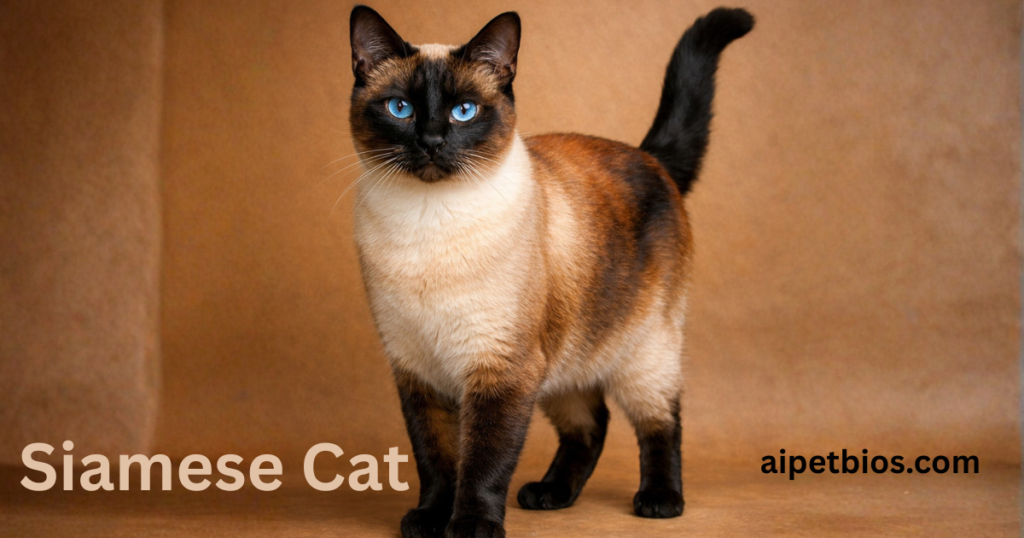
The Siamese Cat: The Vocal Intellectual of the Feline Kingdom
If the Persian is the quiet aristocrat, the Siamese is the charismatic conversationalist. With a history steeped in the royal palaces of Thailand (formerly Siam), this breed has transitioned from a sacred temple guardian to one of the most beloved and recognizable pets in the world. For your readers at AI Pet Bios, this detailed profile explores the high-octane intelligence, striking geometry, and deeply social nature of the Siamese cat—tracing their journey from energetic kittens to their final, dignified years.
A Striking Silhouette: The Geometry of Elegance
The Siamese appearance is a study in contrast and sleek lines. Unlike the rounded “cobby” build of other breeds, the Siamese is defined by its athletic, long, and tubular body.
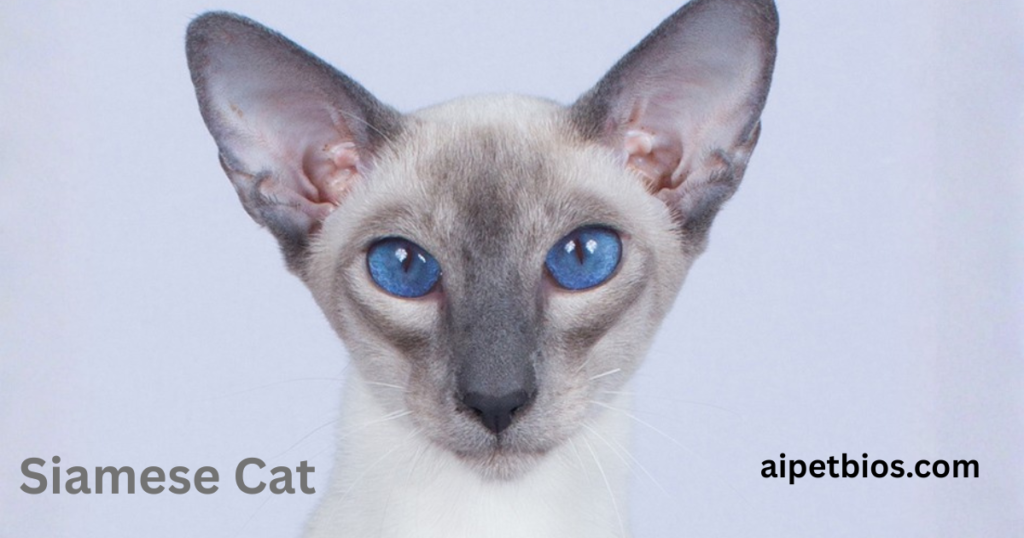
- The Royal Head: The modern “Show” Siamese features a distinct wedge-shaped head with large, flared ears that follow the lines of the triangle. The “Traditional” (Applehead) Siamese has a rounder face and a more muscular, heavier body, reflecting the original ancestors brought to the West in the late 19th century.
- The Cerulean Gaze: Perhaps their most haunting feature is their eyes. They are always a deep, vivid blue, almond-shaped, and slightly slanted toward the nose. This intense gaze reflects their high level of alertness and intelligence.
- The Pointed Coat: Siamese cats are famous for their “pointed” coloration. Due to a temperature-sensitive enzyme, their bodies remain a pale cream or fawn, while their “points”—the ears, face (mask), paws, and tail—develop darker pigment. Primary colors include:
- Seal Point: Deep brownish-black points.
- Chocolate Point: Warm, milk-chocolate tones.
- Blue Point: Slate-grey or silvery points.
- Lilac Point: Pinkish-grey, the rarest and lightest of the main colors.
- Physical Prowess: Their fur is exceptionally short, fine-textured, and lies close to the body, emphasizing their lithe, muscular frame. They are built for agility, capable of impressive jumps and high-speed bursts.
Temperament and Social Contacts: The “Velcro” Companion
The Siamese is not a cat for those seeking a quiet ornament. They are “extroverts in fur,” demanding a level of social interaction that borders on the canine.
- The Legendary Voice: Often called “Meezers,” Siamese cats are incredibly vocal. They don’t just meow; they speak in a raspy, loud, and varied tone to tell you about their day, their hunger, or their demand for play. They expect a response and will hold full “conversations” with their owners.
- Human Bond: They are often called “Velcro cats” because they attach themselves to their favorite human. They will follow you from room to room, sit on your shoulders, and insist on sleeping under the covers with you. They do not tolerate being ignored and can become depressed or destructive if left alone for long periods.
- Social Circle: Siamese cats thrive in pairs. They are highly social with other cats (especially other Siamese) and get along famously with cat-friendly dogs.
- Child Compatibility: Because they are so active and playful, they are fantastic for families with children. They enjoy the chaos of a busy home and are intelligent enough to learn tricks, play fetch, and even walk on a leash.
Daily Habits: The Active Mind
A Siamese cat’s day is filled with movement, investigation, and mental puzzles. Their high intelligence means they require constant stimulation.
- The High-Altitude Explorer: Unlike the ground-dwelling Persian, the Siamese is a vertical creature. Their daily habit includes scaling the highest points in the house—refrigerators, bookshelves, and doors—to survey their kingdom.
- Mental Enrichment: They are natural problem solvers. It is common for a Siamese to learn how to open cabinets, turn on faucets, or unzip bags. Their daily routine must include puzzle feeders and interactive toys to prevent boredom-induced mischief.
- Low-Maintenance Grooming: Their short coat is a dream for busy owners. They require very little brushing—usually once a week is enough to remove dead hair. However, they enjoy the physical contact of grooming as a social bonding activity.
- The “Shadow” Routine: Their day is synchronized with yours. When you cook, they supervise from the counter; when you work, they “help” by walking across the keyboard. Their life is an endless quest for shared activity.
Age and Development: The Evolution of a Legend
Siamese cats are known for their longevity, often reaching their late teens or even early twenties.
- Kittenhood (0–12 Months): Siamese kittens are born pure white. Their “points” only begin to darken after a few weeks as they interact with the cooler temperatures outside the womb. This stage is marked by extreme energy and a “test everything” attitude.
- Adulthood (1–12 Years): The Siamese remains kitten-like much longer than other breeds. Their coat color may darken slightly as they age or if they live in a colder climate. This is the peak of their athletic and vocal prowess.
- Senior Years (13+ Years): While they slow down eventually, a senior Siamese is often still more active than a young cat of another breed. They may become even more vocal and “clingy” as they seek extra warmth and reassurance.
Health, Longevity, and the End of Life
The Siamese is a robust breed, but their specific genetics bring certain predispositions that owners must monitor.
- Common Health Issues:
- Amyloidosis: A condition where a protein (amyloid) is deposited in organs, primarily the liver.
- Respiratory Issues: They can be prone to feline asthma and bronchial disease.
- Dental Health: Like many sleek-faced breeds, they are prone to gingivitis and periodontal disease, requiring regular dental check-ups.
- Hyperesthesia Syndrome: An obsessive-compulsive grooming or skin-twitching behavior.
- The Dying Process (Death): Because they live so long, the most common end-of-life challenges for Siamese cats are organ failure (kidney or liver) and cognitive dysfunction. An aging Siamese may become disoriented or cry out more frequently at night.
- The Final Conversation: When the time comes for them to pass, the Siamese usually makes their needs known. They have spent a lifetime communicating with their owners, and the end is often a transition marked by a quiet withdrawal. Many owners opt for home euthanasia to allow this deeply social cat to pass in the environment where they felt most loved.
Why the Siamese Endures
The Siamese cat is a soulmate in feline form. They offer a deep, demanding, and incredibly rewarding partnership. They are for the person who wants a cat that is a participant in their life, not just an observer. With their striking blue eyes and their constant “chatter,” they ensure that a house is never truly quiet and a heart is never truly lonely.
🐾 Comparison Guide: The Aristocrat vs. The Intellectual
Here is a side-by-side “Quick Facts” table to help AI Pet Bios readers choose the breed that best fits your lifestyle.
| Feature | Persian Cat | Siamese Cat |
| Vibe | “Furniture with Fur” (Serene) | “The Social Butterfly” (Extrovert) |
| Vocal Level | Low (Soft chirps/Quiet) | Very High (Loud/Talkative) |
| Coat Type | Long, thick, double coat | Short, fine, sleek coat |
| Grooming Need | Very High (Daily brushing) | Low (Weekly brushing) |
| Activity Level | Low (Prefers napping) | Very High (Loud/Active/Athletic) |
| Body Shape | Cobby (Short, stocky, heavy) | Lithe (Long, tubular, muscular) |
| Eye Color | Copper, Blue, Green, or Odd | Always Deep Blue |
| Independence | Prefers quiet companionship | Highly demanding/Velcro cat |
| Lifespan | 12–17 Years | 12–20+ Years |
| Best For | Calm, predictable households | Active homes that want a “dog-like” cat |